Portal Under the Stars, Chapter 1

Introduction: Portal Under the Stars Playthrough

Bert Teahill lay under a pile of threadbare blankets, shivering and groaning. He was little more than sun-shriveled skin stretched over bones, his gray hair plastered to his skull with sweat. The cramped room–barely large enough for the small bed, a footlocker, and five figures crowding round–smelled strongly of urine and death.

The old man coughed weakly. “Is everyone here then?” he asked in a voice dry as summer leaves.

“We’re all here, Bert,” sniffed Councilman Wywood, nodding. He glanced at the other three town council members, each doing their best to not be there. Wywood was the oldest and most tenured council member and often spoke first. Councilmen Wayford and Seford weren’t much younger but still deferred to him. Indeed, the three men had held their positions so long that they seemed to share more unsaid with their glances than spoken aloud. For example, right then Seford, small eyes in a round face with hanging jowls, looked to Wywood imploringly as if to say When we can leave and get back to our brandy?

The fourth council member, Councilwoman Leda Astford, was the newest member and everything the others were not. Young, brave, and earnest, she interrupted the silent glances from the other three.

“What is it you wanted to tell us, Bert? We’ve assembled the full town council and your grandson, just as you asked,” she said, laying a hand on his shoulder. Councilman Wywood, for his part, pursed his lips and sniffed derisively. The other two old men nodded at his annoyance, silently agreeing Who does she think she is, taking charge?

Bert Teahill whimpered and stirred feebly beneath his covers. For a moment he stilled, and the room grew silent. Then the old man sucked in a breath and opened his eyes wide, searching around the room. He coughed.

“Good, good. Listen to me, all of you. The star… the stars have come back as when I was a boy.”

“What are you saying, Bert?” Wywood grumbled. The man’s wrinkled face shone with sweat. “What is this about stars?”

“Let him speak, please,” Leda intoned. The other three council members traded offended, frowning glances.

“When I was a boy,” Bert continued, wheezing. “Must be fifty winters since. I used to watch the stars, notice how they formed pictures in the sky. Back then there was a particular star. Called it the Empty Star, a blue, twinkling thing, all on its own with no others around it. As it rose directly overhead, a… a door opened. Shimmering blue, at the old stone mound. Swear to all the gods I saw it! A bright blue door, and on the other side jewels and fine steel spears aplenty.”

“What is he suggesting?” Councilman Wayford scoffed at his brethren. He was stooped with age, and his voice was high and wheedling, as if he were always whining. “We’re all here for a child’s fable?”

“A portal!” Bert said, his voice suddenly strong. A liver-spotted hand emerged from the blankets and gripped Leda’s wrist. He looked up at her imploringly. “All my life I held this secret, wishing I’d gone in. Could have changed my fortune, maybe my whole family’s fortunes. Maybe the whole town’s! And every night since I’ve watched the stars. The pictures in the sky all changed. The Empty Star never came back.

“But now it’s all back, you hear me? The Empty Star is rising! Tomorrow night, sure as my grave! I feel it in my very soul, you hear me? Tomorrow night is the night! Someone has to go to the old stone mound to see the portal. Go in, this time. Change Graymoor’s fortunes! There’s treasure there, and glory. Don’t let it pass by this time, please. Don’t live a life of regret like an old, dying farmer. Please. Please…” And just as suddenly as his old, vital self had returned, Bert Teahill deflated and lay panting.

The three aged councilmen said nothing, eyes darting furtively between them in silent discussion. Leda Astford, meanwhile, patted the farmer’s shoulder gently.

“Okay, Bert,” she said. “We hear you. We’ll go to the old stone mound tomorrow night. If there’s a portal, we’ll get those jewels and spears.”

“Take– take Gyles,” Bert whispered and almost imperceptibly nodded.

With a rustle of cloth and creaking floorboards, the four town council members turned to look at the boy. Little Gyles Teahill was Bert’s grandson, who townsfolk said was strong as a man at ten years of age. He had taken over running the Teahill farm with his father’s recent leg injury. Little Gyles looked up at them all with a mix of wide-eyed surprise from the attention and an iron-like determination.

Councilman Wywood snorted derisively and turned his back on the boy. Wayford and Seford followed suit. The three shuffled out of the room, muttering about “waste of time” and “fool’s errand” and “preposterous” and “let’s go have some brandy.”

Leda Astford, meanwhile, met the boy’s eyes. She smiled, conjuring a confused grin from the boy. As the others left, Leda gently squeezed Bert’s thin shoulder and nodded. “I’ll go myself tomorrow night, Bert. And I’ll take Little Gyles and keep him safe, don’t you worry. We’ll see this door of yours. And if it’s there, well, sure as anything we’ll go in.”

Bert Teahill lay still beneath his blankets, eyes closed and barely breathing. Had the man heard her words?

They would never know.


Councilwoman Leda Astford’s breath steamed in the cold night air. Spring had come to Graymoor, but Winter still had its grip on the dark hours. She shivered beneath her traveling cloak, pulling it tighter. She was a healthy woman in the prime of her life but had always suffered in the cold. Her hands and feet especially.

She looked around. A rumor as big as this one had spread, and a large pack volunteered to wander into the darkness in search of Old Bert Teahill’s flight of fancy. Puffs of breath dotted the shadows as the dozen of them waited. It was a clear night and the path to the old stone mound was well-known, so none had felt the need to light a torch.

“How long are we going to stay out here before we decide the old fool is crazy?” complained Egerth Mayhurst. He was Graymoor’s jeweler, a shrewd and unpleasant man of middle years, thin and bald, with a carefully sculpted beard along his jawline. Leda assumed he was here to lay claim to any gemstones they found, if a magic portal did exist. Grimly, she realized that he may also have been sent here to report back to the other council members.

“Calm yourself, Egerth,” a deep, resonant voice intoned. It was Bern Erswood, the town’s herbalist and likely the most well-liked of the group. Bern’s remedies rarely did what he claimed, but the barrel-chested, bearded man made you feel good about taking them all the same. “That blue star that Leda called the Empty Star… It’s still climbing in the sky, and it’ll soon be directly over the old stones. I’m not saying anything will happen then, mind you, but I reckon we’ll find out soon.”

The others mumbled their assent and Egerth Mayhurst snapped his jaw shut, arms folded. Leda looked down on Little Gyles, who stood near her with a pitchfork held like he was defending a castle from invasion. The boy had stayed at her side the entire trek, and she couldn’t decide if he wanted her protection or saw himself as the protector. Either way, she smiled and gripped his firm, muscled shoulder.

“You hear that? Shouldn’t be long now,” she said reassuringly. The boy pursed his lips and nodded.

 She looked at the tall figure to her other side. Finasaer Doladris was the only elf anyone in Graymoor had ever met, and his long, pointed ears and long, fine hair made for a distinctive profile even in the darkness. His robes seemed to shimmer in the starlight.

“What do you think, Mister Doladris? Will a portal appear?”

“Mm,” he murmured noncommittally. “Difficult to ascertain, councilwoman. Yet whether folk fable or astrological miracle, it’s a fine entry to my documentation of the local populace. Quite intriguing all the same.”

Leda didn’t reply. The elf had been a genuine curiosity to all of Graymoor since he appeared out of the woodland a year ago claiming to be doing research, but the way he spoke made it difficult to hold a conversation.  

The old stone mounds were named such because, amidst a marshy woodland, several large slabs of rock lay against one another randomly like the discarded toys of giants. No other such stones could be found within miles of Graymoor, and against all reason these immense stones never collected moss, bird nests, or spiders. Indeed, no vegetation of any kind grew near the stones. Naturally, most locals avoided the place, and it was a frequent object of childhood dares. If Bert was indeed making up a story, the old stone mound was the perfect location for it.

Suddenly, where three blocks leaned haphazardly together to form an upright rectangle, a shimmering door of light appeared. One moment the space was empty and then it wasn’t, without a sound. The dozen Graymoor residents gasped. Little Gyles took an involuntary step closer to Leda.

As she moved forward, the boy at her hip, Leda saw that it was not so much a door as the opening of a corridor. Where before there had been a person-sized gap, there now stretched a long hallway, limned by blue light.

“There’s nothing on the other side!” Veric Cayfield, one of the three halflings present, called out from the shadows. Like the Haffoot siblings who had also joined their party, Veric had migrated to Graymoor from the distant halfling village of Teatown. He had become the town’s haberdasher years ago, because there was nothing Veric loved so much as clothes and sewing. Indeed, he proudly exclaimed to anyone who would listen that the reason he loved Graymoor is because humans allow him the opportunity to use even more fabric for his craft. Leda had no idea why he’d joined their expedition tonight. Or the Haffoots, for that matter.

A handful of others had wandered to the other side of the three stones.

“Sure enough!” Bern the herbalist exclaimed. “I can see you all clearly through the gap on this side. Can you see me?”

“We can’t, Bern,” Leda called out. “For us it’s a hallway.”

The sound of a sword being pulled from its scabbard rang out. Mythey Wyebury, who Leda always thought was trouble, moved forward to the shimmering corridor’s opening. “Well?” he said. “So the old man was speaking true. Let’s go find these jewels and magical weapons, eh?”

And then he stepped into the portal.

Hesitantly, a small group followed, each clutching the closest thing to a weapon they could find at home. Umur Pearlhammer, the dwarven stonesmith and Graymoor’s most tenured resident, gripped a hammer. Erin Wywood, the councilman’s granddaughter, had a long knife in her shaking hand. Even Hilda Breadon, the town’s baker extraordinaire, gripped a rolling pin in her meaty fist.

“Do we go in now?” Little Gyles asked, looking up at her. For such a strapping lad, his voice betrayed his young age.

“I suppose we do,” Leda answered with wonder, and the two moved towards the opening.

The corridor before them ran about twenty feet, and she was surprised to find that a flagstone floor ran between the portal opening and a large door. Otherwise, the place was bare walls, the same sort of stone as the old stone mound. But it was the flagstones that unnerved her most, for it spoke of someone crafting this place instead of it simply… being.

Mythey and several others were already at the door.

“Locked!” he shouted back at them, clearly frustrated. Veric, Bern, and the others who had walked around the stones were now all at the portal’s entrance behind Leda, peering in.

Leda strode closer, and the door itself left no question as to someone crafting this place. It was wooden and iron-banded. Jewels or crystals of some sort were embedded in the wood, creating star-shapes that twinkled in the blue light.

So far this has all been narrative and no game mechanics. But here we go! Time to roll some dice! Will anyone in the party understand what’s going on? I’ll give characters with an Intelligence of 13 or more (Erin Wywood, Ethys Haffoot, and Umur Pearlhammer) a chance to puzzle it out at a Difficulty Class of 14. Basically, they have to hit a DC 14 on a d20 roll, plus their Intelligence modifier (which for all of them is +1).

Erin’s roll (14+1): 15

Ethys: (11+1): 12

Umur: (2+1): 3

“I think,” Erin Wywood started to say, her voice cracking. She cleared her throat and tried again. “I think we need to wait. Bern said the star wasn’t directly overhead yet, yeah?”

Leda blinked, surprised. She knew Erin to be the closest thing Graymoor had to a minstrel, always in public spaces or the tavern singing songs about the gods and the importance of rooting out Chaos from the world. She never thought of her as quick-witted. Leda was suddenly glad that the councilman’s granddaughter had joined them.

“Screw that!” Mythey spat from the front of the group. Before anyone could stop him, he put his hand on the door’s handle and bashed forward with his shoulder. Mythey was an ass and bully, but he was also a hulking man and perhaps the strongest of them assembled.

This is a bit of a sacrificial lamb move on my part, but I don’t want to assume everyone will listen to the town minstrel’s wisdom, and Mythey is a greedy troublemaker whose best stat is Strength. It makes sense to me that he would try and barge in impatiently. It’s also an opportunity to establish the stakes of this little adventure.

The door can be forced with a DC 15 Strength check. Mythey rolls a (11+1) 12, so fails.

Attempting to force the door triggers a trap, however. Before I describe it, Mythey will take 1d8 damage, which he can halve with a DC 10 Reflex check (he rolls a 3). Sort of a moot point since he only has 1 hit point, but he takes 5 damage and is killed instantly.

It was a solid blow, but the sturdy door held. As the man struck it, the jewels on its surface flashed a bright blue that left all of them within the corridor dazzled. Leda blinked to regain her vision, and as she did so, those nearest the door cried out.

“He’s dead!” Hilda the baker shrieked. “Burned to a crisp! Gods help us!”

Acrid smoke smelling of charred flesh began drifting through the corridor towards the open air. Leda gagged and rushed towards the exit along with the others. She glanced back and saw the blackened lump that was once Mythey Wybury.

As the now-eleven of them huddled outside, under the night sky, near the shimmering portal entrance, several people tried talking at once, some in hysterical, high-pitched tones and others in calm, reassuring ones. The effect was that no one heard a single thing the others were saying, leading to a chaotic babble.

“Enough!” Umur Pearlhammer shouted. At once they all quieted. The dwarf’s weathered face, bushy brows over a bulbous nose, regarded them. “Mythey was a fool and trouble besides, we all knew it. First chance he had to take whatever wealth and steal it, he would have. I donna’ like that he died, mind, but there’s a lesson there for all’a us.”

The others nodded and sniffled and gripped their weapons.

“We gotta take care, now,” the dwarf continued in his gruff, commanding voice. “Think an’ act together, yeah? Miss Wywood has the right of it, methinks. What say you, Bern? The Empty Star still tracking overhead?”

The herbalist scanned the sky. “I would say so, yes. Maybe an hour or two and it should be directly overhead.”

Umur nodded once. “Then we wait. Meantime, who can help me haul that fool’s body out so we can bring it back when we’re done?”

For a moment, no one said a word. Then, at Leda’s side, Little Gyles Teahill raised his hand. “I can help, master stonemason sir.”

Umur nodded again. “Right enough. Come along lad.”

The next hour or two passed slowly. Mythey’s body was badly burned and uncomfortable to see, like he’d been struck by lightning. But he had a short sword in his grip and was the only one of them wearing anything resembling armor. After the trapped door, such things seemed more important than ever. Umur offered to take the sword, since no one else seemed comfortable using it. The leather cuirass, however, would never have fit the stocky dwarf. Indeed, only Bern the herbalist, Egerth the jeweler, and Finasaer the researcher were anywhere near the man’s size. The elf held up his hands helplessly, saying he was not a man of arms. That left the two human men, and, after some discussion, Bern had the least distaste for wearing a dead man’s singed leathers. With the help of the others, they pulled the items from Mythey’s corpse and helped Bern with the straps. Umur swung the sword, away from the group, and grunted in satisfaction as he slid it back into the scabbard that now hung from his hip.

“Something’s happening!” one of the Haffoots, the sister, Ethys, exclaimed, pointing a small finger towards the glowing hallway.

Bern looked skyward, drumming a finger on his now leather-clad belly. “Mm. Looks like it’s directly overhead, sure enough.”

“What is it, Ethys?” Leda asked as the group edged near the stones. It was an unnecessary question. Anyone with a view down the long corridor could see what was happening.

The jewel-encrusted, heavy door had swung open.

Portal Under the Stars, Chapter 2

Introduction: “Portal Under the Stars” Playthrough

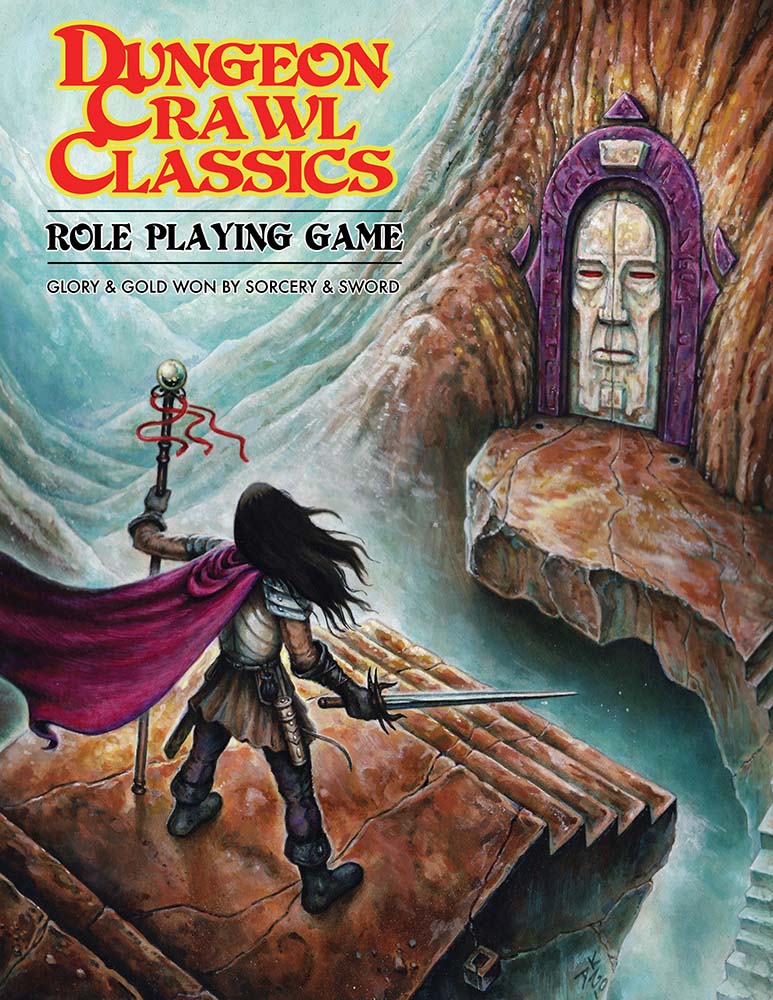
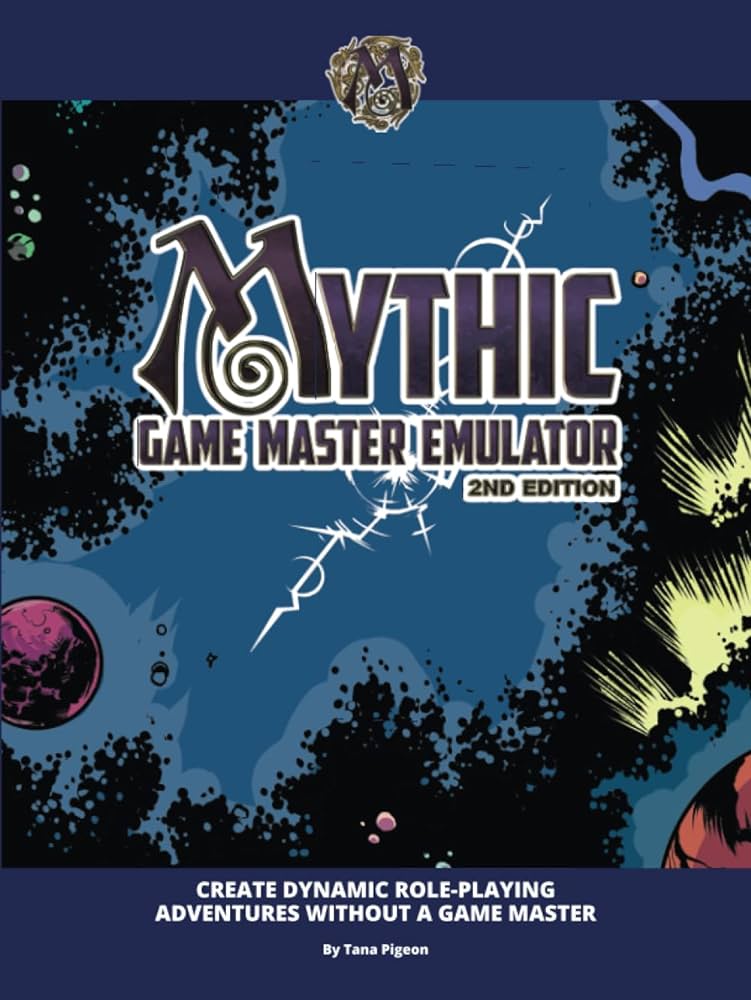
As I mentioned in my last entry, I have recently been pouring over the Dungeon Crawl Classics rulebook by Goodman Games. Each of its 500+ pages is a delight. DCC is a game that a) I really, desperately want to try out, and b) for a variety of reasons (time, number of games already in the queue, my group’s interests, etc.) is unlikely something I can play soon with my weekly online group of players. I also mentioned solo play, and not-coincidentally received the Mythic GM Emulator as a Christmas gift (thanks mom!) last year. So, although superhero games are my first love, right now, in this moment in time, I’m going to try my hand at playing my way through an introductory DCC adventure.

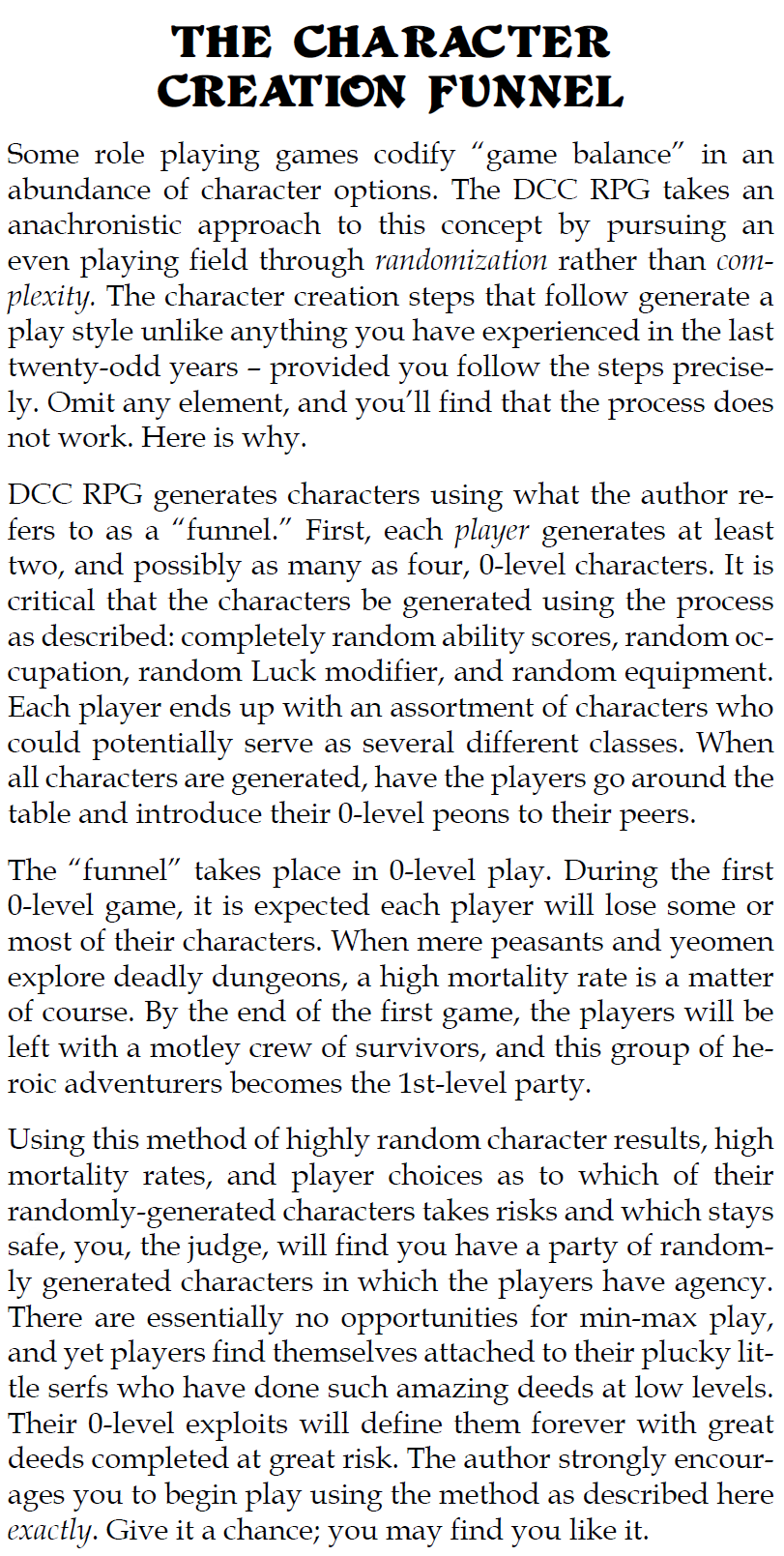
One of the quirks of DCC as a system is “The Funnel,” which is a way of describing how players form new adventuring parties. The basic idea is this: Each player rolls up multiple pre-adventurers, called Level 0 characters. These are normal townsfolk living in a dangerous and mysterious world, ready to defend their livelihood but without the equipment or skills to do so effectively. Then, The Funnel puts these poor 10-15 souls in a brief, deadly scenario. Whoever survives the scenario creates the pool of potential Level 1 adventurers, and off you go.

From what I can gather, The Funnel is a barrier for many “modern” players to jump into DCC. Yet there are also countless testimonials for why a Level-0 Funnel is vital for a new group; The Funnel not only introduces beginners to the rules in a digestible way, but it also emphasizes the tone and tenets of the game world, helps players fall in love with their characters, and creates memorable stories the group will forever remember. Besides, it’s such a different way to start adventuring than most modern games, I am fascinated to try it out. I was immediately sold when reading the rulebook:

Woo! Sounds awesome.

There are a lot of DCC Level 0 adventures, and by far the most popular and highly-touted one is Sailors on the Starless Sea. I own SotSS and initially decided that I wanted it to be the object of my playthrough. What I concluded, however, is that I’d rather not have a public playthrough of such a beloved Funnel, which might ruin it for others (including my own group, if I convince them to try out DCC). Instead, I decided to focus on the Funnel provided in the core rulebook, The Portal Under the Stars.

The Cast of Characters

Before I can dive into my first Funnel, however, I need a large party of townspeople. Simulating four players with three characters each, I rolled up an ambitious TWELVE townsfolk. Below is a quick sketch of each, which is all of the backstory I want right now. There’s no need to create elaborate backstories for characters that might die in the first session, plus the spirit of DCC is to find the characters through playing them. It’s fun to wonder which of these poor saps might eventually become honest-to-goodness adventurers.

I’ll also provide the “stats block” for each character. Right now, don’t worry about understanding the gobbledygook of abbreviations and numbers… I’ll briefly explain mechanics as I go. Suffice it to say, if you’ve played any edition of Dungeons & Dragons, Pathfinder, or another d20-based roleplaying game, DCC will be pretty easy to figure out.


Bern Erswood. Graymoor’s herbalist is well-liked and seen as a kind man eager to help his neighbors, even if his remedies rarely have any medicinal benefits. Bern lives on the village’s outskirts, where he has the most access to nature and can cultivate his gardens. 

Bern Erswood. Level 0 Herbalist. STR 9, AGL 11, STA 13, PER 16, INT 12, LCK 11. Init +0; Atk club +0 melee (1d4); AC 10; HP 5; MV 30′; Act 1d20; SV Fort +1, Ref +0, Will +2; LNG Common; AL Neutral; Equipment: small hammer, herbs, 19cp.

Councilwoman Leda Astford. Leda is one of four councilmembers elected by Graymoor’s populace, and the most recent addition to the Town Council (taking her mother’s seat when she perished from illness). She is young, popular with town residents, and perhaps a touch naïve. Her three councilmember peers—all old, grizzled men who’ve held their seats for years—push Leda to do any and all hard work.

Councilwoman Leda Astford. Level 0 Noble. STR 8, AGL 16, STA 12, PER 15, INT 8, LCK 7. Init +2; Atk longsword -1 melee (1d8-1); AC 10; HP 4; MV 30′; Act 1d20; SV Fort +0; Ref +2; Will +1; LNG Common; AL Lawful; Equipment: 10′ pole, gold ring, 41cp. Note: Born with a clover-shaped birthmark. (-1 to find secret doors)

Egerth Mayhurst. The town’s only jeweler, Egerth has lived in Graymoor since he was a youth and yet still considers himself better than other locals, who he calls “backwater fools.” Selfish and ambitious, he has remained single well into his middle age and is more than a little bitter about it.

Egerth Mayhurst. Level 0 Jeweler. STR 13, AGL 10, STA 10, PER 9, INT 8, LCK 9. Init +0; Atk dagger +1 melee (1d4+1); AC 10; HP 2; MV 30′; Act 1d20; SV Fort +0, Ref +0, Will -1; LNG Common; AL Chaotic; Equipment: holy water (1 vial), gem, 24cp.

Erin Wywood. The granddaughter of Councilmen Wywood, Erin is the closest thing Graymoor has to a bard. She spends her time in the town’s tavern playing her ukelele. Erin should be more popular than she is, due mostly to her devout religiosity and fervor, which creeps into all of her interactions and songs.

Erin Wywood. Level 0 Minstrel. STR 13, AGL 11, STA 13, PER 8, INT 14, LCK 10. Init +0; Atk dagger +1 melee (1d4+1); AC 10; HP 5; MV 30′; Act 1d20; SV Fort +1, Ref +0, Will -1; LNG Common, Halfling; AL Lawful; Equipment: holy symbol, ukelele, 32cp.

Ethys Haffoot. Ethys and her younger brother Giliam are responsible for the trading barge up and down the Teawood River, which connects Graymoor to the neighboring settlements (one of which is the halfling village of Teatown, Ethys and Giliam’s birthplace). She has the family affliction of a club foot, but is otherwise hardy and unquestionably the brains of her family business.

Ethys Haffoot. Level 0 Halfling Mariner. STR 11, AGL 6, STA 12, PER 9, INT 15, LCK 12. Init -1; Atk knife +0 melee (1d4); AC 10; HP 2; MV 20′; Act 1d20; SV Fort +0, Ref -1, Will +0; LNG Common, Halfling, Elven; AL Lawful; Equipment: 10′ pole, sailcloth, 36cp. Infravision.

Finasaer Doladris. Master Finasaer arrived in Graymoor ten years ago from the woods, explaining to the Town Council that he was writing a book on provincial towns in the region. He is the only elf in Graymoor, and a town curiosity in every way. For his part, “Fin” (as the locals call him) is friendly but aloof, and his elevated vocabulary often alienates him from others.

Finasaer Doladris. Level 0 Elven Sage. STR 13, AGL 10, STA 14, PER 9, INT 11, LCK 14. Init +0; Atk dagger +1 melee (1d4+2); AC 10; HP 4; MV 30′; Act 1d20; SV Fort +1, Ref +0, Will +0; LNG Common, Elven; AL Neutral; Equipment: backpack, parchment and quill pen, 14cp. Note: Born on a full moon as a pack of wolves howled. (+1 to attack and damage for starting weapon). Sensitive to iron. Infravision.

Giliam Haffoot. Giliam and his older sister Ethys are responsible for the trading barge up and down the Teawood River, which connects Graymoor to the neighboring settlements (one of which is the halfling village of Teatown, Ethys and Giliam’s birthplace). He has the family affliction of a club foot, but is otherwise hardy and hard-working.

Giliam Haffoot. Level 0 Halfling Mariner. STR 12, AGL 7, STA 13, PER 12, INT 8, LCK 9. Init -1; Atk knife +0 melee (1d4); AC 10; HP 2; MV 20′; Act 1d20; SV Fort +1, Ref -1, Will +0; LNG Common, Halfling; AL Lawful; Equipment: grappling hook, sailcloth, 25cp. Infravision.

Gyles Teahill. “Little” Gyles Teahill is the son of Ephes Teahill, Graymoor’s most prominent rutabaga farmer. Ephes recently had an accident that has left him bedridden, so Gyles has taken up the majority of his father’s work. He is small, but strong for his size and everyone in the town is either overtly or secretly rooting for the Teahills to have a successful year because of Little Gyles’ heart.

Gyles Teahill. Level 0 Farmer (rutabaga). STR 12, AGL 6, STA 5, PER 12, INT 9, LCK 9. Init -1; Atk pitchfork +0 melee (1d8); AC 10; HP 1; MV 30′; Act 1d20; SV Fort -2, Ref -1, Will +0; LNG Common; AL Lawful; Equipment: hen, rations, 25cp.

Hilda Breadon. Graymoor’s only commercial baker, Hilda is famous for her pies, cakes, and cookies of remarkable variety. She would be more successful if she didn’t eat twice as much of her wares as she sells, but she is a woman of great passions and appetites.

Hilda Breadon. Level 0 Baker. STR 9, AGL 11, STA 18, PER 9, INT 11, LCK 11. Init +0; Atk rolling pin +0 melee (1d4); AC 10; HP 7; MV 30′; Act 1d20; SV Fort +3, Ref +0, Will +0; LNG Common; AL Lawful; Equipment: chain, flour, 26cp.

Mythey Wyebury. Mythey grew up in Graymoor as a ne’er do well, always in trouble and running from his bad choices. Unbeknownst to most of the town, he and a couple of his friends have recently been plaguing the roads as outlaws, stealing from travelers to fuel their tavern revelry. His most closely guarded secret, however, is that he has a sickness that he believes will kill him any day now.

Mythey Wyebury. Level 0 Outlaw. STR 15, AGL 11, STA 6, PER 13, INT 9, LCK 7. Init +0; Atk shortsword +1 melee (1d6); AC 12 (leather armor); HP 1; MV 30′; Act 1d20; SV Fort -1, Ref +0, Will +1; LNG Common; AL Chaotic; Equipment: small sack, 29cp. Note: Born as a bear visited the village. (-1 to Melee damage rolls)

Umur Pearlhammer. No one in Graymoor knows how old Umur is, but they know he’s outlived anyone else’s memory. He’s still hearty enough to be the town’s primary stonemason, though, and despite his dwarven gruffness he is one of Graymoor’s most well-liked residents.

Umur Pearlhammer. Level 0 Dwarven Stonesmith. STR 9, AGL 9, STA 9, PER 14, INT 13, LCK 9. Init +0; Atk hammer +0 melee (1d3); AC 10; HP 3; MV 20′; Act 1d20; SV Fort +0, Ref +0, Will +1; LNG Common, Dwarven, Giantish; AL Lawful; Equipment: fine stone, lantern, 26cp. Infravision.

Veric Cayfield. Like the Haffoot siblings, Veric grew up in the halfling village of Teatown, but moved to Graymoor several years ago to begin his life as a haberdasher. No one loves clothes as much as Veric, and what he loves about humans is how much more fabric he gets to use to make them.

Veric Cayfield. Level 0 Halfling Haberdasher. STR 13, AGL 16, STA 12, PER 9, INT 11, LCK 12. Init +2; Atk scissors +1 melee (1d4+1); AC 10; HP 1; MV 20′; Act 1d20; SV Fort +0, Ref +2, Will +0; LNG Common, Halfling; AL Lawful; Equipment: fine suits (3), flask, 19cp. Infravision.

And there we go. Have any bets on survivors or early deaths? And yes… several of them have 1 or 2 hit points. Yikes.

Next time… the adventure begins!

-jms

Portal Under the Stars, Chapter 1

Gaming at Fifty One

Today is a (rather long) State of the Union address on my gaming life.

As best as I can remember, I started playing tabletop role-playing games (or TTRPGs) in Fifth Grade, in 1983, which would make me ten years old. It was one of those phenomena where a friend–though I can’t remember who Gamer Zero was–received a boxed set as a Christmas gift and we all dove in. Soon we all asked our parents to supply us with books, dice, graph paper, and pencils. Throughout the Spring, we played a mix of Basic Dungeons & Dragons and Advanced Dungeons & Dragons, not understanding that they were two largely different games. It didn’t really matter, though… what we actually played was some rules-light, make-it-up-as-you-go game that didn’t even try to involve the many complex tables in the books we didn’t understand. Usually our first-level characters wielded something like a +5 Sword of Dragon Slaying that could cut through anything.

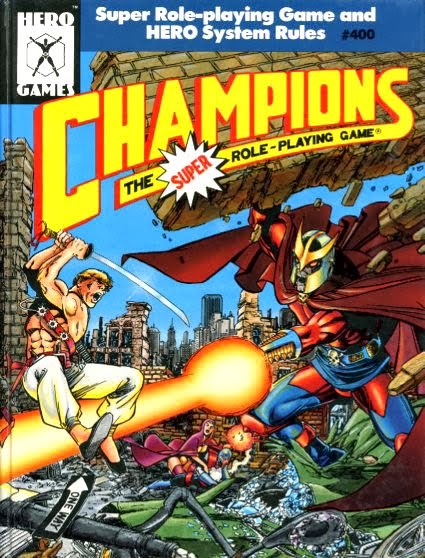
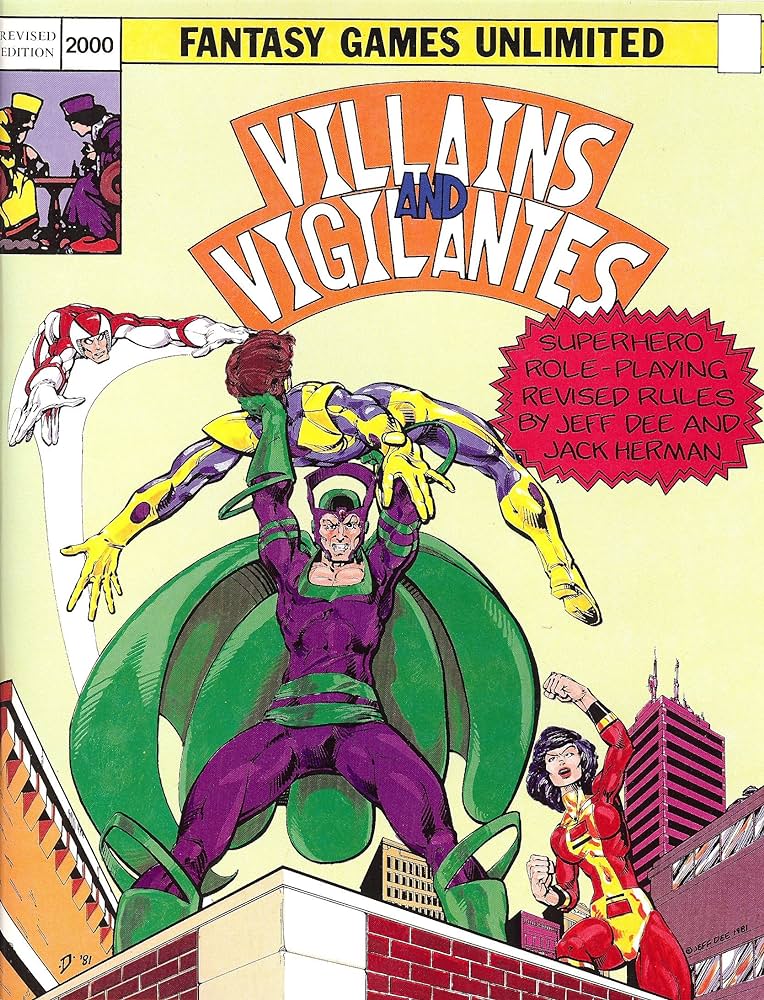
As we transitioned to middle school, a subset of that original group began playing anything we could get our hands on. The biggest boon to our fledgling group was my buddy Russell’s older brother Jim, who was happy to run our games for us. I’m not sure this is an exhaustive list, but I remember playing a lot of Tunnels & Trolls, Gamma World, Car Wars, Top Secret, Marvel Superheroes, Villains & Vigilantes, Teenage Mutant Ninja Turtles (TMNT), Heroes Unlimited, Superworld, Champions, GURPS, and, yes, a good helping of D&D (this time using the rules and their published modules). Just seeing the covers of those games triggers a flood of nostalgic make-believe happiness. Those were fun times.

I had a new group of friends in high school and quickly introduced them to the hobby. We almost exclusively played superhero games, primarily Villains & Vigilantes and Champions, though we sprinkled in some TMNT, Golden Heroes, DC Heroes, and Super Villains as well. My good friend Ted ran us through a particularly memorable V&V campaign, which clued me into how cool a longform set of adventures with the same characters can be.

We all scattered to different colleges, and I met new TTRPG enthusiasts. Throughout my time at Occidental College, I ran a monthly Champions campaign, even drawing the “comic covers” for each session we played as keepsakes. At that point, Champions was my only game, and I was deep into the HERO System and its math-heavy fun.

Then it was off to graduate school, where I met both my wife and a little game called Magic: the Gathering, which would be the object of my obsession for years. Then my working career started to take off, I had kids, we moved around, and, as these things do, TTRPGs faded into the background of my life for nearly two decades. I remember trying to organize a D&D adventure with my wife and some friends once or twice during that time, but it never stuck. During that time, I bought-and-sold the D&D 3E and 3.5 rulebooks without really doing anything with them.

In 2018, I took a year off work to recoup, then in 2019 started a job in San Francisco that, unlike most of my previous roles, didn’t require heavy travel. Around that time, I started listening to a ton of podcasts, including the Glass Cannon Podcast. The TTRPG bug started inching its way into my brain, and I began to seek out my local game stores to see if there were people with whom I could play. After some false starts with Dungeons & Dragons 5th Edition and Pathfinder at local stores, I found a group that was playing D&D 5E and were happy to have me join. They were interested in switching to Pathfinder 2nd Edition once it was released, and eventually I GMed us through the game’s first 1-20 Adventure Path, Age of Ashes over three years. During those years we took occasional detours, experimenting with Blades in the Dark, Symbaroum, Call of Cthulhu, Savage Worlds, and, at my urging, even returned to supers for a Sentinel Comics RPG one-shot.

That gaming group was my first experience with serious personality clashes in TTRPG groups. I ended up feeling picked on by a person there who was close friends with two other members, and after trying-and-failing multiple times to talk it out, my best recourse was to leave. Suffice it to say, it was the only real negative chapter I’ve had with TTRPGs, which have otherwise been a source of unqualified joy in my life.

For months I was genuinely wounded by my abandoned group. Thankfully the global pandemic had introduced me to virtual tabletops and online games. Eventually I found a couple fun virtual tables, including a delightful online group of Europeans that has met weekly now for almost two years. We mostly play PF2E, but have rotated GMs and done several sessions of Call of Cthulhu, Warhammer Fantasy, and most recently Mörk Borg. On our “really want to play list” are Vaesen, Dragonbane, Traveller, Forbidden Lands, Dungeon World, Lancer, Savage Worlds, and countless others.

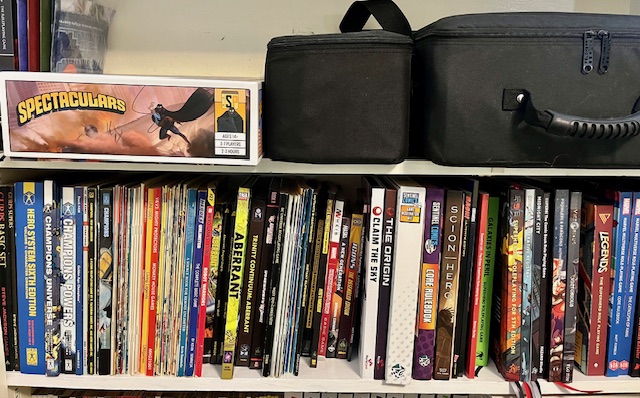
It’s fair to say that, at age fifty-one, I’m in the midst of my Second TTRPG Renaissance. At the same time, the whole TTRPG industry is going through its own Renaissance, with intriguing new games popping up seemingly every week. Not surprisingly, my game shelf has exploded. I now own most of the games listed above, plus a metric ton of others I’ve Kickstarted, found in bargain bins or eBay auctions, or used birthday gift certificates on. I’ve even sold old game books and given my college-age son my D&D 5E collection to make room for them in my house.

There are two major differences between my TTRPG life as a gray-bearded geezer compared to my young, wispy-mustachioed self. The most obvious one is that it’s more difficult to find a group with which to play. Throughout middle school, high school, and college, I rolled dice with my core group of friends. Most of our interests were shared and we spent a ton of time together… easy squeezy. These days, in contrast, the vast majority of my contemporaries have neither the time for, nor interest in, TTRPGs. While online platforms make the pool of potential players wider, these online groups are ephemeral. It’s clear to me that if one of my current group members (all of whom are twenty years younger than me) has kids, takes a new job, or moves, it probably spells the end of the group… that sort of “life event disruption” can happen with any group, but somehow in-person groups feel stickier because the investment feels somehow deeper. Meanwhile, I’ve tried to think of how to conjure another reliable, fun in-person group and failed to come up with a solution.

The second difference is in the type of games I’m playing now versus in my youth. If it’s not obvious from the banner image on this blog, my first love is superheroes and comic books, and at one point in college set my sights on becoming a comic book illustrator. As my TTRPG life deepened as a young person, it skewed heavily–and eventually exclusively–to superhero games. Yet all of my groups in the last six years want to play fantasy or investigative horror games. That’s okay, because I can get excited about those games. But none of the groups I’ve encountered want to play superhero make-believe.

The feeling of being an odd-shaped puzzle piece continued recently as I started to discover the “Old School Renaissance” (or OSR) movement within TTRPGs. These games are built by people who love early Dungeons & Dragons and want to recreate the feel of those games for modern audiences. I’ve looked at OSR-type games like Old School Essentials, Knave, Ironsworn, and have absolutely fallen in love with Dungeon Crawl Classics. I’ve also rescued a bunch of my old D&D modules from my mother’s garage, joined the Ancient Dungeons & Dragons Players Facebook group, and have been bingeing the Vintage RPG podcast. Yet when I tell my online group that I’d love to run them through a DCC beginner adventure to test out the system, I get the same lukewarm response that I received when I tried to get my in-person group to play a superhero game. They’ll probably roll with it because they like and trust me, but there isn’t an itch there they need to scratch.

All of this has me reflecting deeply on the years ahead. I’ll certainly keep seeking out online groups and brainstorming how to form an in-person group, because these are games that are most fun when they’re social and played with friends. Just last week, for example, I jumped online with a bunch of strangers to learn to play Dragonbane, a game I own and have considered running for my regular group. I’ll also keep collecting games, because I find real pleasure in reading the books cover-to-cover and seeing them on my shelf. We truly are living in a glorious period of TTRPG innovation, and the sheer diversity and volume of options is awesome.

But I’m beginning to accept that a) I may never have a long, stable group of gaming friends again, even as an empty nester nearing retirement where my time is beginning to be more spacious, and b) the number of games I own and want to play far outweighs the number of hours I’ll be able to play with friends. I surely won’t ever get a chance to play everything, much less everything beckoning to me.

The final addition to my reflections is the rise of solo play in TTRPGs. Solo play has always been a feature of some TTRPGs dating back to the 1970s, but thanks to the global pandemic it has a lot more support now than ever. Many games, like Ironsworn and Vaesen, have solo play built into the base game as an option. Meanwhile, tools like the Mythic GM Emulator allow for being able to play any game solo, without the need for a gaming group. Indeed, one of my recent podcast obsessions is Tale of the Manticore, a great audio production of a guy solo-playing an old-school D&D system.  

Maybe the answer is to begin solo play on the games no one but me wants to play? Would I enjoy that, or is the fun of TTRPGs really tied to a group? I’ll probably dip my toe into these strange, solo-play waters soon, while continuing my epic quest to find more time with awesome groups like my current online one. My enthusiasm for TTRPGs is as high as that ten-year-old kid pretending to swing his overpowered sword around. How best to channel that enthusiasm, though, is something I’m still contemplating.

If you have any thoughts about the TTRPG hobby these days, or ways you’ve tackled the hurdles I’ve outlined, I’d love to hear it. Comment below or shoot me an email at jaycms@yahoo.com.

Enthusiastically adventuring,

-jms

My First Pathfinder Infinite Product, a novella!

Hello hello! I haven’t been posting here in awhile for good reasons… Each time I’ve thought to write a blog post or some superhero-RPG exploration, I’ve instead wanted to work on a novella-length fantasy writing project for Pathfinder Infinite. I’m excited to share that I’ve now finished the piece, and it is available for purchase:

https://www.pathfinderinfinite.com/product/444610/Age-of-Ashes-Vol1–The-Councils-Chosen?affiliate_id=1607929

This is my first time trying to publish something like this, and as far as I know the first time someone has tried to turn a Paizo adventure into a longform story. It’s been a labor of love, and I’m very appreciative of my awesome wife Sarah and dear friend Kathy for being willing readers of the early drafts.

I’ve already started Volume 2, which I’m guessing will be finished sometime early in 2024. Fun fun!

Goings Ons and What Comes Next

Hoo nelly… it’s been a looooong time since I’ve written anything here. The reasons for my lack of activity are threefold.

First, a lot of what I was posting here was cutscene blurbs from my weekly, in-person Pathfinder 2nd Edition Age of Ashes campaign. That group has broken up indefinitely and the campaign ended (at level 18 of 20… so close to the end!), a result of clashing personalities made worse by trying to make a podcast together. It’s a bummer, but in-person gaming groups are a rare and precious thing, really only disbanding because of either conflict or life-events (moving or having kids, usually). We had a fun three-year run, and I’m thankful for those hundreds of hours of memories.

Second, I started a new job last Fall. It’s an incredibly different job than I’ve had before, and has demanded, among other things, a major shift in schedule. It’s taken me awhile to figure out how to layer in online games to replace Age of Ashes alongside a brand new kind of work, plus establish modified exercise, family, and friend routines. On top of that, my seventeen-year old daughter is in the heart of college recruiting for soccer, which is taking up a ton of time (exciting! but stressful. but exciting! but stressful).

Finally, I actually HAVE been writing regularly, on a novella that I’m planning to publish on the Pathfinder Infinite site later this Spring. I’m genuinely excited about this project and you better believe I’ll link to it here when I’m done — I just crossed 33k words this morning and have the final proof of the cover art. I’m guessing that I’ll have a complete first draft in a month or so, and then spend a few weeks getting feedback and editing before I hit “Publish.” But I haven’t wanted to spoil any of the prose here.

Right before I took my hiatus, I had just started a series of deep-dives into various superhero tabletop role-playing games (you can find my Golden Heroes exploration here, and the Aberrant one here). These two installments were great fun to write. Unfortunately, while I’m still obsessed with my list of every superhero TTRPG ever published*, given everything I’ve said above, those deep-dives are rather more work than I have the bandwidth for right now.

But! Obsession is obsession, whether I have an in-person group, or life is full, or even whether I’m currently writing a long-form story in a different genre. Superhero TTRPG lists must be explored, people. I don’t make the rules, I just live by them.

So, very soon, I’ll begin a different sort of series based on my list. I’m going to just focus on modern superhero games (and I’ll define “modern” in the first installment), and zero in exclusively on the character-creation process of each game.

Why just modern games? Primarily because, while there is a lot of nostalgia woven into my love of superhero role-playing games, some of the older systems are truly obtuse and clunky. Thinking about writing about those older systems sounds slightly painful, whereas the chance to familiarize myself with newer games is exciting. Plus, the list is just too danged long; narrowing my focus to the past decade or so of games helps give me a manageable group of games to tackle.

Why just the character-creation process? Because it is my belief that one of the distinct features of superhero gaming is that making characters is at least half the fun. In other genres like fantasy, sci-fi, and horror, making characters is awesome, but playing those characters is considerably more awesome. It’s the unfolding story and those surprising die-rolls that keep me coming back again and again. Meanwhile, playing superheroes in stories where literally anything can happen (aliens! mutants! robots! time travel! martial arts! magic! other realities! spycraft!) is great. Honestly, it would be a dream come true to have a local group of friends who wanted to play a long campaign of supers. But, oddly, superheroes is the only genre where some of my fondest memories are making characters instead of the game sessions themselves. Writing about making new superheroes for new game systems sounds like a blast, even if I don’t get to play them immediately (or ever).

I’m not sure when this new series will kick off, exactly, but getting an idea like this one in my head usually means my fingers start moving of their own volition. So… sometime soon.

Fun fun!

* As always, if you know of a game not on the list please let me know! Literally every time I do even a small bit of research I discover new games.

An Aberrant Brain

Oh my goodness, I did not intend to have so much time pass between posts. A big work development plus two major trips (a third next week!) plus my first bout of Covid have all kept me away from my laptop.

And yet I had a lot of fun pouring over one of my favorite games of my childhood, Golden Heroes. It was a nice validation of what I want to write about these days: the long list of superhero tabletop roleplaying games (hereafter TTRPGs) that rarely get enough attention. I’m going to continue jumping around the list of games, spotlighting ones I either love or that intrigue me.

Since I started in the 1980s, let’s fast forward a decade. Honestly, the 1990s isn’t a particularly interesting span of superhero games. It’s the time when Champions and, to a lesser extent, GURPS Supers, took up most of the oxygen in the room. Goodness knows I spent my TTRPG time in the ‘90s running two different Champions campaigns and loving the crunchiness that would become the HERO System.

But right at the end of the decade entered a game that I’ve owned for more than twenty years yet barely played: Aberrant. My curiosity in this game abounds. I picked it up at a time in my life when I had just moved to the San Francisco Bay Area, was deep, deeeeeeeep into Magic: the Gathering, and without a dedicated roleplaying group. By the time I was back into TTRPGs there were newer, fresher games to play. As a result, it’s one of those handful of games I own that I’ve played only in a couple of one-shots.

The more I’ve explored Aberrant as part of this blog, though, the more curious I’ve become (and also slightly poorer, since I bought the next two versions to compare them). Let’s see why…

A few weeks ago, I only had three books. Hm…

A Brief History of Aberrant

I couldn’t find a rich, narrative history of Aberrant like I did Golden Heroes, so here is the story as I understand it. Apologies in advance for anything I’m somehow misinterpreting or not seeing clearly.

White Wolf Publishing was a new and powerhouse European game publisher in the 1990s. White Wolf was most successful and famous with its World of Darkness games, but it also produced some fantasy TTRPGs and, right at the end of the decade, the trio of games now known as the Trinity Continuum.

The Trinity Continuum was ambitious because it was essentially three different games interconnected by the same basic mechanics and fundamental lore: Adventure! was an action-pulp, alternate-1920’s game. Aberrant was a near-future superhero game. And Æon was a far-future sci-fi game. All three shared, essentially, one universe with each taking place on a different part of that universe’s timeline. It’s a cool idea, and one that has followed each game through various editions. Although this post is focused on Aberrant, each time the game appeared it has been joined by Adventure!, Æon, and a variety of Trinity-spanning books.

This is speculation on my part, but in looking at White Wolf’s projects I suspect that they saw the success of their World of Darkness games and thought the future was in taking these properties into videogames. They merged with an Icelandic videogame company in 2006 and were acquired by another in 2015. Shortly after that, a scandal led to the dissolution of White Wolf as an independent entity.  

Whatever the case, after three years and quite a few supplements, Trinity generally and Aberrant specifically in 2002 ceased publication. The games tried a d20 reboot in 2004 (because pretty much everyone at the time was seeing if they could make d20 work, sort of like 5E now), but they never found their footing. There is shockingly little content I could find on this d20 foray.

Then, for fifteen years, Aberrant faded into the background as a cool setting with a sometimes-unwieldy game behind it. Eventually Onyx Path Publishing, founded by a White Wolf alum, obtained the tabletop publishing rights to a lot of White Wolf’s old games, including Aberrant. After a recently successful Kickstarter, a new version of Aberrant was born using Onyx’s Storypath System. For these reasons, sometimes this new Aberrant is called “Second Edition” and sometimes “Storypath Edition.” Almost everyone calls the 1999 game “First Edition.” (And again, no one refers to the d20 version as anything, really.)

I was able to find this 2019 interview with the most recent version’s core authors, Steve Kenson and Ian Watson. There isn’t much history-telling to fill in the blanks above, but it’s a great introduction to the broad brushstrokes of the Trinity Continuum generally and a deep look at what excited the authors about this newest incarnation of Aberrant. Check it out!

It’s amazing to think that the original game only lasted three years. As far as I know, people are still playing Aberrant campaigns from First Edition, and it’s still some people’s favorite “crunchy” superhero game. And hey, it spawned a reboot twenty years later that is already seeing a ton of new supplements. What makes it so intriguing, you ask?

What’s Great About Aberrant

The single best thing about Aberrant is the one thing that has endured across three distinct game systems: the setting.

It occurs to me that superhero TTRPGs fundamentally need to decide how much to invest in worldbuilding a setting that explains – and potentially sets the boundaries for – superpowers. Most games just assume that it’s a comic book reality, in which radioactive insects, mystical artifacts, aliens, time travel, interdimensional demons, and giant robots just exist, and that people with amazing powers (often bestowed by some combination of the above) choose sides and battle with their fists and eye lasers.

Aberrant does deep worldbuilding. Indeed, the first HUNDRED pages of their 285-page core book in 1999 are dedicated to fleshing out how superpowers came to be and how “novas” – the people with these powers – exist within society. Those pages are also the only ones in color, full of rich, creative entries detailing news reports, science journals, celebrity interviews and, yes, comic book pages. The art throughout is consistently excellent and evocative of the “Iron Age” of comics, clearly a core inspiration for the tone and flavor of Aberrant. In the newest version, the setting takes up even more space (over half of the roughly 300 pages) and is still the centerpiece of drawing you into the game.

I won’t try and do a full review of the setting here. Suffice it to say, Aberrant takes place about ten years in the future after an international space station blew up and irradiated the globe, spawning the rise of novas. The authors have created a richly textured story as to how the world embraced these thousands of superpowered individuals, full of factions, internet celebrity, private companies, and varied government interventions. Playing Aberrant means becoming facile in terms like quantum flux (and quantum tech and, honestly, quantum everything), The Utopia Society, eufiber, the Æon Society, The Teragen, OpNet, the XWF, Mazarin-Rashoud Coils, and yes… Aberrants (both a slur term for novas and a formal organization).

Getting steeped in Aberrant’s setting is as daunting as learning the game’s mechanics, and in fact creates a sort of dual barrier to entry for new players. The First Edition book didn’t help matters by making the setting a series of wildly creative but unorganized snapshots, something very cool when you spend time with it but incredibly difficult to skim or reference later. The newest edition, thankfully, does a bit of indexing and exposition, but it’s still dense stuff.

But just like any deep worldbuilding, the density and depth of the setting are also the things that fans of the game are most passionate about. The world of Aberrant is evocative and full of intrigue. Reading those first hundred pages of the original book or the setting chapters of the new one, it’s impossible not to have your mind explode with campaign and character ideas, very much like modern Blades in the Dark or Symbaroum, but even more globally expansive.

Aberrant’s setting strives to take a realistic view of how the world would react to superpowers. It’s also, as I said, steeped in the Iron Age of comic books, full of the gray morality and grittiness of the 1990s. There is a very real sense that power corrupts. It’s even baked into the mechanics, as the thing most likely to take your character out of a campaign isn’t death – it’s the tainted transformation from modern god to monster. There are rules in the most recent edition for adapting Aberrant to different tones, but I’m a big believer in playing to a system or setting’s strengths. Aberrant is about the costs and perils of having superpowers as much or more as the glory. It’s a game about tough choices in a complicated world.

Here’s a terrific summary from a very good 2019 review of the original game:

“You are placed as central figures participating in a tragedy played out in slow motion. All Novas are doomed to be tainted by their powers in time, despite any good intentions. No matter how hard they try, they will lose that which makes them human. It’s inevitable. It’s a devastating bit of storytelling, and creates a setting rife with narrative rabbit holes to fall down. I haven’t found a superpowered RPG that comes close to this level of depth in its world building.”

For a detailed look at all things Aberrant, check out the OpCast podcast – a podcast completely dedicated to the Trinity Continuum. There is an episode specifically looking at the First Edition of the game, and a five-episode breakdown of the new Storypath book. Not surprisingly, these episodes slant heavily towards the setting.

Let’s Talk Mechanics (And Lots and Lots of Dice)

The strength and richness of Aberrant’s setting are, I believe, what has engendered so much nostalgic love for the game and the reason why it’s respawned into a new edition. It’s certainly the reason I kept cracking open the original 1999 rulebook over the years. But I’ve made it almost to the end of this write-up without mentioning the mechanics. So how does Aberrant actually play?

The 1999 edition was based on White Wolf’s Storyteller system, which uses d10s exclusively. At its core the system is elegant: You create a dice pool when trying something, and every 7 or better on a d10 is a success. The more successes, the better the result. Aberrant built on this core idea by adding “Mega” (or superpowered) attributes and abilities, which count two successes for a 7-9 and THREE for a 10, resulting in much splashier results.

Although elegant, the original Aberrant broke down in how big the dice pools became. It wasn’t uncommon to have twenty or even thirty d10s in a pool. Although rolling dice is fun, it’s apparently possible to have too much of a good thing. Add in that a 1 on a d10 is a “Botch” and those big dice pools start getting weird. Most longtime players of the First Edition shake their head at how out-of-control silly the game experience could be, especially as the power level increased. As one player commented in a Reddit forum: “The idea [of Aberrant] is fantastic, but you will need to houserule the crap out of it.”

Unlike Golden Heroes, character creation is time consuming and complicated, using a point-buy system that isn’t hard to grasp but does involve a lot of steps. It’s nowhere near as crunchy as Champions (which, as I said, was the dominant superhero game when the first edition of Aberrant came out), but it’s not easy either. The good news is that the system allows for pretty much any superpowered concept, but it’s also a process that a GM is going to have to supervise.

I mentioned earlier the inevitable decline from god to monster inherent in Aberrant’s system. This mechanically in the 1999 game is called “Taint” (which, yes, everyone made fun of then and still do today) – basically, the more Taint your character accrues the less human they become. I really like the idea of this system, but in practice it was a little clunky and surprisingly easy to avoid, a better concept than execution.

So along comes the Storypath system from Onyx Path Publishing, an updated version of White Wolf’s Storyteller system. It’s still d10 based, still with Mega attributes and a point-buy system to create any and all powers. Dice pools are less unwieldy. Taint becomes “Flux” and is more flexible (and less narratively inevitable). And the rulebook is definitely, definitely better organized and thus easier to navigate than the First Edition one. For a good overall review of the new Aberrant compared the original, check out this write-up.

Alas, though: I haven’t yet been able to play the newest edition of Aberrant. It remains on my “super interested to try it out” pile. So consider today’s post a nostalgic reminiscence of the 1999 game more than an analysis of the update. Still, my interest is piqued. Here’s hoping the power of my nostalgia and the strength of the overall Trinity setting is one that pulls you into checking it out. And if you do… drop me a line and let me know how it goes!

Next time I’ll jump forward another decade into the 2000s and pluck some fun-but-lesser-known game out of the pile. Until then, uh… may your Summer be Taint-free and all of your experiences Mega? I don’t know, man. I didn’t really have a closing in mind.

My Golden Heroes Brain

Starting in early adolescence and continuing through college, I mostly played Villains & Vigilantes and Champions (shhh… yes, I’m old), and someday soon I’m sure to have a lot to say about these two beauties. They are two of my all-time favorite games in any genre.

Amidst epic, mask-clad campaigns with friends, my broader exploration of superhero tabletop role-playing games took root. Of the “other” (meaning, not V&V or Champions) superhero games from my teens and twenties, my favorite is a little-known British game called Golden Heroes.

A Quick Golden Heroes History Lesson

The year is 1984. The original Apple Macintosh computer runs its first television commercial. Los Angeles hosts the Summer Olympics. Cyndi Lauper and Wham! are dominating the radio. And a skinny Jay Salazar, just starting middle school, convinces his grandmother during a regular visit to their local gaming store to buy him a new superhero game just hitting the shelves.

It’s amazing that Golden Heroes and I found each other that 1984 day, back at Wargames West in Albuquerque. The game didn’t stay in print long, particularly in the United States. I’m the only person I know across my many gaming groups who ever owned it. Heck, I probably bought one of the few copies in the state of New Mexico.

Why was its tenure so short? Years earlier and across the pond, authors Simon Burley and Peter Haines were university students and friends in England, inspired by Chris Claremont and John Byrne at the height of their powers. They self-published copies of their game and sent it to major publishers hoping for a deal. Check out how the original looked!

The original Golden Heroes, pre-Games Workshop

It was Games Workshop, a London-based publisher now famous for the Warhammer miniatures game, that showed interest. Although few people associate the two, Golden Heroes became GH’s first-ever homegrown game.

Unfortunately, Games Workshop lost access to the Marvel Comics license they had intended to use for Golden Heroes, a license that would instead get used for TSR’s famous FASERIP-system Marvel Superheroes game. Marvel Superheroes beat Golden Heroes’ release by weeks and soaked up consumers’ attention, even though many people – me included – thought Golden Heroes was the superior game. A year later, having published two adventures (Legacy of Eagles and Queen Victoria and The Holy Grail), a Supervisor’s (GM) kit, and some embarrassingly bad miniatures, Games Workshop quietly closed the doors on Golden Heroes.  

For a lovely look into Simon Burley’s stories of the game’s founding and rules, check out the Grognard RPG Files podcast (Part 1 and Part 2). There are a ton of fun stories there, including Simon and Peter going to conventions with their new game, stirring interest by simulating famous battles from the comic books like the X-Men vs. Shi’ar Imperial Guard fight in Claremont/Byrne’s Dark Phoenix saga.

Despite its lack of commercial success, I love this game. My good fortune to discover Golden Heroes led to countless hours of joy for me during those painfully awkward middle school years. I’ve carried the books with me for forty years and counting even though I have yet to play it for more than a single session with friends.

Well-traveled and well-loved

What’s Great About Golden Heroes

Before I get into the game, I want to say something about the art. Art matters in any TTRPG, but for me it matters even more in a genre meant to simulate a visual medium like comic books. Golden Heroes showcases art from several different artists, and the quality varies. But the good far outweighs the bad, and I am nostalgically giddy about the stuff from Alan Davis, Mike Collins, Brett Ewins, and Jon Glentoran.

As I’ve spent the last week reading reviews of Golden Heroes (for two stand-outs, check out here and here), I’m relieved to see that what everyone loves most about the game is character creation. Those reviews make me feel significantly less self-conscious about the memories of me and my friend Ted rolling up character after character after character, then drawing them into our sketchbooks and going back for more. I sort-of-almost-remember actually playing the game, but not in any way that stands out. What I vividly remember is the joy of making characters… all told, probably more than a hundred of them over the years.

Character creation is fully random in Golden Heroes, which on the surface sounds like a nightmare. You roll on four Attributes: Ego, Strength, Dexterity, and Vigour (yay for British spelling!). You roll on how much damage your character can take and dish out. You of course roll up your superpowers. Finally, you roll on the character’s Background, or life before becoming a hero.

That series of random rolls can potentially lead to a mess, but there’s a safeguard built into the system. Golden Heroes gets around the goofiness of rolling up someone with incredible Strength, low Vigour, a Chameleon Ability, Replication, Teleport, and a Vehicle by making a player rationalize how these particular powers hang together. From the Players Book:

“This is where you must use your skill and imagination as a comic-book writer. You must concoct, possibly with the help of the [GM}, a plausible background for your character which explains how they got their Superpowers. You should attempt to explain as many of your character’s powers as possible, for which the [GM] deems are inconsistent are forfeited.”

p.9

You can trade off power rolls as you go for upgrades to already-rolled powers or for an Advantageous Background (like being a Bruce Wayne / Tony Stark billionaire). So while character creation is indeed random, it gives the player a ton of latitude to sculpt those initial rolls into something that’s fun to play.

Simply put, character creation in Golden Heroes is quick and easy, full of flavor and guided by narrative. At the end of this post I’ll roll one up to demonstrate.

Golden Heroes’ “let’s remember that we’re all comic-book writers” vibe permeates the rules of play as well. There’s a heavy focus on combat and set pieces, dividing combat actions into Frames. Different activities cost different amounts of Frames per round (very similar to the modern Pathfinder Second Edition, actually), giving the action a delightfully comic book feel.

Combat can get overly crunchy, unfortunately. For example, there are different rules to resolve a Parry versus a Dodge, and they use different dice (and to be honest, Parry rules are just bonkers). Tables rule everything, as was common in the 1980s. My guess is that, if I ever got into a regular campaign, I’d eventually simplify some of the mechanics to keep everything moving and as fluid as character creation. Even amidst the crunch, though, there are some cool ideas. In addition to Frames-as-actions, you have two hit-point pools: Hit-to-Coma (HTC) and Hit-to-Kill (HTK), and this distinction helps simulate the fact that comic books can toggle between characters beating each other to a pulp but never dying and life-or-death stakes.

Between combats, characters get a certain amount of downtime phases, which is also easy to picture making their way into comics books. And in a truly narrative RPG innovation, every campaign in Golden Heroes has a set of Campaign Ratings that are built collaboratively between players and Supervisor (the GM) that fluctuate based on the adventures the characters undertake and their role-playing. Campaign Ratings also get awfully crunchy, but it’s clear that despite the complexity the goal here is to have a dynamic world and story built off individual character backstories. Supervisors reward players for being heroes instead of murder hobos or powermongers, and these rewards help them achieve more success in the campaign world. It’s a cool rewards system that veers away from individual level-progression and, again, mimics what superheroes experience within comic books.

If you’re intrigued by the game but either don’t want to track down expensive, hard-to-find books or play outdated crunchy tables of the ‘80s, Simon Burley has gone on to update the system as Squadron UK. It’s easy enough to pick up on DriveThruRPG. Because I can’t help myself, I’ve ordered a copy and may dive into it in a future blog post.

Let’s Roll Some Dice!

As I’ve said, the glory of Golden Heroes is the character creation. In fact, there is an absolutely wonderful section in the Players Book that dedicates three full pages to showing the “now you interpret your powers” system in action – using one set of powers rolls to flesh out eight (!) in-depth character ideas. Let’s walk through the steps and see what happens.

For the four core attributes, it’s old school D&D style: Roll 3d6 and that’s your score. Alright [rattles dice in hand]. Here we go.

Ego is a measure of my character’s willpower. I roll 5,4,3: 12.

Strength is, um… how strong my character is. I roll, 3,5,1: 9.

Dexterity measures manual dexterity rather than physical agility. I roll 5,4,3 again: 12.

Vigour (ha!) is a measure of how fit and healthy my character is. I roll 6,2,2: 10.

Wow. My character is pretty much the definition of average.

Hits to Coma (HTC) is the amount of damage my character can take before passing out. I roll 1d6 for each point of Vigour, or 10d6. Fun! I roll 1,1,2,3,4,1,5,2,6,5: 30. Blech. My character will be Staggered at 1/5 of my HTC, or 6, and will be Stunned at 1/10, or 3.

Hits to Kill (HTK) is the amount of damage my character can take before dying. 10d6 again yields 6,6,4,1,3,2,3,6,3,1: 34. My character will be Hospitalized at 3 HTK.

Movement is how far my character can move in a Frame, measured in metres (ha!). The calculation here is (Strength + Dexterity + Vigour) / 6. My character’s movement is 5.

Now comes the fun part.

I get a number of power rolls equal to 2d6 halved + 4 (why not 1d6+4? I don’t know, man. I suppose the idea is that rounding up gives you slightly more rolls on average). Since I’m rolling mediocre today, of course I roll 7, rounded up is EIGHT power roles. Wheeee!

Each Power Roll can be used to either:

  • Determine an Advantageous Background
  • Roll on the Superpower Generation table
  • Upgrade a Superpower already rolled
  • Enhance Superpowers and skills (used for campaigns)

Roll 1-2: 55 = Psi Powers, which the table tells me immediately costs an additional power roll. Psi Powers are COOL and makes a ton of sense for someone with decidedly average stats.

Roll 3: 56 = Psi Powers! This automatically bumps me from Grade 1 Psi Powers to Grade 2, something I would have probably done anyway. Neat.

There’s a subsystem in Psi Powers to determine my powers. I get 15 + 1d10 Psi Points and I roll a 9. 24 Psi Points, which is a resource pool for using my psychic powers. What psychic powers? Let’s roll four d10s and find out:

  • Psi roll 1: 6. Telekinesis. This is my Specialty Power (meaning it costs less Psi Points to use than the others).
  • Psi roll 2: 4. Precognition
  • Psi roll 3: 5. Psi Blast
  • Psi roll 4: 8. Telepathy

Roll 4: 02 = Agility, which as I said is different from Dexterity. This means my character can leap 4 metres in a Frame, swing at 2-4 times my Movement, gain a bonus to dodge, and can do extra damage by swinging or leaping into combat.

Roll 5: 33 = Health. Another table here, which I roll 5 on a d6: Toxin Immunity. My character will be immune to poison.

Roll 6: 20 = Energy Attack. Another table, which I roll 6 on a d10: Vibration. My character can emit destructive vibrations.

Roll 7: 24 = Flight, which is what it says it is and doesn’t require another roll.

Roll 8 is my Advantageous Background roll (which the rules allow me to pick, but I’m embracing full randomness): Previous Training, which allows me to add 2 to any Attribute or 1 to two Attributes and should represent some sort of elite training.

My character’s Superpower rolls:

  1. Psi Powers (Grade 2 – Telekinesis, Precognition, Psi Blast, Telepathy)
  2. Agility
  3. Health (Toxin Immunity)
  4. Energy Attack (Vibration)
  5. Flight
  6. Background: Previous Training

Now comes the time to rationalize and make sense of these rolls. As the Players Guide says, I need to come up with an origin story and narrative that ties everything I’ve rolled together, forfeiting what doesn’t make sense.

Can I get eight distinct concepts out of this list? Gauntlet thrown!

Concept 1: Hand of Gaia

Maasa Abebe is a young, talented archeologist (Previous Training, +2 Ego). At a dig she discovers the literal heart of the world, an artifact linked to the primordial goddess Gaia. Thereafter she is a living avatar of the goddess, able to tap into the ancient soul of the Earth itself to move objects, read others’ thoughts, and even unleash localized earthquakes. Her connection to her goddess makes her immune to natural toxins and preternaturally light on her feet.

I can’t really make Flight makes sense here but kept all others.

Concept 2: Psion

Cassidy O’Toole is in the prime of her life and a doctoral student of cognitive psychology (Previous Training, +2 Ego) when she discovers her terminal illness. Her wealthy parents sign her up for an experimental set of treatments to find a cure. The bad news is that the treatment facility is destroyed during a super-powered battle, with Cassidy the only survivor. The good news is that the chemicals and supervillain powers combine to cure Cassidy and leave her with superior health and psychic powers. She is adopted by the superhero group responsible, becoming an invaluable member.

I don’t really see a room for Energy Attack here (Flight, I’m saying, is a result of Telekinesis on herself).

Concept 3: Quake

Adam Johnson is a dedicated, albeit mediocre gymnast (Previous Training, +1 Strength, +1 Vigour, also accounts for Agility) and geology student at UC Berkeley. During a particularly humiliating competition, Adam’s mutant powers manifest and his rage causes an earthquake to level the gymnasium. Horrified, he retreats from school and vows to understand these new abilities before returning to society. He is quickly found by a group of mutants who train him in his vibration-themed powers (including flight and a metabolism so high it’s resistant to toxins) and give him purpose.

In this version, I’m dropping the highly valuable Psi Powers and would likely request that the Supervisor allow me to upgrade Energy Attack to at least Grade 2 to compensate.

Concept 4: Nomad

No’madd is the sole survivor of an alien spacecraft that has crashed on Earth. In a desperate gambit to save their species from a dying planet, No’madd’s people rigorously trained countless explorers (Previous Training, +2 Ego) and sent them to the far reaches of the galaxy. Now stranded here and utterly alone, No’madd has vowed to ingratiate themself to the local populace and improve life on Earth as much as possible, always hoping more of their people will find their way here.

Aliens always feel a little like cheating in Golden Heroes because I can basically keep everything and say it’s innate. I’d probably ask the Supervisor to switch from Vibration on my Energy Attack to Cosmic.

Concept 5: Prana

Sunita Singh was born and raised in a monastic order (Previous Training, +2 Ego) where she quickly became a prodigy of the mindfulness and inward-centered teachings. At fifteen years old, she had surpassed all masters of the order. At twenty, she went into a meditation so deep that she did not eat or sleep for years. At twenty-five, finally, she awakens with a glowing third eye on her forehead and manifests a broad array of psychic abilities. She has perfect control of her body, full of grace and immune to toxins. Sunita, without a word, flies up and away from the monastery, full of intent to change the world.

I’m keeping everything here except the Energy Attack.

Concept 6: Noir

Christopher Knight was a hardboiled detective (Previous Training, +2 Ego) in Chicago in the 1920s, killed during a case investigating a crime boss. Now he has reappeared, spectral but solid enough to interact with the world. Why now? What is he here to do? Chris doesn’t know, but he picks up the trail of that cold case, intent on finding out.

The Psi Powers, Flight, and Health are all easy enough to fold into “dead guy powers,” and the Agility is decently noir-style pulp detective. I’d work with the Supervisor to say that his Energy Attack is his spectral pistol, using Vibration as an energy type but saying it’s basically ghost bullets.

Concept 7: ATHENA-5.5

Nine years after Dr. Dara Melamed’s death, the ATHENA prototype artificial intelligence she created finishes building itself a physical shell (stretching here, but I’m saying self-educating itself for years has led to Previous Training, +2 Ego). The smooth, silver globe rises from Dr. Melamed’s secret laboratory and drifts out into the city. (It’s the story of Ultron from Marvel Comics, but a creation that strives for making the world better through collaboration with its fellow populace.)

I don’t think it makes sense to keep Agility, since a floating globe won’t really be leaping or swinging anywhere. Everything else makes sense, though I would talk to the Supervisor about making the Energy Attack Sonic or Laser instead of Vibration, which is more what I picture.

Concept 8: Medusa

Deep-sea diver (Previous Training, +2 Vigour) Sophie Kim discovers a new, bizarre species of jellyfish, an amazing and groundbreaking find. Unfortunately, it stings her and sends her into a coma for nearly two years, and the jellyfish is never seen again. When she awakes in a government science facility, Sophie’s body has turned translucent like a jellyfish, her hair a mass of tentacles and her brain pulses with electricity within her iridescent skull. She has amazing psychic powers, immunity to toxins, and she can swim at astounding speeds. Government officials give her the codename Medusae (which the media mistakenly changes to “Medusa,” a name that sticks) and send her out on aquatic missions.

No Energy Attack here, and I’d say the Agility and Flight are water-based. She can’t technically breathe underwater, so I’d either ask for a device to allow her to do so or to provide a Grade 2 on Health from the Supervisor to compensate for the self-imposed limitations on my powers.

There we go! Eight distinct thumbnail concepts from the same random rolls, all of which I can see being a fun foundation for a series of adventures. So yes, fully random rolls can be a mess. But there’s enough freedom in character creation that somehow solid characters still emerge. It’s fair to say that very few of these ideas would manifest in quite the same ways if I was using a point-buy system and starting with my own concept. That’s the joy of Golden Heroes character creation, and why it’s so addictive.

Holy cow this post became a beast. I’ll set my eyes on another game from my master list of games and see where the next post takes me.

In the meantime, may your Vigour be high and your Movement take you many metres!

A New, Heroic Adventure

For the past couple of years, my posts here have primarily been scenes I’ve written for my longstanding Pathfinder campaign. Because of some dynamics within the gaming group, we’re taking an extended break. Being a Game Master of a deep and complex story has been soaking up my creative energy for almost three years now, and I suddenly find myself with time and space for something new. I’ve learned over the years that a) I only have room in my brain for one creative project at a time, and b) there must always be a project.

What to do with this fresh, blank canvas? Normally I would turn to superhero fiction, either character sketches in preparation for something ambitious or short, contained stories. But I’ve been loving this tabletop role-playing renaissance in my life, and I’m not ready to fully replace my TTRPG creative space with something entirely non-TTRPG related. The switch from traditional fantasy to superheroes is an easy one, but my grip on my dice bag is white-knuckled and fierce.

Alrighty then. It’s time to turn this blog into a blog.

Superhero Tabletop Role-Playing Games

For as long as I’ve played fantasy TTRPGs – which for me started in middle school back in the 1980s – I’ve played superhero TTRPGs. I’m a lifelong comic book reader, and the opportunity to live those stories was and continues to be a siren’s call.

The first superhero tabletop game, Superhero 2044, followed the more popular Dungeons & Dragons by a mere three years (1977 vs 1974). Since then, for forty-five friggin’ years and counting, a handful of superhero games have continued to regularly pepper the broader role-playing game landscape, nowhere close in popularity but ever-present.

The lack of popularity, by the way, confuses me. Even in our modern age of the Marvel Cinematic Universe dominating cinema and television, superhero games take a backseat to elves and dragons, steampunk industrial fantasy, horror, and futuristic sci-fi. I mean, look at the top graphic from this 2021 analysis, where a superhero game doesn’t even crack the top fourteen Google searches (unless you count small slivers of the Powered By The Apocalypse or Blades in the Dark systems). That same article says that the superhero genre makes up a measly 6% of the broader TTRPG market.

Maybe it’s that simulating superhero action – where traditionally anything can and does happen, full of characters with wildly different power levels – is more difficult than other fantasy genres. Maybe it’s that people want to watch adults dress in spandex, imagine it, but ultimately get embarrassed actively pretending it with friends. I don’t know. For now, the important point here is that, okay, these games aren’t incredibly popular with most people.

To me, though, they’re THE BEST.

Neeeeerrrrrrd Alert!

Indeed, I have a full cabinet full of superhero TTRPGs I’ve collected over the years. Many I’ve played with friends over the decades, but just as many I’ve only made some characters and wished that I had a gaming group eager to tell superhero stories with me instead of sword-and-sorcery ones. It’s fair to say at this point that I’ll probably never play all the comic book-inspired games that I own.

At some point in the last year, the collector in me started getting curious as to what percentage of the entire superhero TTRPG market I knew, and if there were any new or major publications I’d missed over the decades.

(This sort of side quest, the need to generate a list or framework, is common for me. Heck, two years ago I started compiling a “Favorite 300 Albums” spreadsheet and hope to finish it before Christmas. My brain is a demanding, dissatisfied master.)

The result of my curiosity is this list. Or perhaps I should say THE LIST. It is beautiful and daunting and full of masks… every superhero role-playing game ever published. I’m not saying it’s perfectly comprehensive because every time I dig through the internet, I miraculously find little gems I never knew existed. But I am saying that this list is the most complete list of superhero TTRPGs around.

Basking in Superheroic Glory: A Blog Pivot

Now that I have this wonderous, sparkling list, what do I do with it?!? On its own, it’s cool but not particularly useful. At one point I fantasized about launching a podcast where I walked through each game, systematically looking at what made it special or fun and taking it for a test spin. But the technical start-up costs of a podcast are daunting and not something I’m particularly excited to take on right now.

But you know what I am excited to do right now? Write, baby.

Welcome to my new creative project. I’m going to take some time to explore these superhero role-playing games, one by one. I’m not going to march in order down the list, because wow does that sound like grappling with a lot of archaic, bad games early on. Instead, my intention is to cherry-pick games I either love or that intrigue me, and just generally see where this series goes. Maybe I’ll only write about a small handful of games and feel ready to jump into more fiction writing. Or maybe this list will be satisfying enough to keep going. I’m excited to find out.

We’ll begin next time with a low-key favorite game of mine from high school, often overlooked but utterly delightful. Here’s a hint: I probably should have said “low-key favourite game.”

Stay tuned!

Zundar and the Booker

[Author’s note: I got the flu and then started working on the novel again, so there’s less to post here. But I am starting a new Pathfinder 2nd Edition game in which I get to play instead of GM and wrote up this sketch of my character.]

Giovani sat hunched over an Osirian scroll when the little bell at the front of his bookstore tinkled happily. The old man groaned, then painfully straightened, his back and joints popping. One day he would get a real chair instead of this damned, unbalanced stool he’d been using for decades.   

His gnarled finger, black from ink, pushed Giovani’s spectacles up his bulbous nose. The eyeglasses were round and thick, and made his eyes seem impossibly large on his face. Giovani glanced to the doorway with those owl eyes, blinked, and squeaked in alarm.

The thing that had pushed itself into his little bookstore was enormous — almost seven feet tall at first guess, with broad shoulders and elongated arms that hung almost to its knees. It had to crouch to avoid bumping its head on the ceiling, which made it seem even larger amidst the cramped shelves. Its skin was a ruddy, cerulean blue and hairless, with a bald head that was wide and pointy-eared. If it had been half its height it would have looked like a blue-skinned goblin. But at this size… 

“Hobgoblin!” Giovani blurted, his voice cracking. 

The thing grunted, seeming to notice the old bookstore proprietor for the first time. Crouching, it shuffled towards Giovani, clearly taking care not to knock over shelves as it approached. 

Giovani expected to be hit by the stench of the creature. But, though its scent was undeniably strong, he was surprised to find the hulking brute smelled something like a fresh Spring breeze. Giovani blinked again behind his eyeglasses and licked his lips nervously.

“I say. Um, quite unusual. May I– may I help you?” The old man’s voice squeaked out the end of the sentence. 

The hobgoblin grunted, looking around the bookstore with its menacing, all-white eyes. Giovani swallowed and his brow began to sweat.

“You the booker?” it asked, a voice low and growling.

“The– the what?” Giovani’s eyes blinked several times, lashes fluttering behind the spectacles.

“This,” the hobgoblin waved a hand the size of Giovani’s torso absently. “Bookstore, yeah? You the booker? You know books?”

“Yes, well,” he cleared his throat. “This is indeed Giovani’s Rare Books and I am its proprietor, Giovani.”

The creature stared hard at him. 

Giovani’s voice quivered. “Yes, okay. I’m the–”

“Booker?” 

“If you say so, yes. I know books. Is there something I can help you with?”

“Dunno. Think so, yeah? See, I had a dream.”

“Dream?” Giovani asked, confused.

“Dream,” the hobgoblin nodded. “First time ever. Hopin’ you can tell me about it.”

“By the gods, man. Why would I be able to–”

The creature pounded one meaty fist into his other hand. “Gods! Knew a booker could help. Gods is what I need to know!”

“Please don’t hit me!” Giovani threw up his hands in defense and the crooked stool overbalanced. The old man fell backwards with a clunk, worn shoes flailing in the air.

“Hit you? Why would–” He looked down at his hands, one fist still wrapped in another. “Oh. Sorry. Scared you, huh?”

The creature shuffled around the small desk and loomed over the fallen Giovani, picking him up like a doll and standing him up. The puffs of white hair on either side of the bookseller’s head stood out crazily.

“Unhand me! I’m fine! Please, get off!” the old man grumped, pushing those giant hands away.

Giovani regarded the hobgoblin, who looked almost comically apologetic. It backed up a step and bumped into a bookshelf. The shelf swayed but stayed upright as the creature steadied it carefully. 

“Sorry, sorry.” That scent of Spring breeze rose up again pleasantly from its blue skin, filling the room. 

The old man sighed. 

“Most unusual, most unusual. Apologies. Perhaps I have misjudged you, my large friend. Please, let’s start again. From the beginning this time. What is your name?”

It was the hobgoblin’s turn to blink. He stared at Giovani for two heartbeats and finally rumbled, “Zundar.”

Giovani waved his small hand as the creature tried to reach past him. “No, no leave the stool please. The cursed thing can barely stand on its own anyway. You and I can just talk here.”

The hobgoblin settled back into place, looking huge and out of place in the bookstore. 

“Where are you from, Zundar?”

Zundar grunted. “Here. Cheliax. I, uh… made chains. For the Hellknights.”

“In the dungeons?” Giovani’s wild eyebrows rose. 

Zundar grunted ascent.

“Well, that’s honest labor, I suppose.” Giovani tried not to let his distaste for the Hellknights or their barbaric prisons show on his face. “How long have you been doing that?”

Zundar shrugged a massive shoulder. “Always. Born in the dungeons. Just saw the sky yesterday.”

“My goodness!” Giovani squeaked again. “Just yesterday! For the first time? How? Why?”

A lopsided grin touched the too-wide mouth on Zundar’s too-wide head. “Some guy talkin’ about it. Never seen it. Thought I should.”

Giovani was suddenly entranced. He smiled. “And what did you think of your first view of the sky, Zundar?”

“Pretty,” the hobgoblin said. His grin vanished. “But then… dreamed.”

“Ah, good. Yes, now we’ve come to it. Please, tell me about this dream. Was it of the sky?”

Zundar grunted, thinking. “A lion, yeah? Lightning in the hair around its head. Body a long snake. Lots of legs. Swam through the clouds. Talked to me. A lot. Said he was an old god.”

“Lion with a snake’s body,” Giovani was muttering to himself, tapping an ink-stained finger to his lip. “An old god, you say? Yes, well. Unusual. That sounds like Ranginori.”

“RANGINORI!” Zundar bellowed, and Giovani almost jumped out of his wrinkled skin. The hobgoblin seemed to notice the reaction and said, “Sorry, sorry. Not gonna hit you. That’s what he said his name was. Ranginori.”

“He… You say he spoke to you? In your dream?”

Zundar nodded his oversized head.

“And what did he tell you?”

The hobgoblin grunted. “Lotta things. Break all the chains. So I did. Broke all the chains. Let a bunch of people go. Right thing to do, yeah? People shouldn’t oughta be chained.”

Giovani blinked again in rapid succession. “I see. Zundar, when was this that you broke people’s chains in the dungeon?”

“This morning. Before I came here.”

The bookstore was silent for several heartbeats.

“And,” Giovani licked his lips, voice cracking again. “How many people did you free?”

Another shrug of an enormous shoulder. “Dunno. All of ‘em.”

Giovani swallowed. “I say, Zundar. That’s quite an extraordinary tale. Did the Hellknights try to stop you?”

“Yeah.”

“And what happened?”

Zundar shrugged.

“I see. Well, I believe I may be able to help you after all. Perhaps you can sit and make yourself comfortable on the floor there while I go close up the shop and find a book or two?”

“Okay,” the hobgoblin said in his monstrous growl. “Hey, uh… You’ll read ‘em, though, yeah? Don’t read.”

Giovani blinked. “Of course. Yes. I can do that.”

The lopsided grin returned. “Okay. Thanks, booker.”