Choosing a Supers System, Part 4: ICONS

Another post, another quest for my soulmate game.

By now you’re aware that I’m envisioning a new solo-play venture, one that involves a genre mash-up and thus a particular set of requirements for choosing my next game. These requirements are:

  • A superhero game that can be played in a fantasy setting, plus allow for anachronistic weapons and technology. Basically, the superpowers and fantasy elements need to be satisfying, but allow for other genre shenanigans.
  • Is neither too crunchy (if I’m consulting forums or rulebooks more often than writing, that’s bad) nor too lightweight (I need to feel like the dice are guiding the story and enhancing the narrative). I want to feel like the mechanics support the story.
  • Level-up jumps in power. My idea is that the PCs start as “street level” heroes and become demigods as the story progresses. Something will be pushing them closer to godhood, which is a core part of the story. The game should not only allow for those different levels, but be fun to play at all of them.
  • No hard-wired comics tropes (like secret identities, costumes, etc.). The story will be a genre mash-up, so I can’t hew too closely to any overly specific formulas.

I have another “lighter weight” game system on my pile, so I figured it would make sense to tackle it next in direct comparison to Supers! RED andProwlers & Paragons. It’s also the most popular of the three systems: It’s time for ICONS!

ICONS

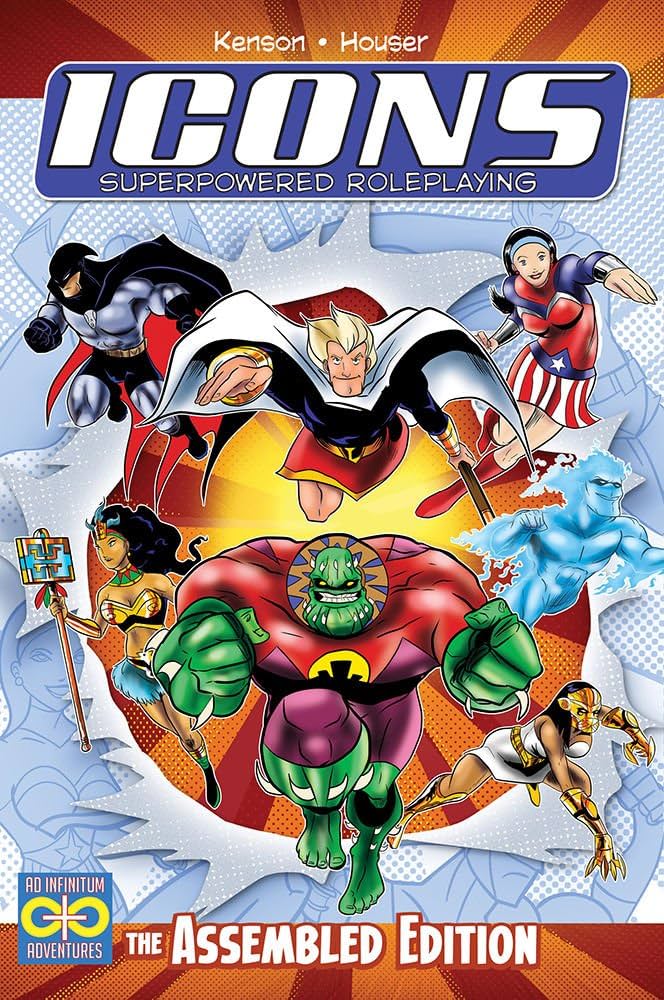
ICONS (yes, it seems to be always capitalized, though it’s not an acronym… yell it with me now) is the brainchild of Steve Kenson, longtime TTRPG veteran and original designer of Mutants & Masterminds, probably the most popular and played superhero game of all time. In listening to interviews with Steve, it sounds like he was trying, with ICONS, to create a more accessible game than M&M, something that gamers of all ages could jump into with minimal start-up costs. This goal is further emphasized by the presentation of the core book (the “Assembled Edition” is the 2014 revised book, and seems to be the definitive ruleset), which features Saturday Morning Cartoon-like artwork from Dan Houser and is pocket-sized. Everything about ICONS is non-threatening and kiddie, which I’ll admit for me at first was a turn-off.

The bones of the game are steeped in Fate Core, a rules-light, narrative-focused system. Every opposed test includes rolling a single d6, adding the value of the Attribute or Power you’re using (always on a scale of 1 to 10), and comparing the result to another single d6 plus the opposing ability. Dead easy. Results of these tests have a narrative range (seven possible outcomes, from “Massive Success” to “Massive Failure”). Each character also has descriptive, non-numerical Qualities (e.g. “I can do this all day” or “All-American hero” might be on Captain America’s sheet), and players or the GM can invoke (using Determination points, the game’s metacurrency) these Qualities either for or against the PC. Stamina is the “hit points” stat, a combination of a character’s Strength and Willpower. Range and time in combat are both abstracted. All these points are like the previous two games I’ve explored and seem characteristic of many narrative games. I’ve read some reviews annoyed that ICONS uses many of the same mechanics as Fate Core but changes the terms unnecessarily. Since I’ve not played any Fate proper games, I’m blissfully unaware of these issues.

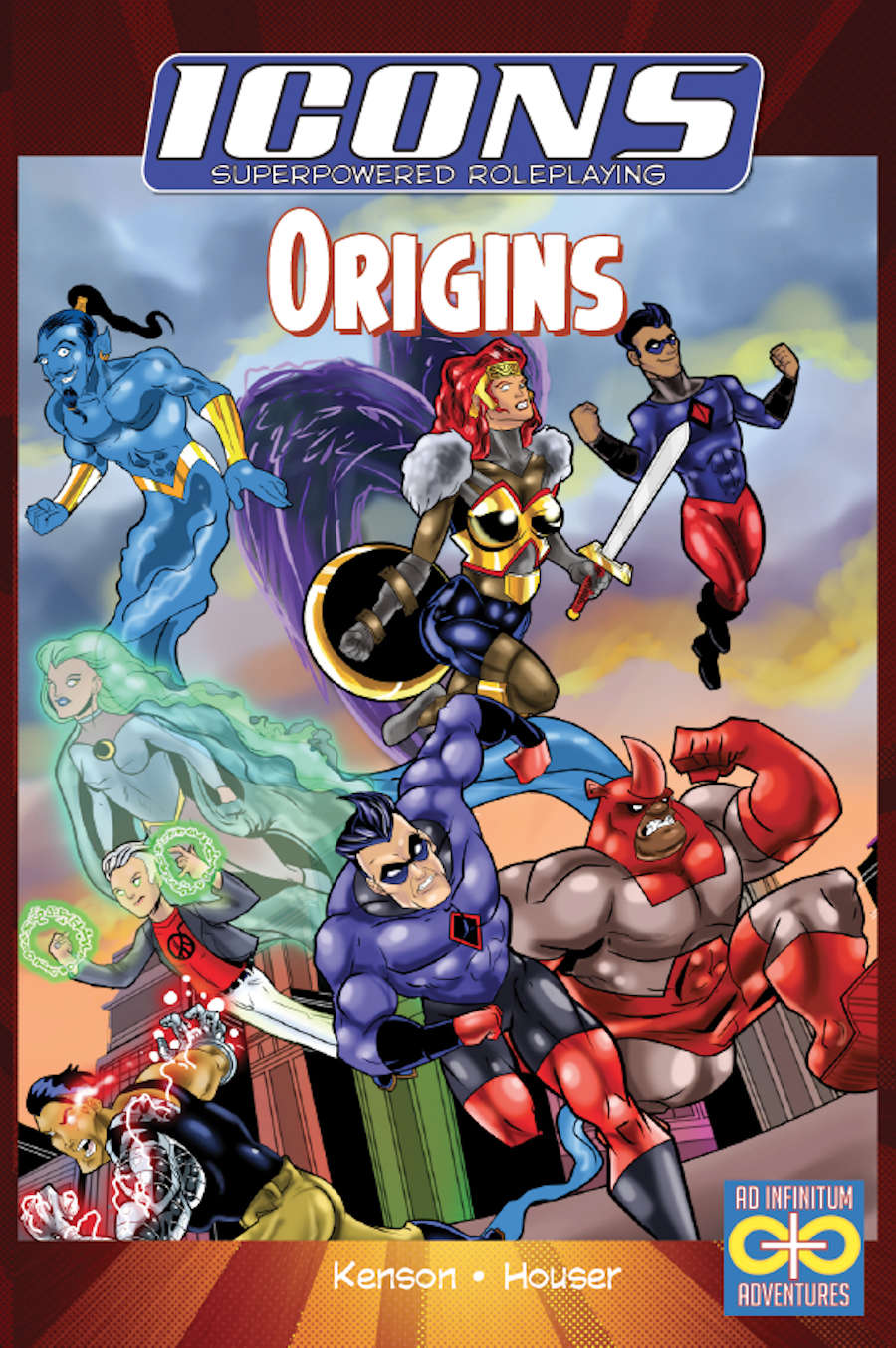
Sitting on top of these relatively basic mechanics are a metric ton of wrinkles and optional rules that make ICONS deceptively deep. Characters can combine effort to overcome otherwise-impossible opposing numbers, or the GM can set up “pyramid tests,” which are multistep challenges that simulate things like stopping trains from colliding. Players can retcon the fiction and use their powers for creative stunts. The game’s lethality is a choice, as are things like sustaining injuries. The list goes on and on, and that’s just from the 2014 rulebook. Over the past ten years, a metric ton of splatbooks, supplements, and additions have piled up, much like my bae Dungeon Crawl Classics. Unlike DCC, Steve Kenson has managed to collect many supplements into a few “greatest hits” books. For me, the best are Great Power, which adds a bunch of new powers to the base game, Origins, which expands the character creation process and introduces Knacks and Specialties, and ICONS Presents!, a 2019 summary of all sorts of variant rules and additions to the game. Included in this last book is a whole section on playing ICONS in a fantasy setting!

Character creation in ICONS is meant to be random (though there’s an optional point-buy way of making characters, the reverse situation from the last two games I explored) and is supposed to go quickly. So… let’s try it out!

To simulate what I want to do in my game, I’m dipping into ICONS Presents! for the alternate “fantasy hero” tables. I’m also going to roll on the very fun Background tables in Origins to flesh out the character. And, to fully stretch all the supplements I own, I’ll also use the expanded Powers tables in Great Power.

My first table is Origin, and I roll a 1 on a d6: My character is Arcane, with an innate gift for magical power. I also receive an additional arcane Knack.

I next roll on Archetype, a get a 5 on a d6: Stealth, adding +2 to my Coordination and Awareness. Cool. It’s an arcane trickster or thief of some kind.

Now it’s time to roll up my Attributes on 2d6, consulting a slightly modified table for Fantasy. Here is what I roll:

Prowess (ability to fight): 3 (Average)

Coordination: 6+2 from my Origin: 8 (Amazing)

Strength: 6 (Great)

Intellect: 6 (Great)

Awareness: 5+2: 7 (Incredible)

Willpower: 2 (Poor)

I then get to swap two Attributes, and I’ll swap Strength and Willpower. Whoever this person is, they’ll be a slight, agile, headstrong person, but not particularly musclebound.

Next I would roll for powers, but the Fantasy rules say to pick a few Knacks instead. I’m actually going to do a bit of both, selecting 2 each of Knacks and Specialties (their “fantasy” profession and skills), then rolling for a single Power.

For our magician-thief, I’ll pick Vanish and Escape Artist as Knacks, plus Stealth and Occult as Specialties. My character was, I’ve decided (at least until rolling up the background information), an Indiana Jones-like relic hunter before acquiring otherworldly abilities.

What was that Power? I roll “Offensive” and then “Dazzle.” My character can overwhelm an opponent’s senses somehow. Cool, and mighty handy given a PC who wants to mostly get out of combat instead of fight.

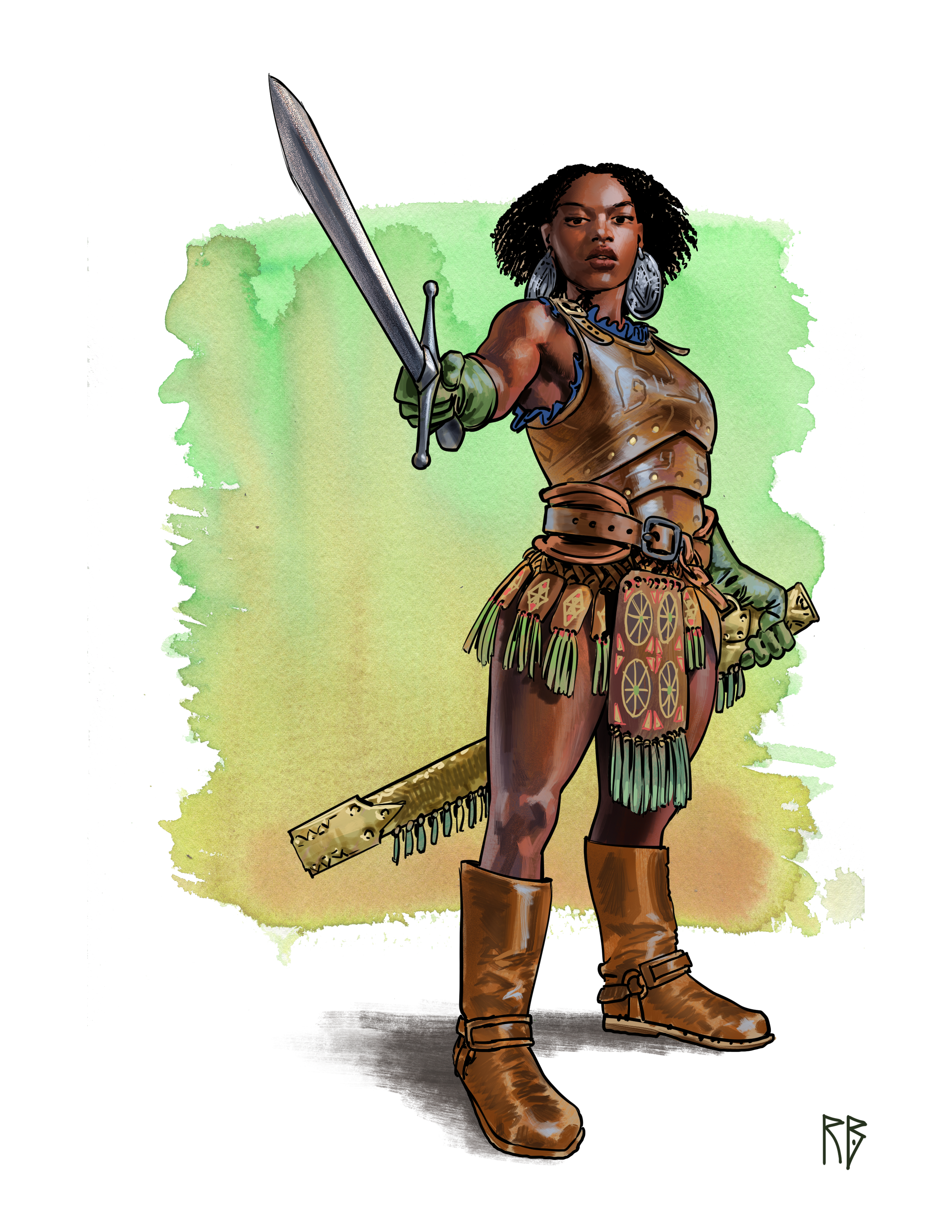
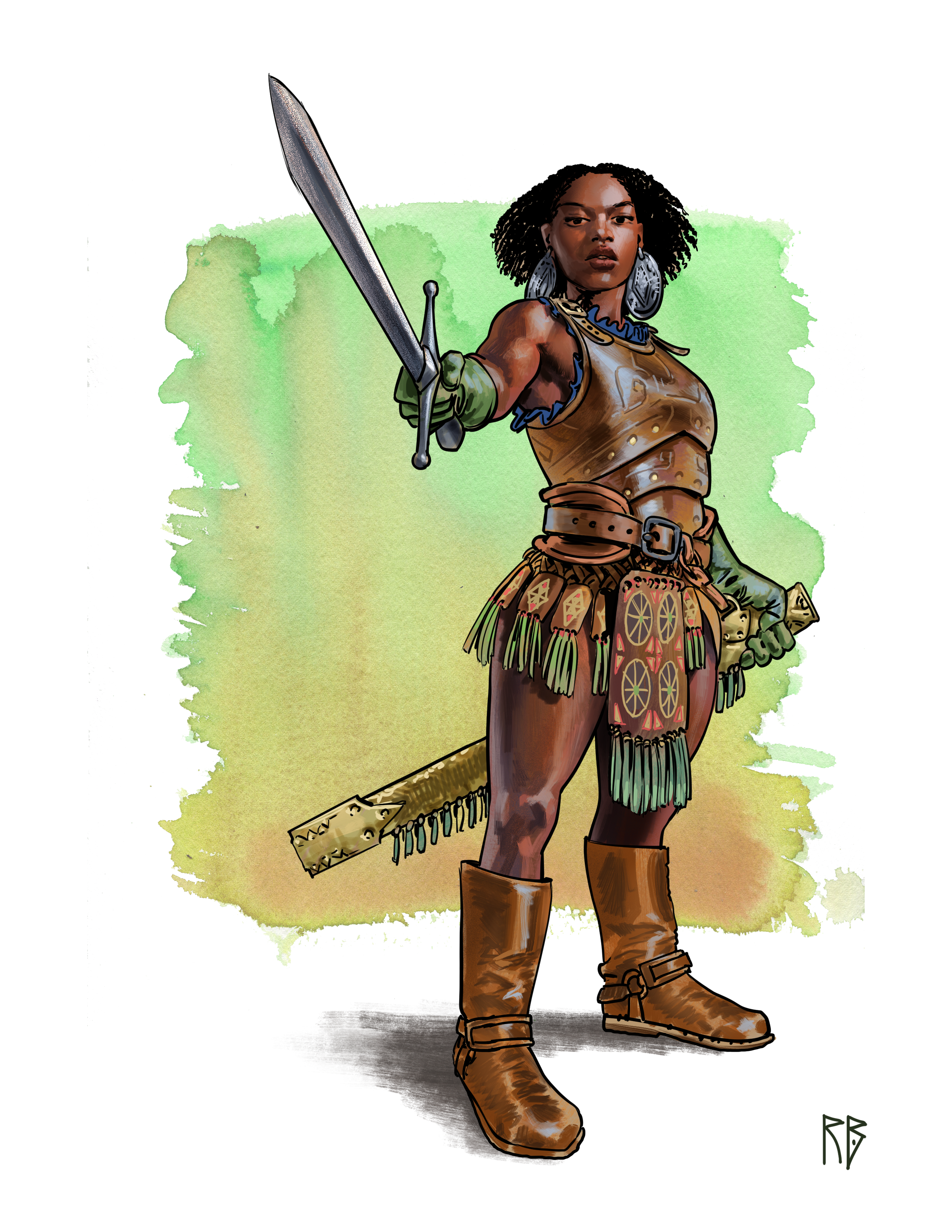
Now I turn to rolling up my character’s Background. After a whole bunch of rolls, I come up with a female, pale-skinned, seventeen-year-old who is a fun-loving and playful person. She values a mentor/teacher and yearns for love. She believes that people need leadership and guidance. She grew up in a rural community and was well-treated, at least until her entire family was betrayed by a loved one and lost everything. She then found a mentor and a windfall. Excellent stuff, random tables! I’ve got her in my mind, and as such writing her origin and Qualities is simple.

Here’s where I ended up:

The character creation process took me quite a bit longer than, say, Prowlers & Paragons, but that’s partly because I was flipping through four separate books. I have no doubt that it would become a fast process with practice. More importantly, it was fun, and generated a character that I could immediately drop into the story I’m wanting to tell.

Why ICONS Works For Me

It’s clear that Steve Kenson has put a lot of love over the past dozen years into ICONS, and it’s built on a Fate Core system that’s tried and true. As a result, ICONS is an intuitive system that is not only easy to understand but easy to tweak. I made a judgment call on what to use between standard superhero random character generation and the fantasy alternate tables without feeling self-conscious about the decision, even though Meri was my first character. Because the game always comes down to a single d6 role plus a single value, there’s not a lot to bog down speed of play. I love that the timekeeping system out of combat is divided into chapters, issues, and series, which sounds perfect for serial fiction. Which is all to say that ICONS’ core mechanics are easy to digest, easy to use, and I can easily see it working in my homebrewed world. With the four books I already own, I’m ready to play.

Although I didn’t think of it as a requirement when I began this process, I’m finding that random character generation is foundational to me being interested in the character creation process. Recall that I’m coming off six full months of Dungeon Crawl Classics, which is likely the most random-table heavy game in any genre. So much of solo play is combating my paranoia about overly railroading the story, and the randomness of rolls is what generates my surprise and delight. I’m already more interested in the character I made above than either of the Evlyn Towers I made with point-buy systems.

The level of support for ICONS is also heartening. There are tons of books, from both Ad Infinitum Adventures (Steve’s company) and third parties. I found no less than a dozen form-fillable PDF character sheets online, for example. There are Wiki and Facebook pages and a Discord server. The community feels dormant, but there’s still a faint heartbeat there. And hey… there’s even VTT support! I haven’t used Fantasy Grounds VTT before and have heard that it’s an expensive endeavor, but it’s nice to know that it’s there if I need it.

My ICONS Hesitations

My two hesitations on ICONS are related. First, because everything in the game is based on a 10-point power scale and every roll is a single d6, the power spread in the game doesn’t feel huge. As a result, I’ve read some forum comments that it might be a better game for low- and mid-level play instead of cosmic-threat level. It’s not a game that has particular rules for “street level” or “superheroic” play, because I don’t think those distinctions really exist in ICONS.

…Which means that it’s difficult to envision what “leveling up” looks like, when what I’m seeking are clear jumps in power once the character hit story milestones. There’s a section in the rulebook that discusses how to give Minor, Moderate, and Major Achievements, and Major Achievements (increasing Determination, adding Powers, etc.) might be enough, especially if I ignore the other two. It’s an open question, though, and one I probably wouldn’t sort out until I was already deeply invested timewise into my campaign. It would be a shame to get six months into a solo campaign, only to realize that I’m going to have to switch systems to fully realize the higher levels of play I had intended when I began.

I also don’t love juggling so many books to play, which is the same complaint I had with DCC. But I can’t really ding other systems for not having enough supplemental material and then complain that ICONS has too much material that I want to use. Consider this a minor irritant, not a reason to play another system.

One Game to Rule Them All

Of the three lightweight systems I’ve explored these past few weeks, it’s clear to me that ICONS is the best fit for what I want to do. The question is: Does moving it into first position on my list mean that I absolutely won’t come back to Supers! RED? For now, no. Yes, ICONS has the better character creation system, and far better support and materials. Supers! RED is different enough mechanically, though, that I may end up deciding that I want its narrative flexibility (particularly how it handles multiple Resistances) and the clear ladder of power levels. Heck, I could even see using the random tables in ICONS to generate the concepts for Supers! RED. So for now, I’ll keep both on the list:

Top Contender: ICONS

Second: Supers! RED

Not currently in consideration:

Choosing a Supers System, Part 5

Portal Under the Stars, Chapter 2

Introduction: Portal Under the Stars Playthrough

Portal Under the Stars, Chapter 1

Art by Antal Keninger

Councilwoman Leda Astford stared through the open door in wonder. She could feel the other Graymoor residents pressed beside and behind her in the cramped corridor, but her full attention was fixed ahead.

Old Bert Teahill had claimed that beyond the magical portal lay “jewels and fine steel spears.” There were crystals on the now-open door, dotting the wooden surface in star-like patterns, which she supposed could be mistaken for jewels. And spears?

Yes, there were certainly spears.

In a rectangular room, perhaps ten feet from the open doorway, straight ahead, was another stout, wooden door banded in iron, no crystals upon its surface. Four armored iron statues, two on each side, flanked that door. Each statue depicted a person–human men and women, judging by the physiques, ears, and roughly carved faces–in enameled armor holding a black spear, arm cocked back as if ready to throw. All four deadly spear-tips aimed directly at the open doorway in which Leda stood.

It was Bern Erswood, the herbalist, who pulled her aside forcefully.

“Leda! If those things loose those spears, you’re as dead as Mythey, that’s for sure,” he whispered fiercely, admonishing.

“If it were a trap,” sniffed Egerth Mayhurst, the unpleasant jeweler, panting, flattened himself on the opposite side of the hallway as Leda and Bern. His bald pate gleamed with sweat in the pale blue light. “It would have triggered, yes? Perhaps it was meant for someone who forced the door open before it was unlocked.”

“Well then, by alla’ means,” the dwarf, Umur Pearlhammer, grumbled from behind them. “Go on in and try the next door, yeah?”

“Absolutely not!” Egert blanched.

“I’ll- I’ll do it,” stammered Little Gyles, Bert’s grandson. He planted his pitchfork and pushed forward.

“No, son,” Umur and Bern said almost simultaneously, then chuckled at one another.

“Bravest one here is the wee lad,” Umur shook his head. “Step aside, step aside. We’re here. Might as well see what’s behind that next door since we’ve come alla’ this way.”

“I’ll join you, Master Pearlhammer,” Bern smiled, and the two men stepped into the room, shoulder to shoulder. Undaunted, Little Gyles was right on their heels.

Nothing happened.

Leda exhaled loudly at the same time as several others, not realizing she had been holding her breath.

The adventure text says that the statues “wait for an opportune moment, then suddenly hurl their spears at the characters.” Since I’m controlling the actions of both the traps and the PCs, it seems unfair to choose when that moment occurs. Instead, I’ll leave it up to chance.

I’ll roll a d4 to see how many cohorts of three individuals enter the room before the spears fly. I already have their marching order down on a piece of paper.

I roll a 1. Dang. I like all three of those characters in the lead!

Each statue attacks with a +2 against the PC’s Armor Class of 10 (12 for Bern, who is wearing Mythey’s leather armor), but poor Gyles is in the doorway, so any that target him get a whopping +4. They do 1d8 damage each. I’ll say one spear flies at each PCs, and two at Gyles unless the first one kills him. If so, the fourth spear will fly through the doorway at either Leda or Egerth at a +2 (what? You thought the point-of-view character Leda had plot armor? The dice decide the story, and everyone here is as fragile as a… well, as a villager thrown into a magical, alien portal.). Here goes…

The first spear flies at Umur: (19+2) 21, and hits for 2 damage. Umur has 3 hp… whew!

The next at Bern: (6+2) 8, sails wide of Bern. Whew again!

Now at Gyles: (8+4) 12, which hits for 3 damage. The boy only has 1 hp, sadly. Brutal.

That means the fourth spear targets either Leda (1-3 on a d6) or Egerth (4-6): A 4 is Egerth. It rolls a (7+2) 9 and barely misses.

Suddenly, with a coordinated, metallic THUNK! and a quick whirring noise, the four statues released their spears in unison. Before Leda and the others could even gasp, one had buried itself in Umur’s broad shoulder, another had clattered against the wall behind Bern, and a third had sailed through the doorway, narrowly missing Egerth’s leg and skittering across the stone floor amidst the others. The dwarf cried out in pain and stagged just as the jeweler clawed at the wall backwards, into the pressed crowd.

“No!” Bern yelled, much to Leda’s confusion. And then Little Gyles Teahill, the boy with the strength of a grown man, asked specifically to be there by his grandfather, fell back into her arms. A spear shaft protruded from the middle of his chest.

Gyles didn’t mutter last words or even make a single sound. The sleek, black spear must have killed him instantly. A bright bloom of red blossomed on the front of his homespun shirt, his eyes wide, surprised, and glassy. The pitchfork the boy had been clutching clattered to the floor.

For a long while, there was screaming, crying, consoling, and grief. Leda herself carried Gyles’ body to the end of the corridor and outside, placing him gently on the open ground in the nighttime air. She closed his eyes and said a prayer that Justicia, goddess of justice and mercy, watch over him. She had promised Bert that she would keep the boy safe and had utterly failed. The weight of that failure threatened to crush her into a ball on the cold dirt. Instead, she stood and planted fists on hips, staring at Little Gyles to memorize his every feature. Something cold and hard formed along her spine, keeping the tears at bay.

Bern, meanwhile, tried his best to tend to Umur’s shoulder wound, and managed at least to get the bleeding staunched. The dwarf looked pale and weak now, his voice strained. The others tried to convince the dwarf to turn back and head back to Graymoor, but he set his jaw stubbornly.

“You say me, but we should alla’ go back,” he grumbled. “We’ve found only death here.”

“We keep on,” Leda said decisively, joining them after her time outside. “They’ve taken Little Gyles, these bastards. We go in, we take what we can, and we ensure his death was not in vain.”

The group quickly realized that the black, sleek spears were better weapons than any of them wielded. Bern and Egerth were the first to take theirs, and after some discussion the Haffoot siblings, Ethys and Giliam, gripped the other two. The halfling pair, who made their living trading tea leaves in a small boat up and down the Teawood River, looked particularly small carrying the long, wicked weapons. When offered one, Finasaer Doladris explained that, as an elf, he could not touch the iron of the spears for long, but he did pick up Little Gyles’ wood-shafted pitchfork. Even the scholar, it seemed, had recognized the danger of their situation.

It was Erin Wywood, the sharp-witted minstrel and councilman’s granddaughter, who recognized that the armor on each statue was not part of the sculptures and could be removed. It took what felt like ages, but together they puzzled out how to unstrap the pieces from the unmoving iron and help others don them. Umur looked the most natural in the black metal, even though his dwarven physique forced him to exclude some of the original pieces. Hilda Breadon, the stocky baker, followed Umur’s lead and made hers fit in much the same way. Erin donned a full, scaled suit, which the others thought only fair since she had discovered it in the first place. And, thanks to the particular urging of Umur and Bern, Leda took the final suit of armor herself. She was unaccustomed to wearing anything but simple cloth, though she found the weight somehow comforting.

When everything was sorted, only the haberdasher Veric Cayfield found himself armor- and weapon-less. He smiled brightly and said that he didn’t mind… it was fun to help get the others fitted into armor, and he would feel ridiculous holding a spear.

“I have my scissors if it comes to fighting,” the halfling announced with cheer, patting a pouch at his hip. “But I don’t think it will. This strange place beyond the portal is full of traps, not monsters. What do you think the traps are protecting, do you figure?”

“And who was the principal architect of this demesne?” Finasaer wondered aloud, tapping his lip. “Fascinating.”

At that, the group grew quiet and looked warily at the closed, iron-banded door. After the experience of the last two doors and the talk of traps and mysterious builders, no one seemed especially eager to go first.

Filled with visions of Little Gyles’ glassy-eyed stare, Leda sighed and told the others to stand aside. “From now on, I’ll go first,” she announced. “Everyone keep sharp and have your eyes open. If you see something, speak up.” The others murmured assent, even bitter-faced Egerth. The smell of sour, nervous sweat filled the room. Leda’s gauntleted hand reached out to the door, she exhaled sharply, and tried the latch.

It clicked and the door swung open. Leda winced, expecting pain. Nothing happened.

Beyond the door was a large, square room with marble flooring and polished walls. At the far end of the space was a towering granite statue of a man. It was a detailed work of artistry Leda could hardly fathom, and must have been thirty feet tall. The statue’s eyes looked somehow intelligent, and his barrel-chested body was carved to show him wearing animal hides and necklaces from which dangled numerous amulets and charms. A heavy, stone sword was carved to hang at the man’s hip. Leda thought he looked both like a barbarian warrior and shaman, though from where or when she could not begin to guess.

One arm of the statue was outstretched, its index finger pointed accusingly at the doorway in which Leda stood. After the room with the spear-throwing statues, it was a nerve-wracking pose. She quickly stepped into the spacious room and aside.

“Come on,” she said to the others. “There are more doors here.”

Indeed, the square room had three additional doors, all identical to the one she’d just opened, at each wall’s midpoint. Four sides, four doors, one enormous statue. Otherwise, the room was empty.

Time to see if anyone notices some other features of the room with an Intelligence check, at DC 12. I’ll give the three high-Int PCs and Leda, as the first one in, a chance.

Erin for once misses an Intelligence check at (2+1) 3.  Ethys also rolls a (2+1) 3. Leda rolls a (12-1) 11. Thankfully Umur rolls a (15+1) 16, which makes sense since he’s the stonemason of the town.

As everyone slowly filed in, boots echoing on the marble floor, Umur peered up and around, studying the statue and room’s construction.

“Careful,” he growled. “See those scorch marks on the floor and walls? And look here, this statue weighs tons but there’s grease here on the base where it meets the foundation.”

“What does that mean, master stonemason?” Bern asked nervously.

“It means, methinks, that the statue rotates and shoots fire, is my guess,” he rubbed thick fingers in his beard, frowning. “Though the masonry involved in such a thing, well… it boggles the mind.”

“Traps, not monsters,” Veric said from the back of the group.

At that, everyone froze and looked wide-eyed up at the enormous barbarian shaman, its finger outstretched accusingly at the empty, open doorway.

“What– what do you think activates it?” Erin Wywood whispered. Still no one moved.

Umur continued rubbing at his beard, eyes searching. “Could be pressure plates on the floor, s’pose, but I donna’ see any. Could be openin’ the doors, but it didn’t scorch us when we came in, did it?”

“Eyes open, everyone,” Leda tried to keep her voice from trembling as she called out. This enameled black armor would not help her at all when engulfed in flame. “And let’s not clump together.”

For the next several minutes, the ten Graymoor residents carefully, carefully spread out and searched the room. Other than discovering more evidence of fire to support Umur’s theory, they found nothing.

“Maybe… it’s broken?” Giliam Haffoot, the brother, asked, rubbing sweat from his brow with a sleeve. It was well known that his sister Ethys was the brains of their boating operation and he was there for the labor. “Been here for years, innit?”

“We have no idea how long,” Bern mused. “We could be standing in another plane of existence, outside of time, even on the surface of that distant Empty Star. That statue could be of the god who created everything, ever, all the stars and worlds. Who knows? This place is a wonder.”

“A miracle,” Erin the minstrel breathed, eyes wide.

“Let’s assume,” Umur murmured through teeth still clenched in pain. “That it will roast anyone who tries to open a door. What do we do?”

They all contemplated.

“We could open all three doors at the same time,” Ethys Haffoot tried, planting the tall spear on the stone to lean on it. “Maybe the statue will get confused, then.”

“Or only cooks one of you, at the least, while the others escape,” Egerth mused. Leda frowned that he said “you” and not “us.”

“And then what? The rest of us run to a door where it ain’t pointin’?” Giliam asked, his scrubby face scrunched in thought. “Sort of a shit plan, though, innit?”

“Do you have a better one, Master Haffoot?” Bern asked. The halfling seemed surprised to be asked and looked absolutely dumbfounded how to respond. Neither he nor the others could come up with an alternate suggestion on how to proceed.

With much apprehension, then, they assembled themselves. Leda would open the western door (none of them knew if it were truly west, but it helped to have a description, so they pretended that the door from which they’d come was south), Umur the northern one, and Giliam surprisingly volunteered for the eastern door. The others of them stood near one of the doors, Bern and Finasaer with Leda, Erin and Hilda with Umur, and finally Egerth and the two other halflings joining Giliam.

“Ready?” Leda called out, placing her hand on the handle of the western door. As she did so, a whirring noise began building within the room. “Now!”

I tried to puzzle out who would go with whom here. Bern the herbalist has been protective of Leda, and the elf Finasaer has seemed to gravitate to her side as well. Erin, one of the smartest of the group, will follow one of the other smarties in Umur, and Hilda is a fellow craftsperson (as much as bakers and stonemasons are similar) so would feel some kinship with the dwarf. Ethys would clearly stick near her brother, and it makes sense that Veric would want to be near the other halflings. Egerth, meanwhile, calculates that a group of four means he is less likely to be targeted by the statue than if he were in a group of three.

Egerth’s logic, it turns out, dooms his group. The statue targets the largest group first, and whoever is opening the door. It shoots out a gout of flame, and rolls a whopping (19+6) 25, for 5 damage. Giliam only has 2 hp, so he’s dead.

Into combat initiative we go… The PCs are lucky and most rolled higher than the barbarian-shaman statue.

In surprising synchronicity, the three figures at the door clasped the latches and opened their respective doors. As Umur had predicted, the immense stone figure rotated on its base with a sound of grinding rock so deep that they all felt it in their bellies more than heard it. Ethys and Veric shouted warnings, but too late. A fountain of fire erupted from the statue’s fingertip, engulfing poor Giliam Haffoot. The man shrieked and rolled on the stone as he died.

Veric, the haberdasher with neither weapon nor armor, did not pause. Quicker than Leda knew the man could move, he sprinted on short legs away from the flaming Giliam and towards Umur, diving through the open northern door. Umur, wide-eyed, followed the halfling, with Hilda right on his heels.

“In! In!” Bern shouted over the screams, and he pushed himself and Leda through the western doorway.

Egerth Mayhust, Graymoor’s jeweler, stumbled past the burning, shrieking Giliam Haffoot and into the eastern opening. Then, much to Ethys Haffoot’s utter astonishment, slammed the door closed behind him, right in her face.

There are now three villagers remaining when it is the statue’s turn: Finasaer the elf at the west, Erin Wywood the minstrel at the north, and Ethys Haffoot (facing a closed door) to the east. Since there is no group larger than the rest, we’ll roll randomly who the statue targets next. I’ll roll a d6 (1-2, 3-4, 5-6) and get a 2.

The statue rolls a (14+6) 20, which easily hits the elf. He takes 3 fire damage, leaving him with 1 hp. He is also burning, though, and will take an additional 1d6 of damage, killing him, unless he can succeed at a DC10 Reflex save. I’ll roll that now: Finasaer gets a 6.

The room seemed to shudder as the thirty-foot stone figure pivoted in its base, finger swiveling to the sage Finasaer Doladris, the only elf in Graymoor’s memory.

“No, wait!” he held up his hands, dropping Little Gyles’ pitchfork, before the WHOOSH! of fire jetted from the fingertip to surround him.

Through the open doorway, Leda could see the elf rolling around in his once-sparkling robes, frantically trying to extinguish the flames. Yet within moments he was nothing more than a burning pile, like Giliam Haffoot across the room.

A Haffoot family trait, the siblings had long told the Graymoor residents, was a single club foot. Both Giliam and Ethys had one, lending credence to the claim. Across the wide room, Leda and Ethys locked eyes and the councilwoman could almost feel her mind working out whether she could, on one lame foot, make the distance between them. The quick-witted halfling apparently decided she couldn’t, and ran in a galloping trot to the north using the spear as a makeshift crutch, out of Leda’s view.

“Miss Astford!” a small voice called out clearly from the direction in which Ethys had run. It was Veric, the haberdasher.

“Yes! I’m here! Me and Bern!”

“Quick! Run to us! So we’re not split!”

She turned to Bern at her side and the two shared a quick nod. As one they threw themselves out, leaping over the charred, flaming lump of Finasaer and towards the north. The room shuddered and rumbled as the statue began tracking their movement. She did not even pause to take in the surroundings behind the western door before exiting it.

Damn this armor! Leda thought wildly. Bern, in Mythey’s leathers, sprinted past her, around the statue’s base and into the northern opening. Leda stumbled, feeling clumsy with the weight of the enameled, black metal strapped everywhere. Ahead she could see a group of huddled faces, urging her on. Veric and Umur and Erin, all reaching out to her from the doorway as she panted towards them, each step heavy.

The scale mail that Leda (and Umur, Erin, and Hilda) is wearing decreases her movement by 5’ per round. So while Bern can dash from the eastern hallway to the northern in one turn, Leda cannot. She gets right to the north entrance, and the statue gets to make a strike against her. The only hope is that Leda’s AC is higher than everyone else’s, +4 for the armor and +2 for her high Agility. So her AC is 16, meaning the statue has just over a 50% chance of hitting. Oh boy.

The statue rolls a (13+6) 19, hitting. I literally winced when I rolled the damage, but it’s only 2! That’s half of Leda’s hit points, and now she needs to pass a DC 10 Reflex save. Now, scale mail also provides a “Check Penalty” for a variety of activities involving dexterity. I can’t find in the rulebook if this pertains to Reflex saves, though. A quick web search tells me that, while slightly disputed, no. Leda’s +2 Reflex save bonus is intact. So she has to only roll an 8 or better…

She rolls a 12. Yes! Whew.

Joseph Goodman, author of Dungeon Crawl Classics and the adventure The Portal Under the Stars has said that the statue room is incredibly deadly, able to wipe out whole parties of Level-0 characters if they aren’t careful. He’s not kidding.

“Come on!” Umur growled from mere feet away. “Run, lass!”

The others dove for cover as the sound of the flames fountained from behind her. Her back and legs seared with heat and she jumped with her last bit of strength towards the now-empty doorway. Leda landed painfully, with a clatter of armor, and suddenly multiple hands were all over her, rolling her and helping to extinguish the flames. Someone slammed the door shut, leaving only the sound of several people panting and the smell of burnt hair hanging in the air.

 For several moments, Leda gasped for breath and lay her cheek on the stone floor beneath her. Her father’s longsword, never used once in her life, jammed painfully beneath her hip. Indeed, everything hurt, especially her back and legs. But she was alive, thank the gods. She squeezed both eyes shut and thought of Little Gyles.

Eventually, she rolled to her knees and, grimacing, stood. Umur sat gasping, his back against the door. She could see the dwarf’s bandaged shoulder through the gaps in his armor and it was soaked in fresh blood. Bern, Erin, Hilda, Ethys, and Veric all sat or stood nearby, looking stunned and out of breath. Seven of them, where they had once been twelve.

It was only in glancing at her companions that she first became aware of the shimmering, ethereal light in the room. She gasped as she looked beyond their group.

“What– what is this place?” she whispered.

Portal Under the Stars, Chapter 3

Gaming at Fifty One

Today is a (rather long) State of the Union address on my gaming life.

As best as I can remember, I started playing tabletop role-playing games (or TTRPGs) in Fifth Grade, in 1983, which would make me ten years old. It was one of those phenomena where a friend–though I can’t remember who Gamer Zero was–received a boxed set as a Christmas gift and we all dove in. Soon we all asked our parents to supply us with books, dice, graph paper, and pencils. Throughout the Spring, we played a mix of Basic Dungeons & Dragons and Advanced Dungeons & Dragons, not understanding that they were two largely different games. It didn’t really matter, though… what we actually played was some rules-light, make-it-up-as-you-go game that didn’t even try to involve the many complex tables in the books we didn’t understand. Usually our first-level characters wielded something like a +5 Sword of Dragon Slaying that could cut through anything.

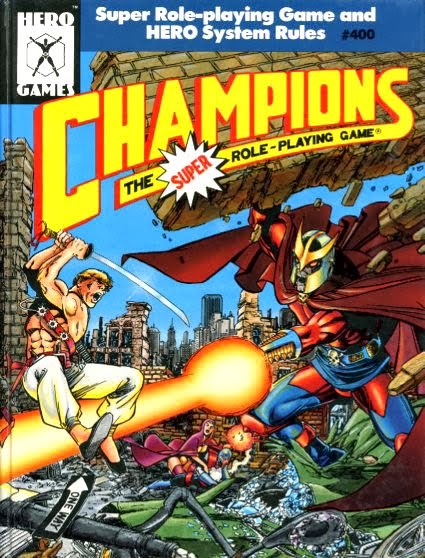
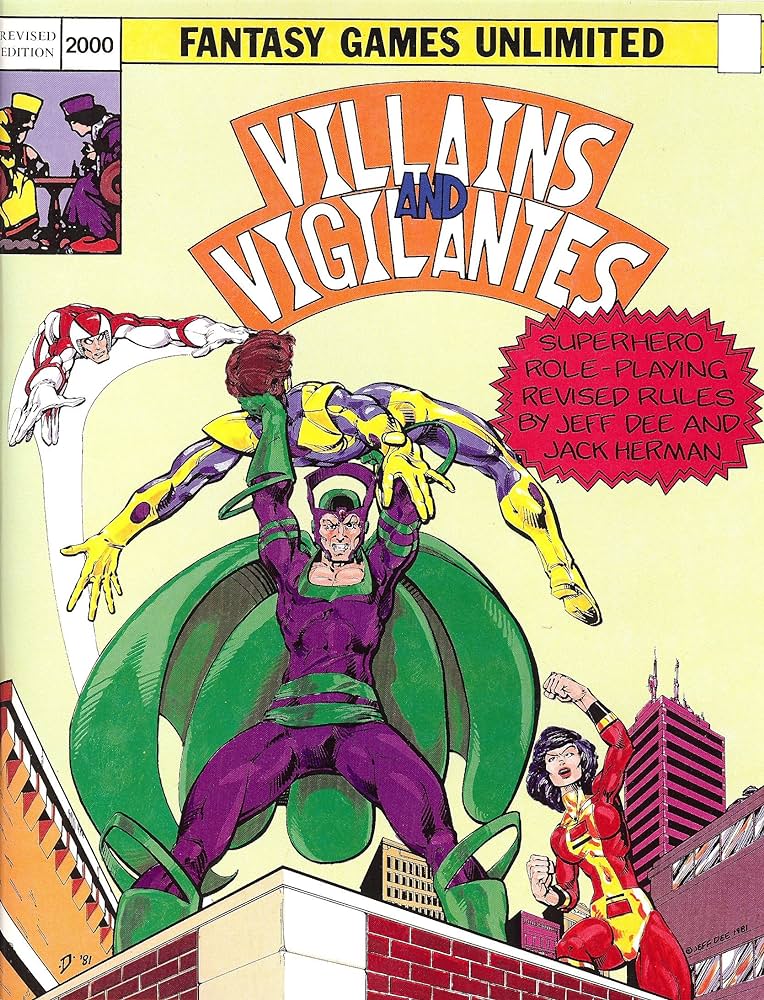
As we transitioned to middle school, a subset of that original group began playing anything we could get our hands on. The biggest boon to our fledgling group was my buddy Russell’s older brother Jim, who was happy to run our games for us. I’m not sure this is an exhaustive list, but I remember playing a lot of Tunnels & Trolls, Gamma World, Car Wars, Top Secret, Marvel Superheroes, Villains & Vigilantes, Teenage Mutant Ninja Turtles (TMNT), Heroes Unlimited, Superworld, Champions, GURPS, and, yes, a good helping of D&D (this time using the rules and their published modules). Just seeing the covers of those games triggers a flood of nostalgic make-believe happiness. Those were fun times.

I had a new group of friends in high school and quickly introduced them to the hobby. We almost exclusively played superhero games, primarily Villains & Vigilantes and Champions, though we sprinkled in some TMNT, Golden Heroes, DC Heroes, and Super Villains as well. My good friend Ted ran us through a particularly memorable V&V campaign, which clued me into how cool a longform set of adventures with the same characters can be.

We all scattered to different colleges, and I met new TTRPG enthusiasts. Throughout my time at Occidental College, I ran a monthly Champions campaign, even drawing the “comic covers” for each session we played as keepsakes. At that point, Champions was my only game, and I was deep into the HERO System and its math-heavy fun.

Then it was off to graduate school, where I met both my wife and a little game called Magic: the Gathering, which would be the object of my obsession for years. Then my working career started to take off, I had kids, we moved around, and, as these things do, TTRPGs faded into the background of my life for nearly two decades. I remember trying to organize a D&D adventure with my wife and some friends once or twice during that time, but it never stuck. During that time, I bought-and-sold the D&D 3E and 3.5 rulebooks without really doing anything with them.

In 2018, I took a year off work to recoup, then in 2019 started a job in San Francisco that, unlike most of my previous roles, didn’t require heavy travel. Around that time, I started listening to a ton of podcasts, including the Glass Cannon Podcast. The TTRPG bug started inching its way into my brain, and I began to seek out my local game stores to see if there were people with whom I could play. After some false starts with Dungeons & Dragons 5th Edition and Pathfinder at local stores, I found a group that was playing D&D 5E and were happy to have me join. They were interested in switching to Pathfinder 2nd Edition once it was released, and eventually I GMed us through the game’s first 1-20 Adventure Path, Age of Ashes over three years. During those years we took occasional detours, experimenting with Blades in the Dark, Symbaroum, Call of Cthulhu, Savage Worlds, and, at my urging, even returned to supers for a Sentinel Comics RPG one-shot.

That gaming group was my first experience with serious personality clashes in TTRPG groups. I ended up feeling picked on by a person there who was close friends with two other members, and after trying-and-failing multiple times to talk it out, my best recourse was to leave. Suffice it to say, it was the only real negative chapter I’ve had with TTRPGs, which have otherwise been a source of unqualified joy in my life.

For months I was genuinely wounded by my abandoned group. Thankfully the global pandemic had introduced me to virtual tabletops and online games. Eventually I found a couple fun virtual tables, including a delightful online group of Europeans that has met weekly now for almost two years. We mostly play PF2E, but have rotated GMs and done several sessions of Call of Cthulhu, Warhammer Fantasy, and most recently Mörk Borg. On our “really want to play list” are Vaesen, Dragonbane, Traveller, Forbidden Lands, Dungeon World, Lancer, Savage Worlds, and countless others.

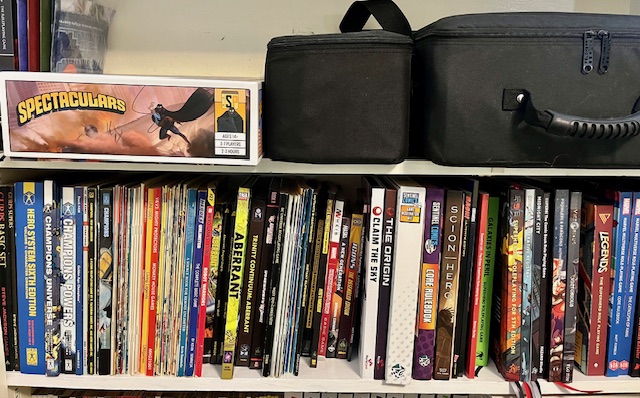
It’s fair to say that, at age fifty-one, I’m in the midst of my Second TTRPG Renaissance. At the same time, the whole TTRPG industry is going through its own Renaissance, with intriguing new games popping up seemingly every week. Not surprisingly, my game shelf has exploded. I now own most of the games listed above, plus a metric ton of others I’ve Kickstarted, found in bargain bins or eBay auctions, or used birthday gift certificates on. I’ve even sold old game books and given my college-age son my D&D 5E collection to make room for them in my house.

There are two major differences between my TTRPG life as a gray-bearded geezer compared to my young, wispy-mustachioed self. The most obvious one is that it’s more difficult to find a group with which to play. Throughout middle school, high school, and college, I rolled dice with my core group of friends. Most of our interests were shared and we spent a ton of time together… easy squeezy. These days, in contrast, the vast majority of my contemporaries have neither the time for, nor interest in, TTRPGs. While online platforms make the pool of potential players wider, these online groups are ephemeral. It’s clear to me that if one of my current group members (all of whom are twenty years younger than me) has kids, takes a new job, or moves, it probably spells the end of the group… that sort of “life event disruption” can happen with any group, but somehow in-person groups feel stickier because the investment feels somehow deeper. Meanwhile, I’ve tried to think of how to conjure another reliable, fun in-person group and failed to come up with a solution.

The second difference is in the type of games I’m playing now versus in my youth. If it’s not obvious from the banner image on this blog, my first love is superheroes and comic books, and at one point in college set my sights on becoming a comic book illustrator. As my TTRPG life deepened as a young person, it skewed heavily–and eventually exclusively–to superhero games. Yet all of my groups in the last six years want to play fantasy or investigative horror games. That’s okay, because I can get excited about those games. But none of the groups I’ve encountered want to play superhero make-believe.

The feeling of being an odd-shaped puzzle piece continued recently as I started to discover the “Old School Renaissance” (or OSR) movement within TTRPGs. These games are built by people who love early Dungeons & Dragons and want to recreate the feel of those games for modern audiences. I’ve looked at OSR-type games like Old School Essentials, Knave, Ironsworn, and have absolutely fallen in love with Dungeon Crawl Classics. I’ve also rescued a bunch of my old D&D modules from my mother’s garage, joined the Ancient Dungeons & Dragons Players Facebook group, and have been bingeing the Vintage RPG podcast. Yet when I tell my online group that I’d love to run them through a DCC beginner adventure to test out the system, I get the same lukewarm response that I received when I tried to get my in-person group to play a superhero game. They’ll probably roll with it because they like and trust me, but there isn’t an itch there they need to scratch.

All of this has me reflecting deeply on the years ahead. I’ll certainly keep seeking out online groups and brainstorming how to form an in-person group, because these are games that are most fun when they’re social and played with friends. Just last week, for example, I jumped online with a bunch of strangers to learn to play Dragonbane, a game I own and have considered running for my regular group. I’ll also keep collecting games, because I find real pleasure in reading the books cover-to-cover and seeing them on my shelf. We truly are living in a glorious period of TTRPG innovation, and the sheer diversity and volume of options is awesome.

But I’m beginning to accept that a) I may never have a long, stable group of gaming friends again, even as an empty nester nearing retirement where my time is beginning to be more spacious, and b) the number of games I own and want to play far outweighs the number of hours I’ll be able to play with friends. I surely won’t ever get a chance to play everything, much less everything beckoning to me.

The final addition to my reflections is the rise of solo play in TTRPGs. Solo play has always been a feature of some TTRPGs dating back to the 1970s, but thanks to the global pandemic it has a lot more support now than ever. Many games, like Ironsworn and Vaesen, have solo play built into the base game as an option. Meanwhile, tools like the Mythic GM Emulator allow for being able to play any game solo, without the need for a gaming group. Indeed, one of my recent podcast obsessions is Tale of the Manticore, a great audio production of a guy solo-playing an old-school D&D system.  

Maybe the answer is to begin solo play on the games no one but me wants to play? Would I enjoy that, or is the fun of TTRPGs really tied to a group? I’ll probably dip my toe into these strange, solo-play waters soon, while continuing my epic quest to find more time with awesome groups like my current online one. My enthusiasm for TTRPGs is as high as that ten-year-old kid pretending to swing his overpowered sword around. How best to channel that enthusiasm, though, is something I’m still contemplating.

If you have any thoughts about the TTRPG hobby these days, or ways you’ve tackled the hurdles I’ve outlined, I’d love to hear it. Comment below or shoot me an email at jaycms@yahoo.com.

Enthusiastically adventuring,

-jms