
And that’s a wrap on my first six-Issue, Trade Paperback for this story! Up until this point, I’ve used these interstitial weeks to offer thoughts and reflections on each Issue, discussing where I’m adjusting either the story or game system, plus how I feel about my progress. Today, I’m going to step back and discuss this entire Age of Wonders experiment, beginning with my first inclination to start a new solo roleplaying game as inspiration for fiction. How has it gone, from my perspective? Most importantly, am I signing up for another six Issues of this story, with these characters and this game system, or switching direction?
I’m fundamentally a nerd who loved school, so the way I’ll structure these reflections is to look at each aspect of the Age of Wonders experiment and give myself a letter grade. After that, I’ll look holistically at where I go next. Spoiler alert: I’m keeping some things the same and completely changing others. What comes next will be a relaunch more than a completely new project. More on that topic later.
For now, let’s remind ourselves of my goals for this experiment!
Worldbuilding: C+
From my very first post about this project almost eight months ago, here is how I described the world I wanted to build:
“It’s a post-apocalyptic Earth that has become, with the fall of modern civilization, a feudal, fantasy-like setting where humans face off against monsters. No one remembers the world as it was. Suddenly a set of superpowered people—think comic book powers layered onto fantasy archetypes—emerge. What is the origin of these strange abilities? What do these powerful beings herald for the world? Can they save humanity? You get the idea.”
Recall that one of my insights after six months of Dungeon Crawl Classics is that I spent too little time fleshing out the world before jumping into play. I like discovering the world as I play, but it’s difficult for me to immerse myself in a story if I don’t have a feel for what the setting is in at least some broad brushstrokes. This time around, I wanted to be more intentional, creating a world in which I’d be excited to tell stories. Moreover, I wanted very much for this world to meld my two biggest escapism loves: Sword & Sorcery fantasy and superhero comic books.
If you’re an accomplished worldbuilder, either as a writer or GM, you’d rightfully give me a middling grade here. The world of Age of Wonders is typical fantasy faire without a lot to distinguish it, and while I do a lot of hinting at the changes happening all around our protagonists, it’s difficult to tell if things like a ratfolk community beneath the town, a bejeweled box of demons, or a telepathic black panther are linked to some larger mystery or just fantastical elements of a world with weird stuff in it. I also never really examined the “safe in the city, the wilds are scary” aspects of the setting, since all the danger occurs within the walls of Oakton. As a result, I probably deserve a C at best here.
But dammit, I’m proud of myself for dedicating as much time to thoughtfully scoping out the world of Age of Wonders, even if many of the elements of it haven’t yet reached the fiction, and even if I didn’t really know what questions to answer at first. As someone who has mostly relied on published settings like Dragonlance, Forgotten Realms, Golarion, Skarn, Ravnica, etc. etc. etc., being intentional about building my own setting was a treat. I will do it differently next time, but as a first step, I’m happy enough with my first foray.
Bringing Oakton to Life: C
I’m less pleased with how I brought the city of Oakton to life. I truly enjoyed using Pendulum to come up with Oakton’s history, though I now realize how flatfooted I was starting on that tool without having some broader questions about the world already answered. I was making up things like the Kalee nation, with its immigrants from Mesca, the Stone Isles, and Kaizuka on the fly, which was hugely uncomfortable and meant that I relied heavily on real-world analogues. More egregious, I didn’t bring the rich history developed with Pendulum into much of the fiction, nor did I even remember a lot of it as I was writing. That’s bad form from me.
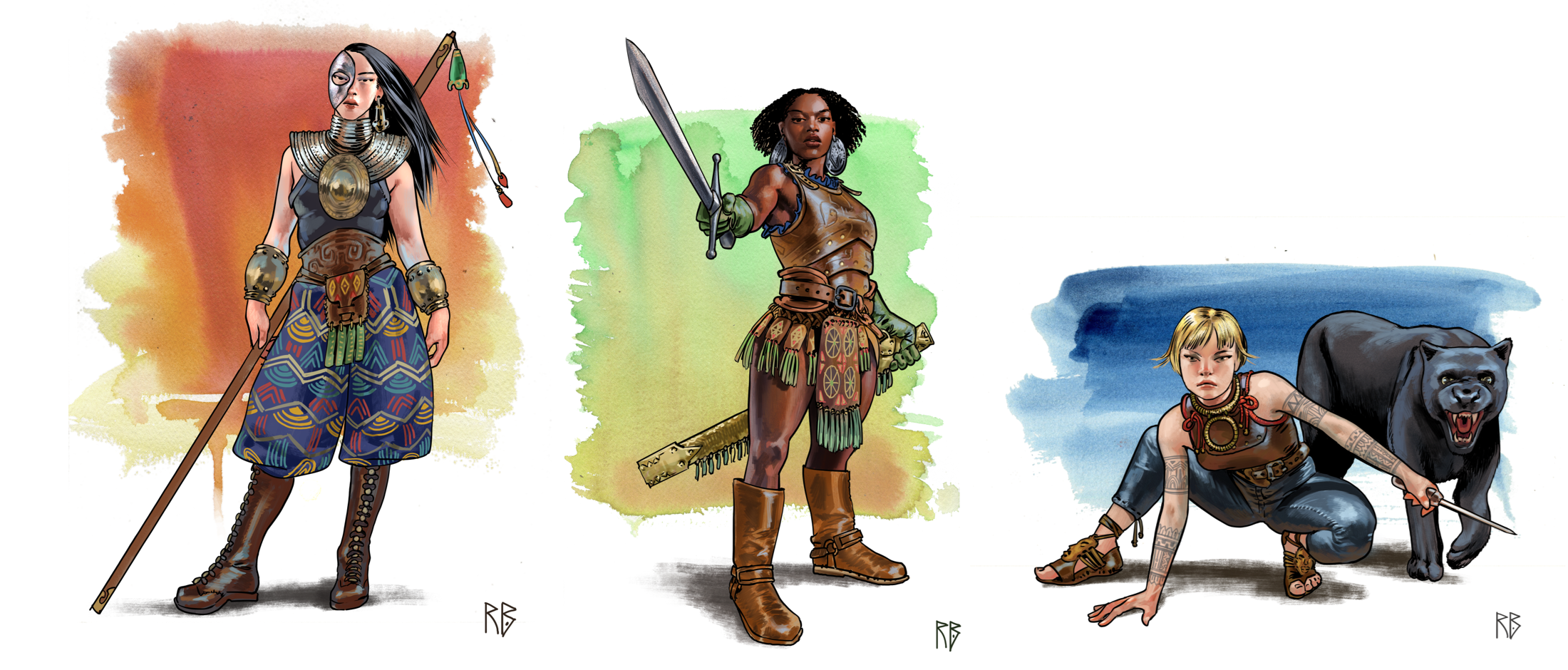
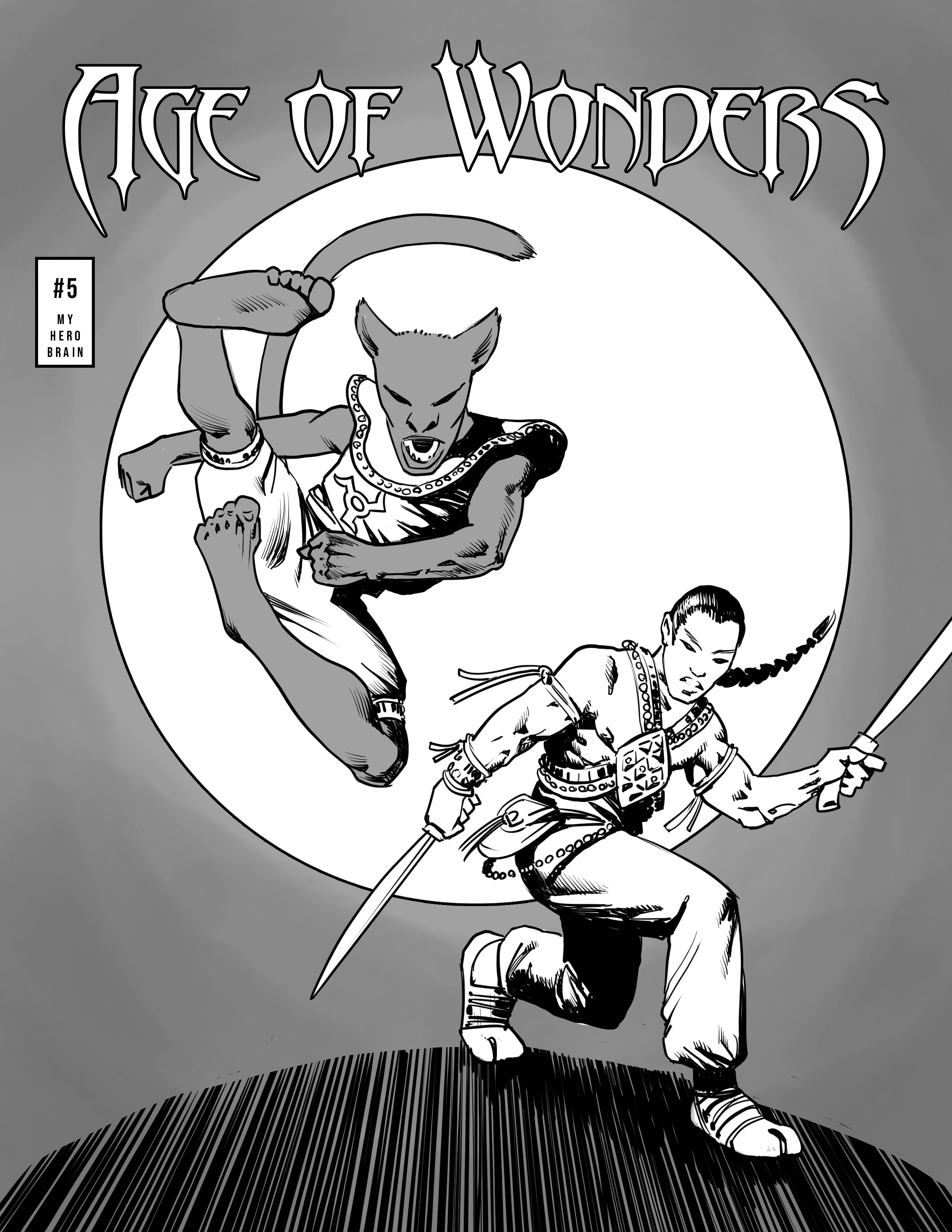
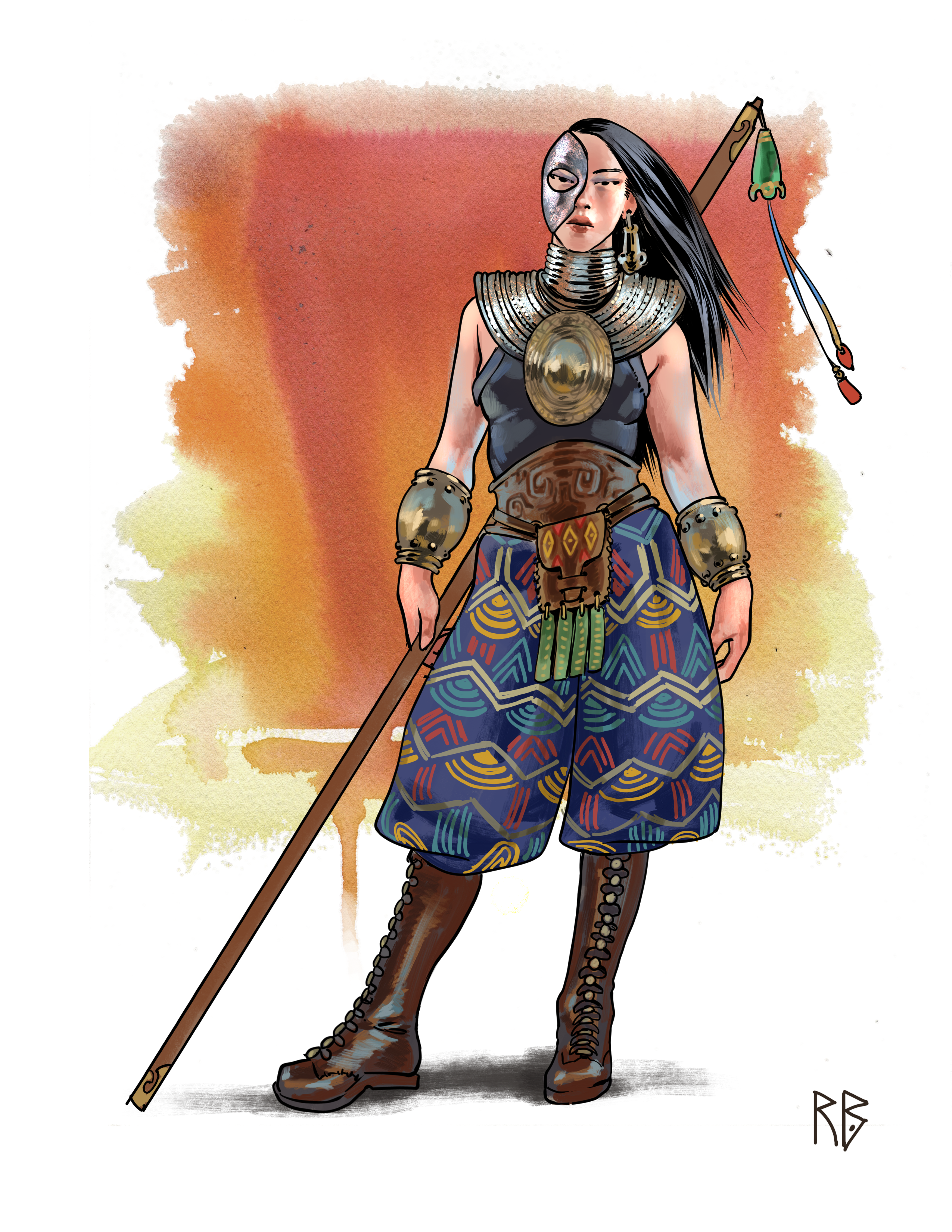
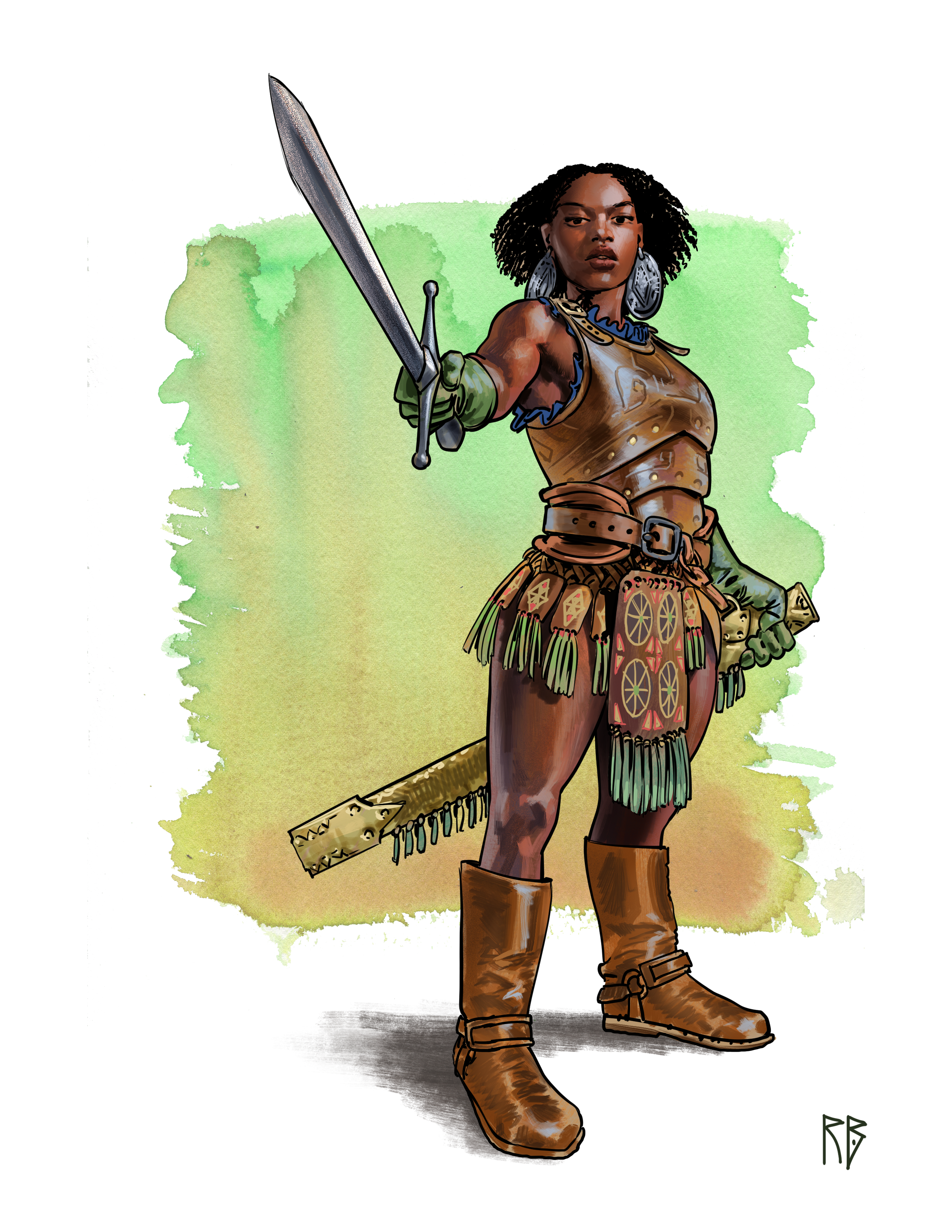
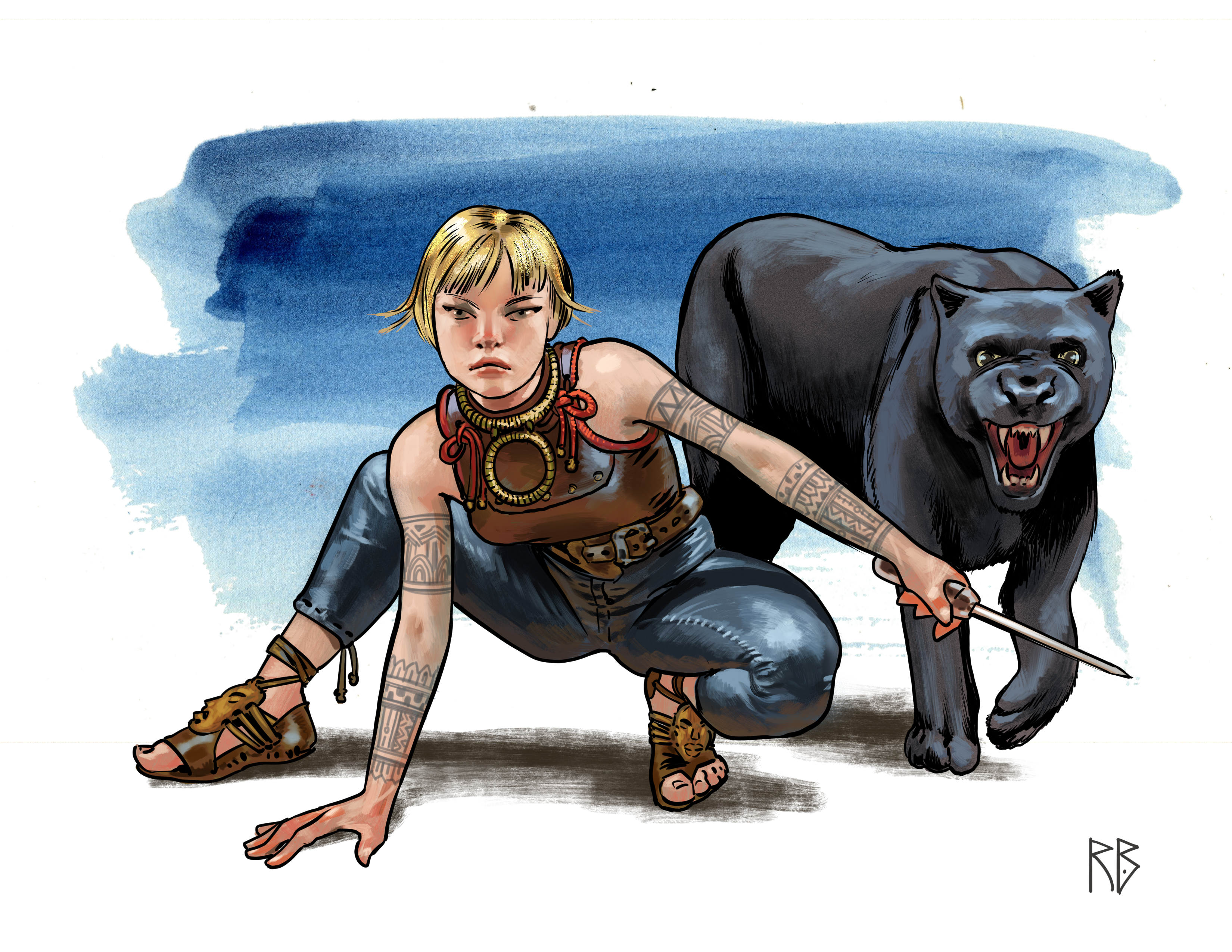
What I like about Oakton: First, I like that it’s a diverse city—more of a salad than a melting pot—and the dominant culture isn’t based on a white, Western European history. I thought Roland Brown did an amazing job using these influences in his design of the three protagonists, and his depictions of clothing and style really brought the city to life for me. Second, I like the image of the giant tree overhanging the city, clearly signaling the fantastical nature of the setting without overdoing it. Finally, I like that it’s an all-human, low-magic city, which helps underscore the Sword & Sorcery vibe.
Despite those bright spots, I don’t think many readers could really picture Oakton in their mind’s eye like I intended. Were districts like the area around the Keep, the Coins, or the cul-de-sac of Sami Suttar’s home vivid? Was the City Watch interesting? What about the guild structure and how they influenced life in the city? How did the otherworldly, enormous tree affect the culture or beliefs? From my perspective, I fumbled the storytelling on many, many dimensions. Again, I’m giving myself credit for creating my own setting and trying, which is more than I’ve done in the past. And, as I’ll keep saying, I’m learning a ton. But the final output was clumsy at best.
Mashing-up Fantasy & Superheroes: D
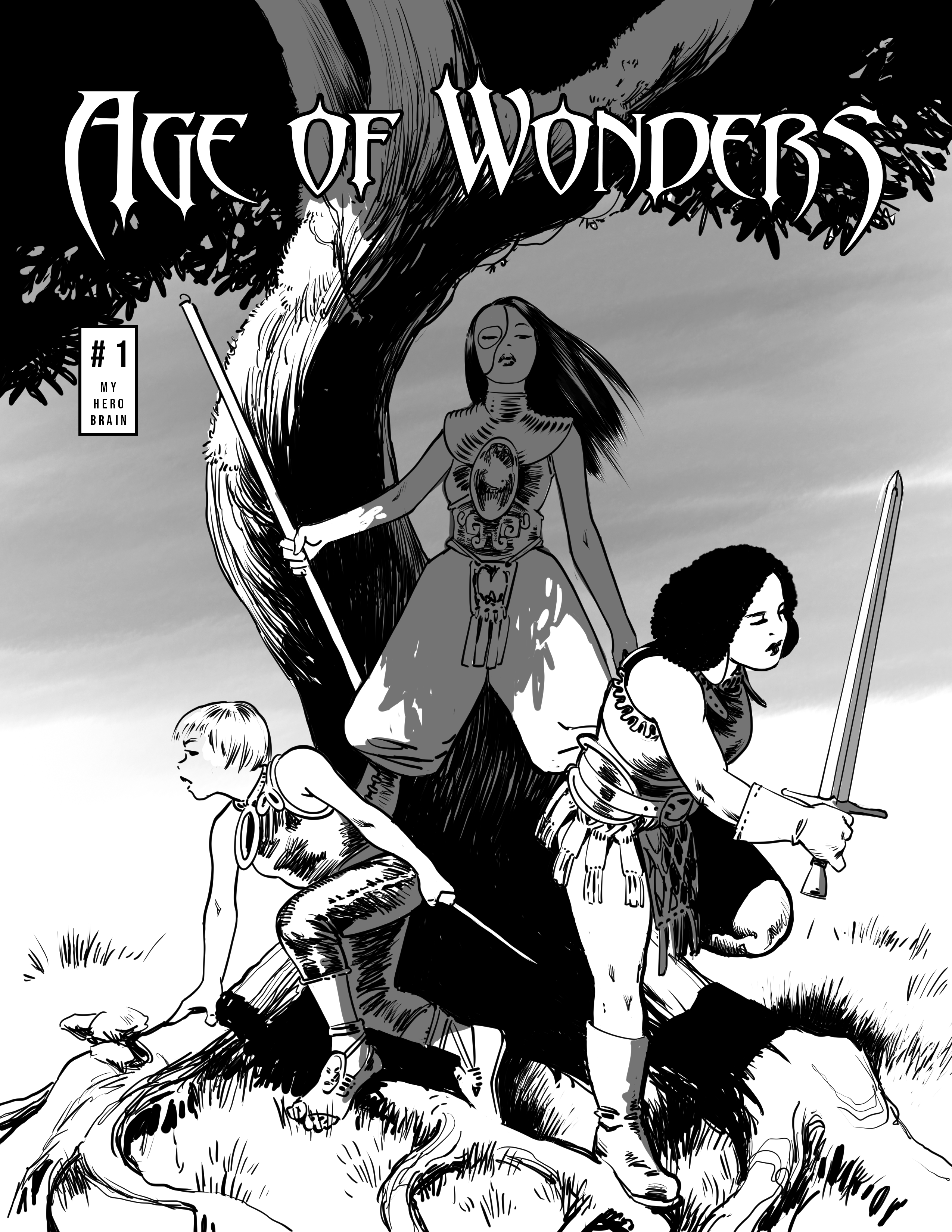
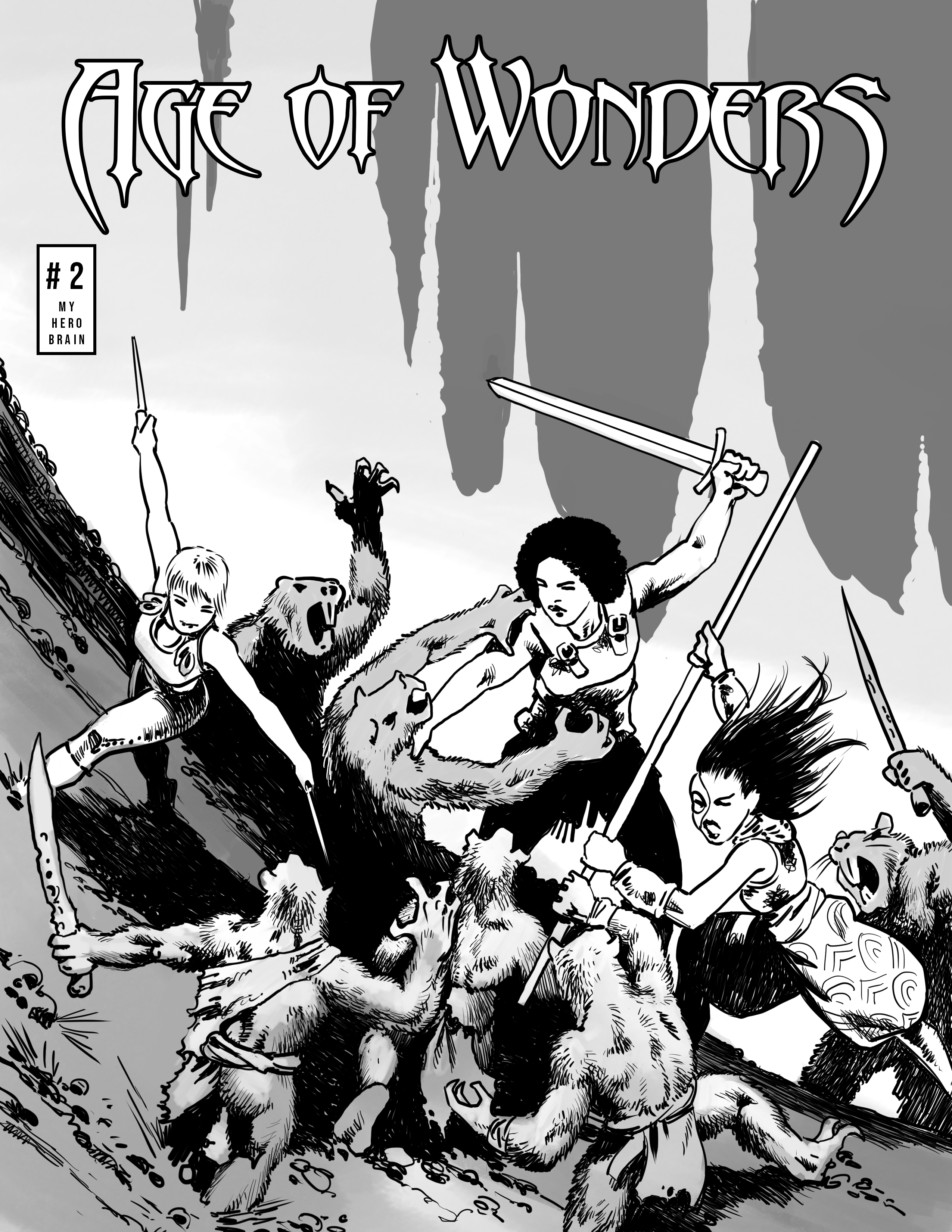
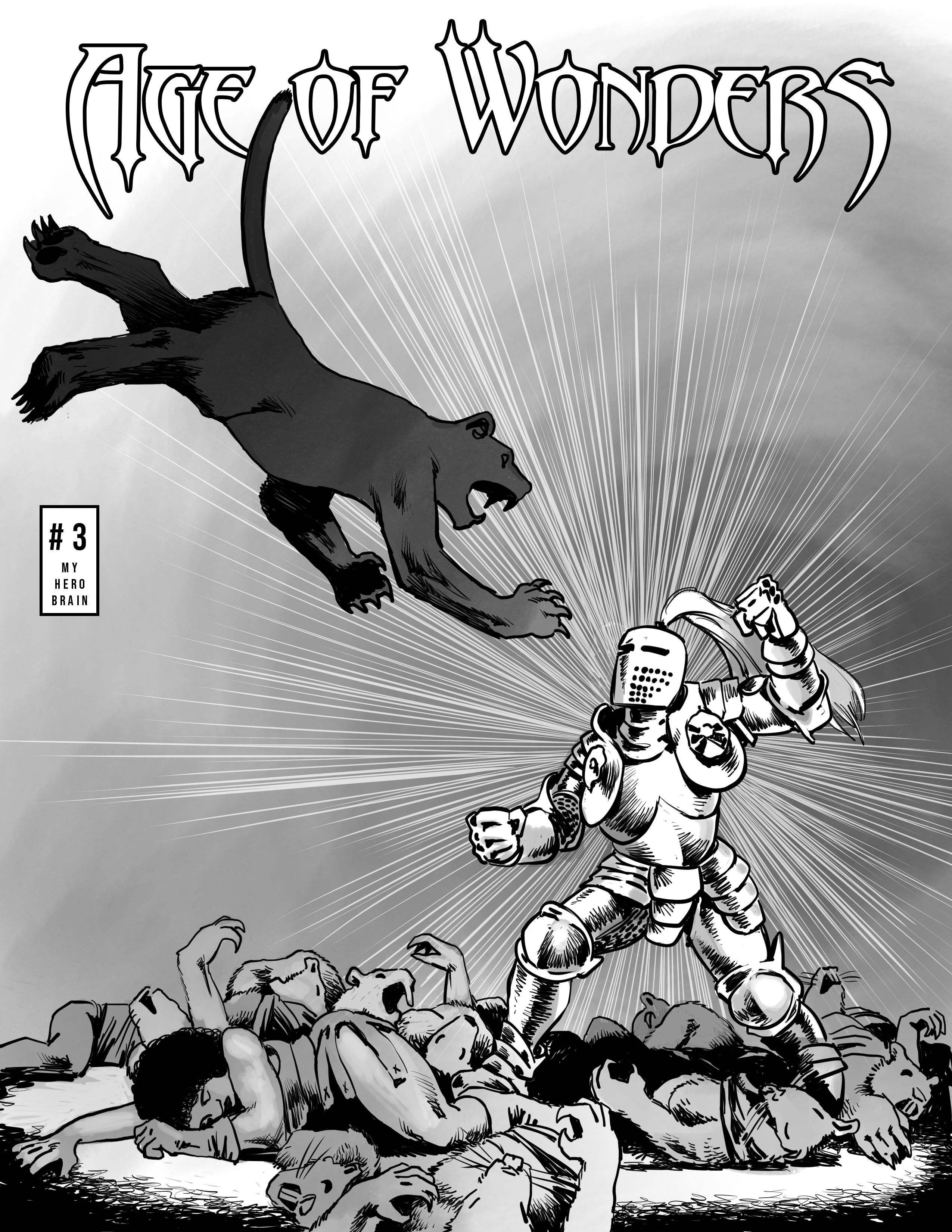
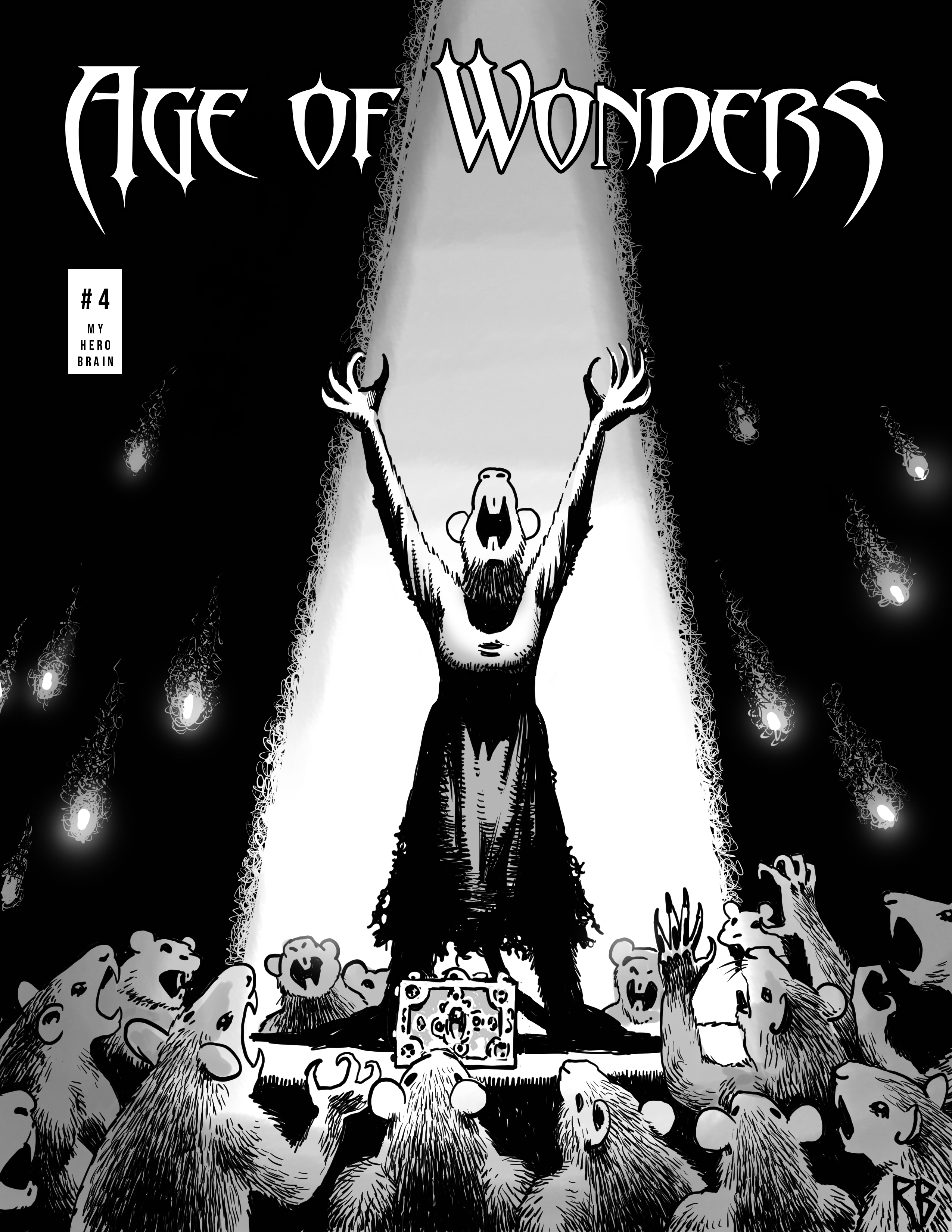
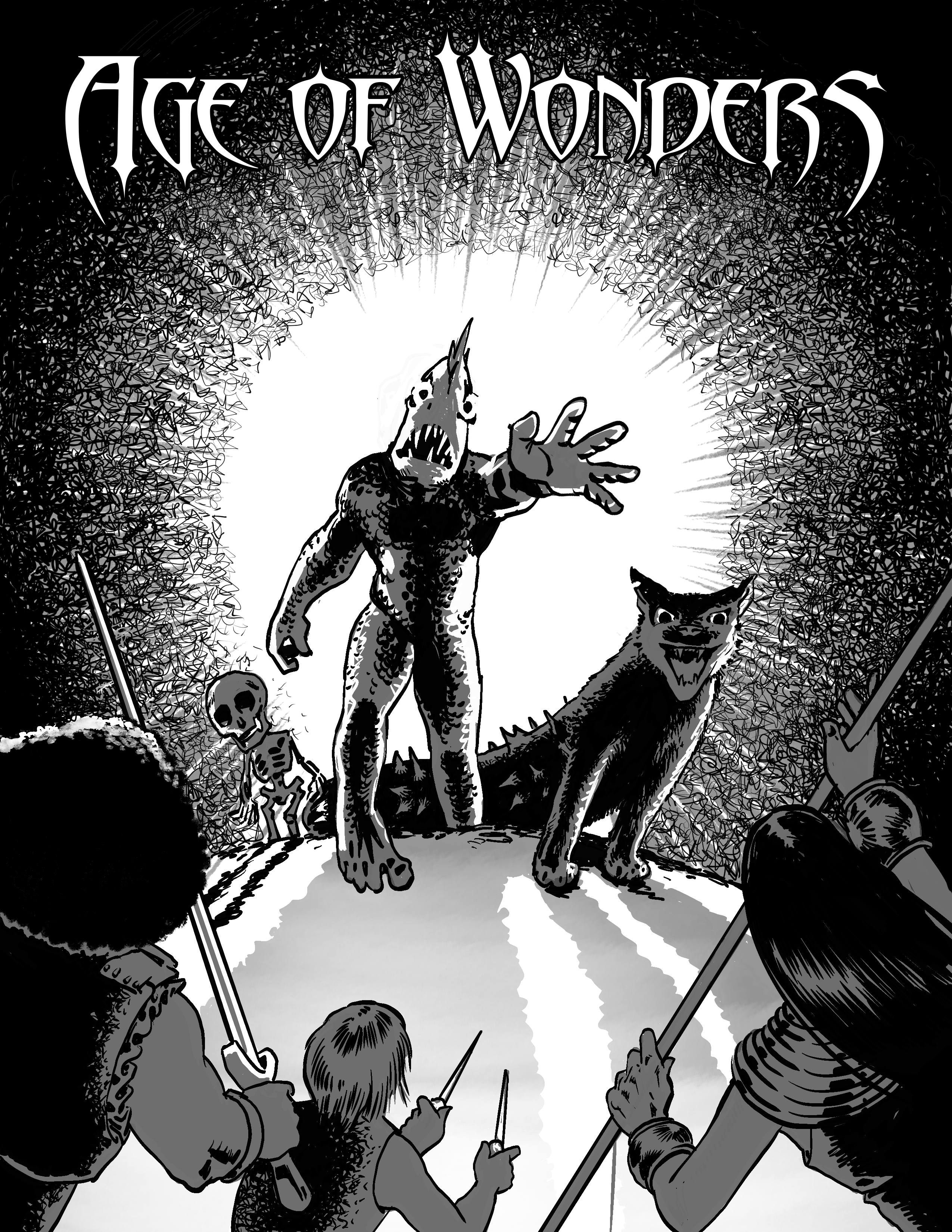
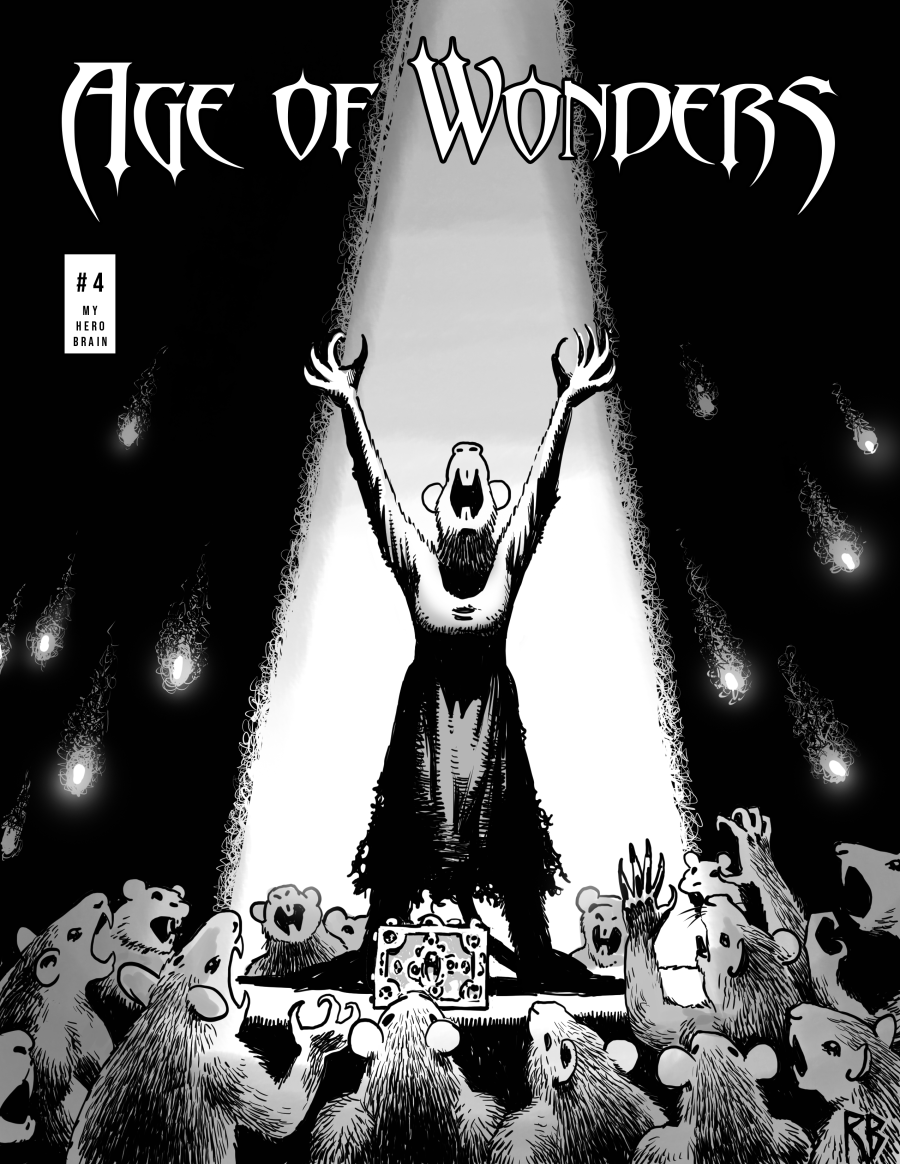
By far the place I most let myself down was on the mash-up of sword-and-sorcery fantasy with classic bronze-age comic book superheroes. Pretty much the only way you could say these stories were comic book-y is that they came out in Issues instead of Chapters, and those Issue covers were awesomely illustrated by Roland. After that, meh. We had a stretchy character and… and… well, not much else that sits outside of typical fantasy. Nothing really nods at the comics of my youth. I do think that, if I continue, the story would evolve into more and more obvious superheroes and supervillains; the protagonists would continue to get more powerful and distinct in their appearances with each level-up, and they would distinguish themselves from “ordinary humans” more and more. From the first six months of the story, however, Age of Wonders looks a heck of a lot like simply a fantasy tale, full stop.
All my critiques above sound negative because I want to be honest about where I didn’t live up to my own expectations. That said, I’ve had a ton of fun since early December with this project and have been filled with creative energy the entire time. I’m thrilled that I’m pushing myself away from published settings and material to focus on my own worldbuilding and plotting, and I want to continue my journey that Age of Wonders (and DCC before it) began. Before I get to the next steps, though, let me pause on two aspects of the project that a) I consider successes, yet b) are absolutely changing in the next iteration …
Playing Crusaders: B+
Ever since I first stumbled across the Crusaders rpg, sitting on my shelf unread, I was in love. As a reminder, I had been sifting through games looking for a particular set of features:
- A superhero game that can be played in a fantasy setting, plus allow for anachronistic weapons and technology. Basically, the superpowers and fantasy elements need to be satisfying, but allow for other genre shenanigans.
- Is neither too crunchy (if I’m consulting forums or rulebooks more often than writing, that’s bad) nor too lightweight (I need to feel like the dice are guiding the story and enhancing the narrative). I want to feel like the mechanics support the story.
- Level-up jumps in power. My idea is that the PCs start as “street level” heroes and become demigods as the story progresses. Something will be pushing them closer to godhood, which is a core part of the story. The game should not only allow for those different levels but be fun to play at all of them.
- No hard-wired comics tropes (like secret identities, costumes, etc.). The story will be a genre mash-up, so I can’t hew too closely to any overly specific formulas.
Reading through the Crusaders rulebook, to this day, makes me smile. I love the whole ethos of the game, and the mechanics do a great job of not only simulating comic book action but also addressing the above list of needs. Yes, I homebrewed a metric ton of the rules, but I consider the ability to tweak rules to suit my needs a strength, and doing so was a joy. Even though I still wonder what would have happened if I’d explored the other games on my list: Evolved (now released! it’s amazing!), Destined, Basic Action Super Heroes (my vote for what would have unseated Crusaders back in December), S5E, Pathfinder 2nd Edition (which, yes, I think can be easily tweaked into a superhero game) and now Outgunned Superheroes, I’m very happy that I jumped in to play Crusaders and launch Age of Wonders. Consider me a convert to the idea that playing fantasy games with a cinematic superhero system is not only easy but freeing. I will absolutely do so again.
So why isn’t this aspect of the project an A, and why would I change systems? As I’ve outlined in these monthly Reflection posts, what I’ve come to realize is that Crusaders is there to showcase superhero combat, period. It’s truly fun for what it does, but I’m already getting a little weary of only rolling dice when it’s time to bash action figures together. I miss mechanics for chases, social situations, and downtime, and I feel like I’m operating with too few handholds when I’m in noncombat scenes. The whole point of pairing solo roleplaying with fiction writing is to allow for randomness and game logic to my stories, after all.
Anyway, thank you Oliver Legrand and the Crusaders rpg. I’ve had a blast!
Characters & Plot: B
One of the things that most frustrated me about my DCC stories were how flat the characters were. As I launched Age of Wonders, I posited that some of the issues driving this flatness were juggling too many PCs and the neutral third-person narrator, both of which are semi-required in writing DCC-inspired fiction because of the characters’ high death toll. As a result, my love of DCC had transitioned to group games (no joke: I will GM a long, multi-year DCC campaign for friends in the foreseeable future), and I fully intended to focus more on character in this next project.
I sort of stumbled into the current format of the blog—with three primary protagonists, each spending a week as the POV-character for the story, followed by a reflections post—but I’m pleased with how it’s working. For me, the characters of Maly, Emah, and Kami are clearer and more distinct than my earlier solo play stories, each with their own personalities, motivations, and goals. I still feel like I should have pushed these differences further in my prose and emphasized their wants and needs more clearly. I’m still a work in progress when it comes to character realization, but again… Age of Wonders was a noticeable improvement from the last round. Even though the characters were done through random rolls, I also like that they’re all women, and each from a different cultural tradition. I don’t know how well I write women, but I certainly enjoy making powerful, kick-ass female characters.
Meanwhile, probably the biggest point of experimentation was how I found my story each Issue. I started from something emergent, reached back into published material for help, then abandoned that material to swing back over to emergent narrative via the Mythic GM Emulator. It’s been a ride. It’s also been hugely instructive. I have something like fifteen unfinished novels on my laptop, all with carefully structured, multi-page, detailed outlines. What I’ve found in longform storytelling is that I enjoy building the plot and characters, but I lose steam when telling them. One of the many reasons I’ve taken a break from novel-writing and shifted to shorter-form stories and serial fiction is to keep myself fresh and excited each time I sit down to write. Mission accomplished!
However, I’m new to serial stories or working without the aid of an outline. I’m also a forever-GM in games like D&D and Pathfinder, prepping endlessly for pre-defined set-pieces and story milestones from published adventures in established settings. Add these two factors together and doing something like Age of Wonders has been a massive stretch for me, and one I’ve really enjoyed. The past two Issues, I found my footing somewhat, delighted by ways the Mythic GM Emulator can help me. In fact, these revelations triggered me consuming several blog posts, forums, and podcasts on solo roleplaying in general, and I see how some of the ways I would alter my approach in my next project. Suffice it to say, I’m both more comfortable and eager to embrace the “let’s find out what happens next” allure of solo play, and the fiction that results from it. I’m even starting to wonder if I might write my next novel (if I ever aspire to do that again) using these methods, knowing that I can go back and edit out extraneous characters or plot points, emphasizing whatever key themes emerge after the fact instead of within an outline.
All of that said, knowing that I’m switching systems means that I’m also switching characters. I’m taking the lessons of worldbuilding from this project, retooling the continent and city of Oakton, and rolling up entirely new characters, in a new game, with only a plot-hook to start. It’s basically an Age of Wonders reboot.
It’s tempting to throw out an overall letter grade for Age of Wonders, but doing so feels significantly more arbitrary than grading each goal. Overall, I’m happy with what I’ve created over… sheesh, eight months now?! Equally, I’m ready to start a new project, incorporating the lessons from this one. Let’s gooooooo!
Tales of Calvenor
Currently, on my laptop there’s the “Age of Wonders” folder in “Games,” where I have all of Roland’s artwork, character sheets, and the various documents I use to run the game. There’s the “Age of Wonders” folder in “Writing,” which has these posts, separated in the game-notes and pure prose versions. As I began to think about my relaunch, I changed the names of both folders to “Age of Wonders v1” and created “Age of Wonders v2” folders. That was already confusing enough, but when I started thinking about how to name each file in the folders, my mind broke. As much as I love the Age of Wonders moniker, I’ve decided that it needs to solely describe this project. And hey, that means that I could always pick this story back up later without creating a bruhaha.
Instead, I’m calling this new project “Tales of Calvenor,” named for the Princehold of Calvenor, the nation in which Oakton sits. Thank you, Age of Wonders. Welcome, Tales of Calvenor! We’ll dive in… next week!
Before turning the proverbial page, a final, special Thank You to Roland for his amazing artwork throughout this project. He’s a joy to work with, and I hope to do so again.
As always, if you’re enjoying these posts or have suggestions, drop me a comment below or feel free to email me at jaycms@yahoo.com.
Next: A new beginning!



 My Hero Brain