

Wednesday, what? New Year’s Eve, what? What’s happening here?
Well, see… Two related but distinct things have been occurring in my life, and they’ve led me to this Wednesday post (and possible future Wednesday posts… read on!). First, I’ve been unemployed since July. I don’t like the word “unemployed,” honestly, because it sounds so negative. Better to say that I’ve been happily unemployed since July, taking a large severance package from my employer instead of moving to Amsterdam. The unexpected windfall has allowed me to, for the first in years, slow down, travel, and enjoy time with loved ones. Over the last six months, I’ve reconnected with friends that I haven’t seen in over a decade, spent quality time with my adult kids, soaked up experiences with my awesome wife of thirty years (including getting an awesome new puppy), and—most profoundly—supported my mother through her husband’s unexpected death. It’s been a blessing to have this time and freedom, truly, and I’m not a religious guy so don’t use that word lightly.
Second, I’ve been spending many, many hours with my TTRPG books. They’ve long sat there, the collection growing each year, waiting patiently for me to have some downtime. Now that I have that time, it’s been a joy to both dive into nostalgic books from my gaming past and introduce myself to new games I’ve picked up but never absorbed. My brain has been swimming in dozens of game systems and mechanics, and piles and piles of nerdy lore. It’s been fabulous.
I’m not quite ready to retire from my day job, but one of the things I’ve long envisioned when I do is to host an in-person Dungeon Crawl Classics campaign at my house (right now all of my weekly games continue to be online). DCC remains my favorite fantasy TTRPG, exploding with random tables and emergent storytelling (it’s a testament to Tales of Argosa that when I promote it to people, I describe it as “DCC’s more elegant, sword-and-sorcery cousin”). When I’ve allowed myself to dream, I always assumed that I and my players would co-create a campaign world from whole cloth. But—thanks entirely to my weekly Tales of Calvenor game—I now realize that any fantasy game I run for a long time, maybe forever, will be in my own homebrewed world of Calvenor.
DCC and Calvenor Cosmology
One of the things that’s often bothered me about DCC’s cosmology is the fuzzy line between deities (where clerics receive their magic) and patrons (where wizards do). Both deities and patrons are supernatural, immortal, otherworldly entities influencing the world through mortals, but deities do so without corruption, keeping clerics on a leash of approval/disapproval. Patrons, meanwhile, corrupt the literal hell out of their poor wizards, constantly entering into dangerous bargains. Yet, as far as I can tell, there’s no particular difference as to why one supernatural entity is a deity versus a patron except it’s whatever the author wanted to write.
The Princehold of Calvenor is the nation in which my current story takes place, a small part of a much larger world. Within Calvenor are disparate cities, and each city—like Oakton, my current story’s epicenter—is protected from the wilds by a pantheon unique to that city. Outside, in the wilds, are demon-gods who rampage and scheme to take down those cities. The entire conceit of my fantasy world is that the gods of Law support human civilization and the demon-gods of Chaos oppose them.
So, in my world, I justify the distinction thusly: ANY deity of Law OR demon of Chaos can be a deity for a cleric OR a patron for a wizard (if I ever decide what Neutral entities are in my world, the same goes for them). The difference is that a cleric is in harmony with an entity’s goals and belief system whereas a wizard only wants power, and thus the entity is steering a wizard against their will towards their belief system.
Take two characters from my story: Alric Mistsong and Hadren Kelthorn. Both are in relationship with Orthuun the Blind Sovereign. Hadren, in the above terms, would be a cleric of Orthuun, promoting the demon-god’s nihilistic goals and gaining power as a result. Alric, meanwhile, uses Orthuun as a patron, channeling power from the demon-god via his corrupted spellbook but actively working against the destruction of his own world. Both clerics and wizards are dangerous gigs (especially as it relates to Orthuun), but in very different ways.
As I mentioned, one of the key aspects of DCC that makes the game so flavorful, exciting, and awesome is the mountain of custom, random tables. Each spell, each deity, each patron, each major magic item, each demon or dragon… they’re all—ALL OF THEM!—multiple pages long and full of bespoke tables that send your games into madcap directions.
But do you see the problem? To do my homebrewed world justice, I’ll need to make both deity and patron entries for every supernatural entity in my world. To begin with, that means tackling the twenty-two Oakton gods and twenty-ish demon-gods. That’s, oh… almost ninety pieces of work? And each piece includes a multi-page entry with multiple random tables? Let’s not forget, too, that’s only one city in a vast nation, nestled within an even vaster planet.
I mean, that’s just a bonkers amount of work.
And yet…
I have time right now! My brain is alight with ideas!
Let’s just…
Oh, I don’t know…
At least start?
The Goddess Quenvara the Rootmother
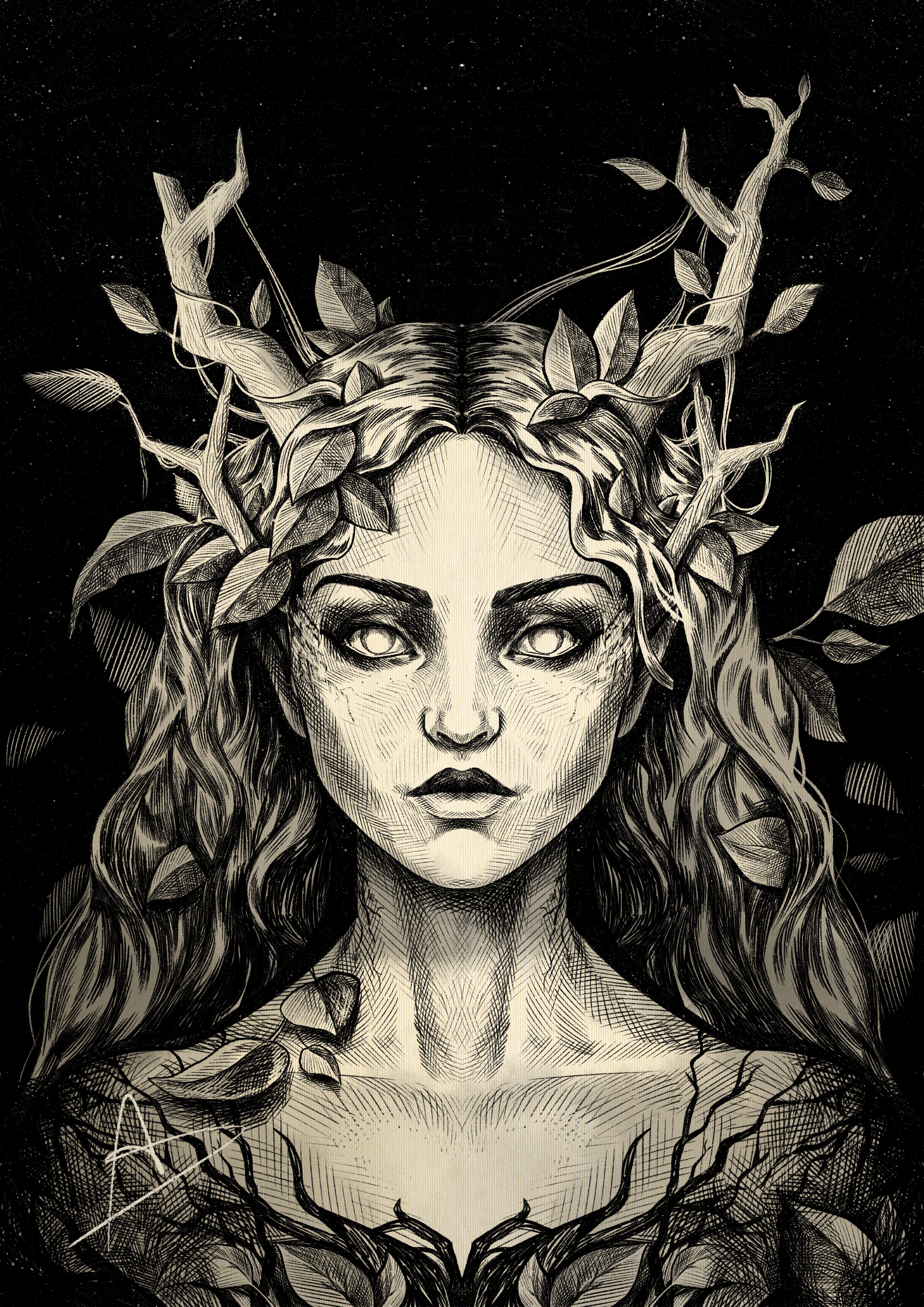
To stretch my creative muscles, it only makes sense to start with the most central deity in the Oakton pantheon, the goddess that is the focus of declarations and exclamations almost every single week: The Rootmother, known by her sacred name Quenvara to clerics and power-hungry wizards alike (note that none of the current story’s protagonists know or use this name for her).
Below I’ve created a full DCC-style deity entry for her, much of which is either inspired by or taken directly from the excellent (free!) Ildavir write-up in Clerics of the Known Realms by Sean of Realm 15. Because I’m not at all worried about selling these write-ups, I’m perfectly happy to steal good work and give credit where it’s due.
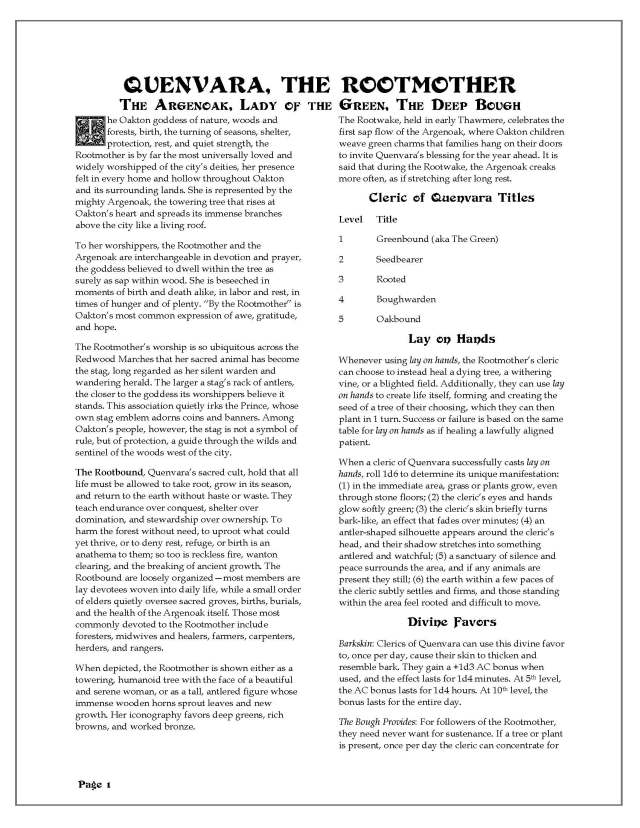
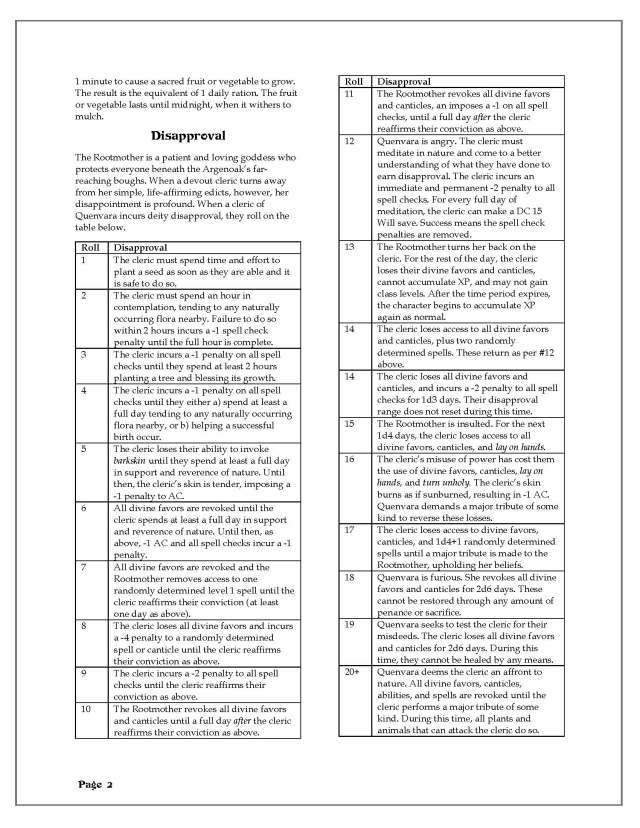
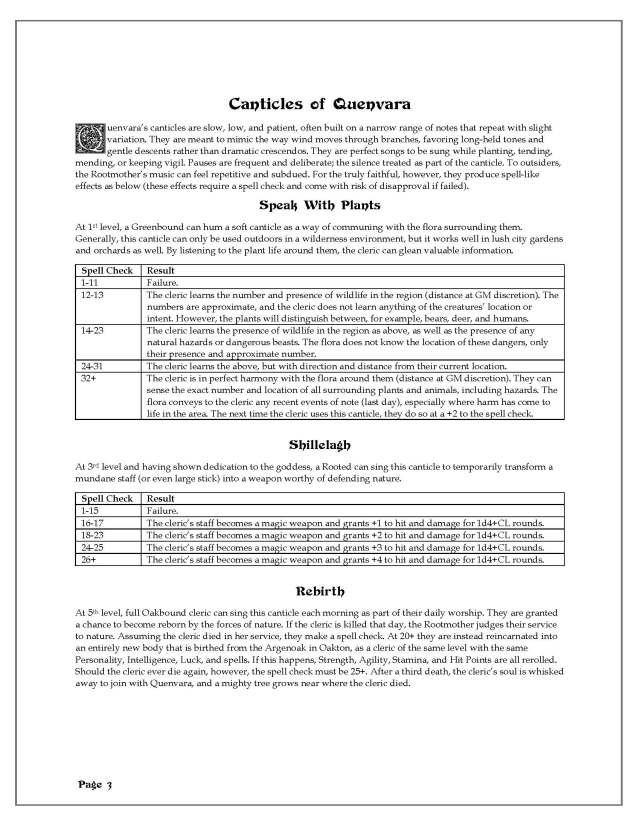
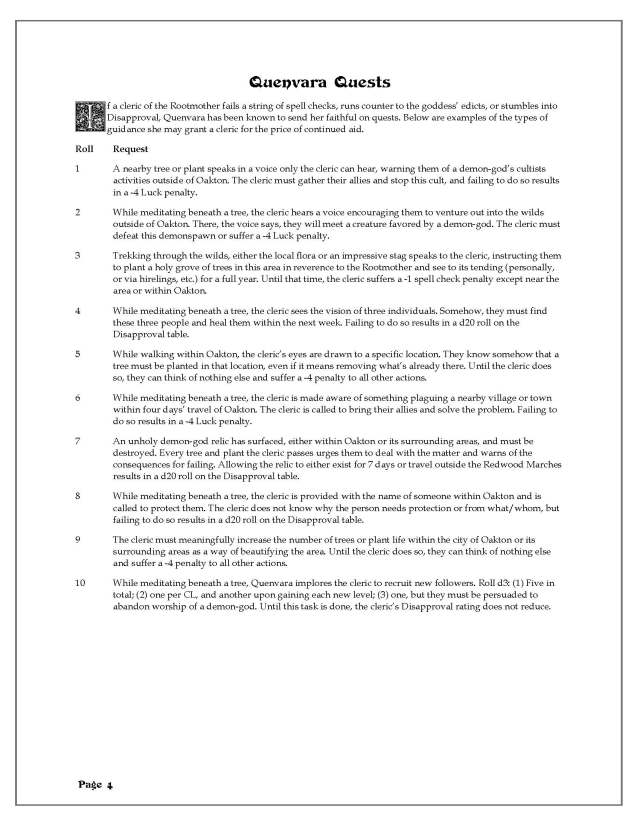
You can also view the full PDF of Quenvara here.
Enjoy!
Next week I’ll provide the very different Patron write-up of Quenvara the Rootmother. I absolutely do not promise to keep these entries going every week on Wednesday, but I’ll do so as my time and passion allow. The priority is the Saturday story, but this project is a wonderful outlet of energy and time, and each entry only gets me closer to my DCC retirement dream…
Today’s post is a curveball bonus, so please let me know what you think below or via email at jaycms@yahoo.com!
 My Hero Brain