
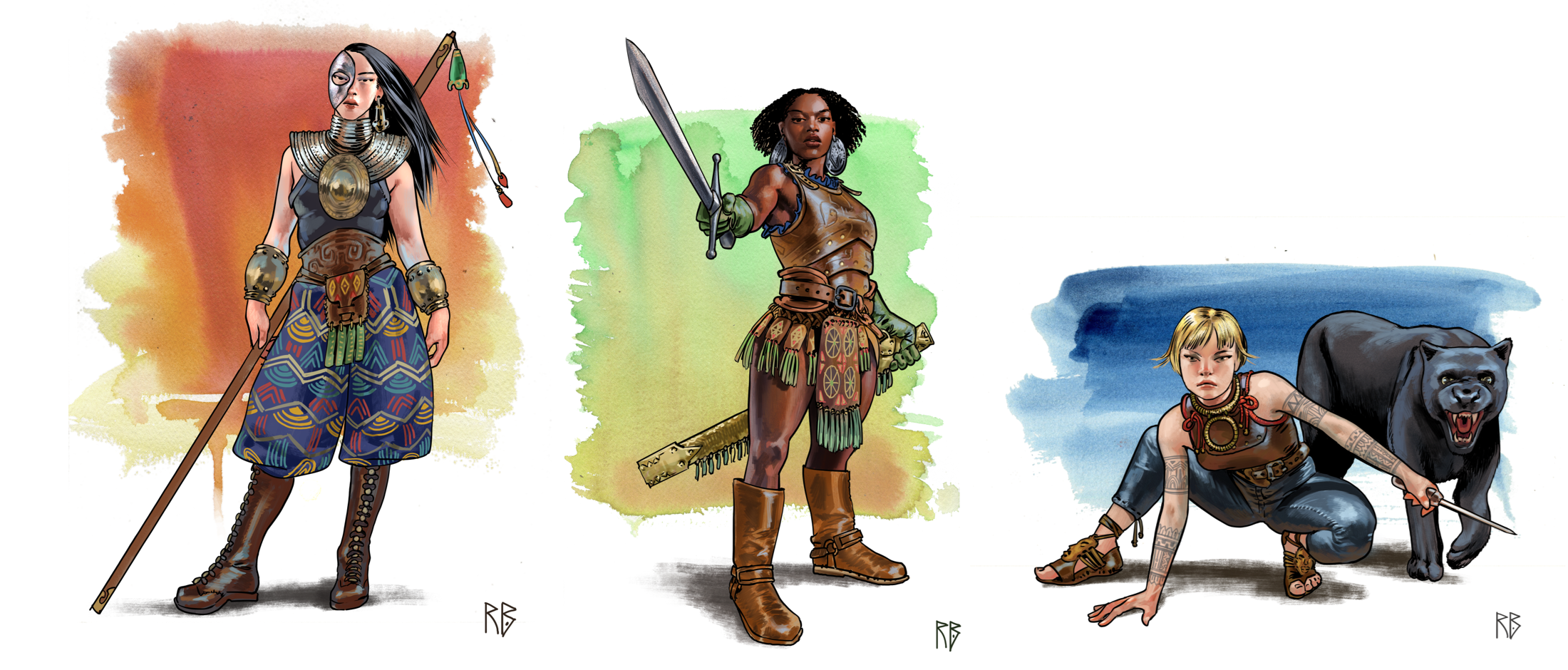
We’re heading into the climactic Issue 6! Let’s avoid the preamble and just jump right in, shall we?
Deconstructing Prepared Adventures
Issue 5 really opened my eyes to the glory of solo roleplaying. Recall that I’d recently started falling back on published material to give me some structure for my storytelling. No sooner had I done so, however, than the plot sort of led from one thing to another… Maly made a heroic theft of the bejeweled box (which, at the time, I had no idea what it was or why the ratfolk wanted it), giving rise to an underground chase, then a showdown with new villains, one of them Kami’s brother, and then the re-theft of box by the ratfolk ringleader. None of that was in my head when I started looking at Rats of Ilthmar for inspiration.
But then I hit a wall; there was no “next logical step” for where to take the story, and I’d strayed so far from the published material that I didn’t see how to find my way back there. Enter Mythic GM Emulator to the rescue last installment, and in a few quick rolls I not only had my answer (summoned filth demons, baby!) but felt reinvigorated for Issue 6. Maybe it’s silly to type this sentence after so much time solo roleplaying, but I felt like Mythic’s unlock of the next part of the story made me finally “get” why solo-play is fun. I still don’t like having absolutely no material as a foundation for my games, but it was easy to see how I could continue this story for months, if not years, and never run out of exciting twists and turns.
Indeed, I’ve been expanding my consumption of media on solo roleplaying and recently listened to an interview with Tana Pigeon, author of Mythic, on the Solo RolePlayers Podcast. The topic of the interview was playing published adventures solo, and it’s a great listen. Though neither Tana nor the podcaster PJ really understand the glory of published material (or, in PJ’s case, an appreciation for the magic of group games), Tana has a few super interesting tactics for how solo play can use published material as a source of emergent storytelling, some of which are detailed in the Mythic second edition book. A new and intriguing approach, however, comes from Tana’s article in Issue 50 her own self-published Mythic Magazine called “Deconstructing Prepared Adventures.” Buy the issue if you can, but, in summary, the idea is to completely abandon the structure or plot of published adventures and instead roll dice to randomly select sections of the adventure as tables to answer Fate questions and generate random events. This approach keeps the adventure feel and themes but creates something entirely new.
Now, as I said, what was missing for me in the interview was a true appreciation of published material. I like the structure of an adventure with story beats, plot milestones, and overarching quests or themes. I enjoy the prep of GMing a group game or a solo one equally. Just look at my playthrough of two full Dungeon Crawl Classics adventures – that experience was great fun for me. I’m excited about having the dice determine the protagonists’ fates without me worrying about what comes next. As a forever-GM in my group games, it’s an opportunity to dive deep into an adventure that either I’ll never get to play with a group or as preparation for doing so. Moreover, that experience feels like it mimics the vibe of a group game (with the obvious differences that I’m piloting both the PCs and NPCs and I’m not with friends). I don’t get bothered by knowing what’s behind the next door, because I get the same thrill out of the anticipatory “Ooo! How will they handle the next challenge?!” excitement as I do GMing group games, plus I find it a narrative challenge to follow the dice and still navigate the published material. On the other side of the coin, I never really wanted to play truly emergent games. Somehow not having any structure destroyed my motivation. If anything could happen and I was making it all up, why did the events matter at all? The idea of playing solo like Tana or PJ seem to enjoy felt, I don’t know… lonely.
Maybe it’s having invested more time in solo play, or perhaps it’s just all the new media I’m consuming on the topic. Whatever the case, I’m becoming more open to what I’m now realizing is the norm for solo roleplaying and am increasingly ready to embrace wherever the heck my mind will lead me. Will this dawning revelation lead to more interesting stories? I guess we’ll find out. File it away for the next adventure, though… I want to try that “Deconstructing” method at some point.
Speaking of the next adventure…
We’ve Made It: Issue 6!
I don’t know how explicit I’ve been throughout this experiment, but once I settled on the “six Issues form a Trade Paperback (TPB)” idea, the commitment I made to myself was to see one six-Issue arc all the way through. It’s been an experiment on so many different dimensions: Homebrewing a world, mashing up superheroes and fantasy, playing a new game system, more emergent play, different POV narratives, six-Issue arcs… the list goes on and on. Given the pace of my writing, I was essentially giving myself six months to settle into this story and then assess. All along, I’ve meant to decide after Issue 6 whether to keep going as-is, make a significant change (for example, swapping Crusaders for another game system), or pause the story and start a new project. Right now, I’m not at all sure which path I’ll take in a month’s time.
Whatever I decide, I’m hoping to end this TPB with a bang. We’re entering a battle where the odds are stacked against our protagonists: Without Destiny, there are three Rank 1 PCs against three Rank 2 villains. Moreover, it feels to me like the demons’ powers are more wide-ranging and complementary to each other than Kami, Emah, and Maly’s are. They will need some luck and good tactics to survive, much less to defeat the demons. As I said at the end of the last installment, I’m officially worried about the party.
So, either the PCs will get wiped out, the heroes will triumph against all odds, or somewhere in between. Either way, I’m excited to see what happens. I feel a little bad about killing Tatter “off screen,” but my choices were to do that, have her be part of the battle, or escape again. My sense is that she would have tipped the scales for either side if she’d joined them, and her escape just leaves me in the same “how do I resolve the ratfolk plot?” predicament I was feeling before. I’m glad the dice decided to take her off the game board, despite the ignominious end.
Finally, let’s also pour one out for Anos Wosu, the cat-man sidekick of Kami’s brother who never even got a name in the narrative, much less a chance for backstory. Peace out, karate cat-man.
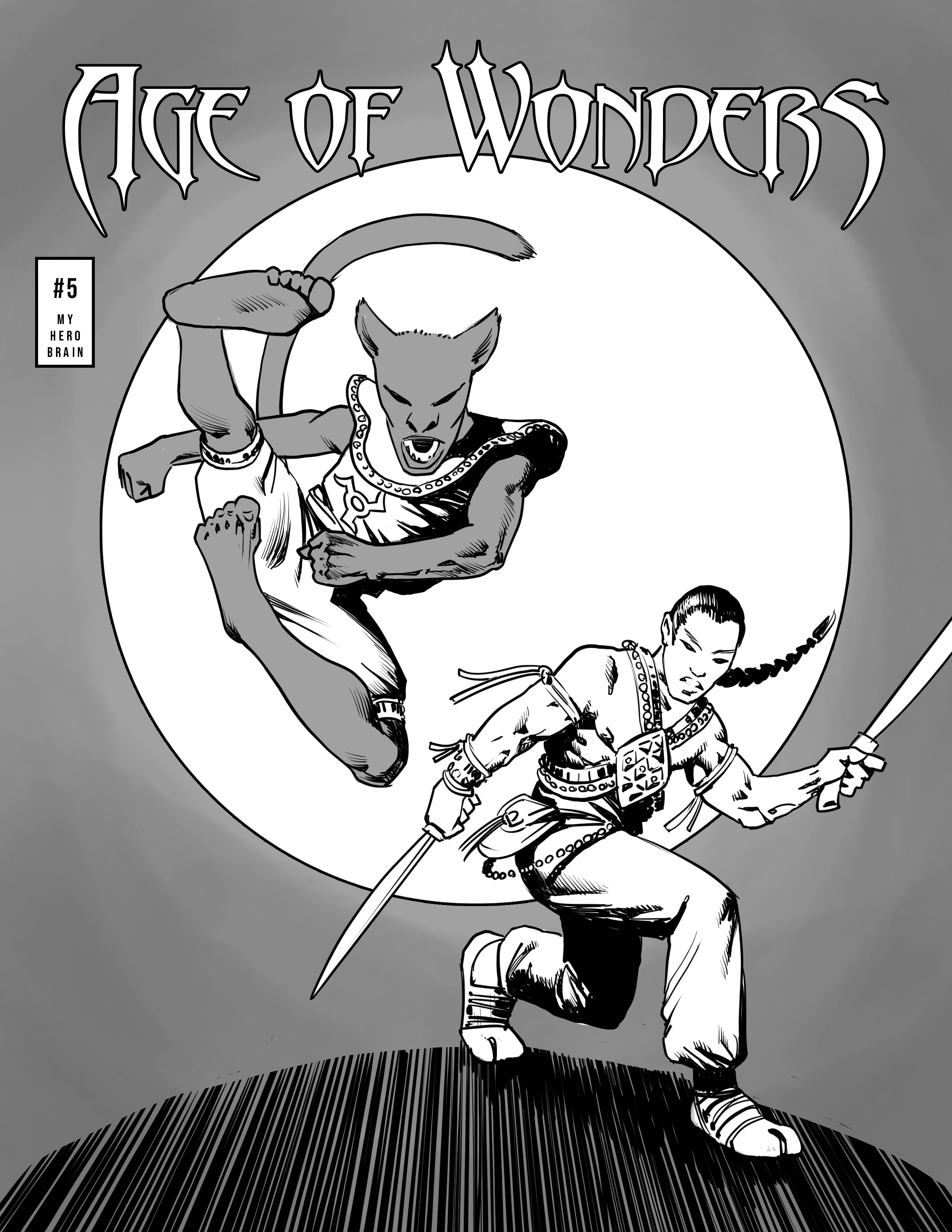
I like that Issues 3, 4, and 5 all feature the main antagonist(s) of that Issue, and of course all credit goes to Roland Brown for his creative eye and drawing prowess. That said, wait until you get a look at Issue 6’s cover! I gave Roland some really weird beasties to manifest, and he delivered in spades. Get ready for some gross demons next week.
As always, if you’re enjoying the story or have suggestions, drop me a comment below or feel free to email me at jaycms@yahoo.com.
Next: Heroes versus demons! [with game notes]
 My Hero Brain
Pingback: Age of Wonders, Issue 5c: What Happened Here, Part 2 – My Hero Brain
Pingback: Age of Wonders, Issue 5c: What Happened Here, Part 2 [with game notes] – My Hero Brain